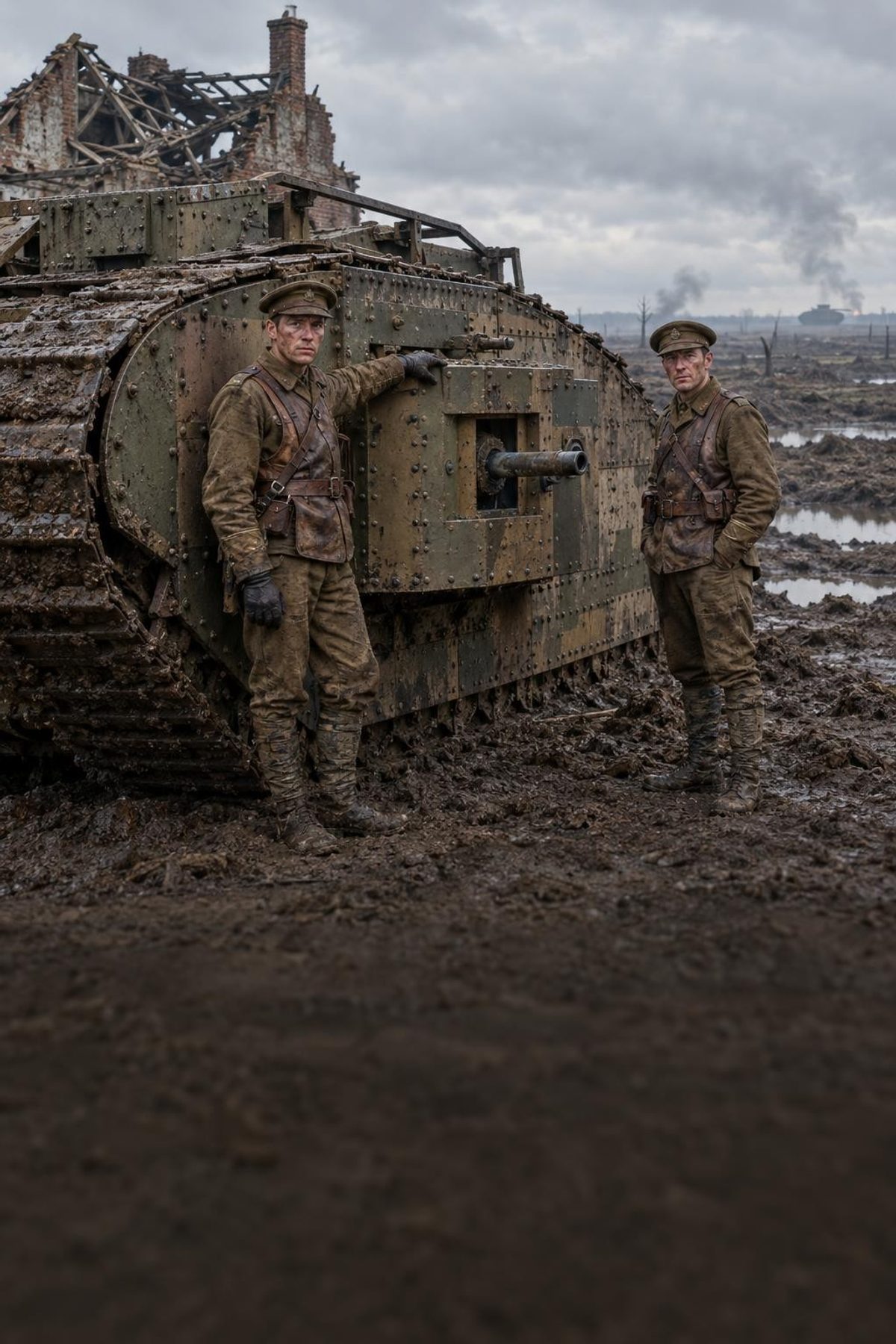
The metallic clang ricocheted through the cramped interior as yet another German shell glanced off the tank's reinforced hull. Inside, the crew of the Mark IV 'Tadpole' held their breath, each member keenly aware of their fortress-like vehicle's remarkable resilience. They had become accustomed to the dull thud hitting their metal beast, an evocative symbol of British engineering grit amid the chaotic ebb of World War I.
The Ironclad Leviathan
In the early years of the war, British tanks were a revelation, clanking through fields, striking fear into trench-bound enemies. Yet, by 1917, the ingenuity was not enough. German forces quickly adapted, devising strategies and munitions — armor-piercing rounds capable of breaching the standard Mark IV tanks. The thick, acrid smoke of the battlefield mingled with the dread of British crews knowing that those once-impenetrable walls could soon be their grave.
Enter the Mark IV 'Tadpole', a desperate response born of necessity. Engineers and metallurgists worked tirelessly to bolster these behemoths, welding additional steel plates directly onto the hulking mechanical frames. These modifications, crude yet effective, transformed the tanks into a plodding fortress — a shell that stopped bullets cold. The nickname 'Tadpole' describes the tank’s new longer track extensions intended to improve trench-crossing capabilities, though not all modifications were implemented in this variant.
These spectacles of war propelled themselves across the Western Front through the grime, mud, and the relentless shrapnel that defined those bloody fields. For the crews, every inch advanced was fraught with peril yet infused with newfound hope. Combat was less about heroic dashes and more about grinding, brutal endurance. Inside, the cacophony of grinding gears and strained engines was a symphony of survival.
Read next: When El Alamein Handed Britain a Machine Nobody Could Name
A Grudging Admiration
While impressive on paper, the reality of the 'Tadpole' was a mixed blessing. The additional armor extended its longevity under fire, greatly reducing casualties and bolstering the morale of their operators. Still, these advantages came at a cost. The extra weight taxed the engines severely, slowing the tanks to a cumbersome crawl and increasing the likelihood of mechanical failure.
It was a trade-off British commanders grudgingly accepted. The alternative was unimaginably worse, with armored units highlighted as key elements in tactical advances across the scarred lands of France and Belgium. To the soldiers, seeing one of these plodding behemoths emerge from the smoke was like catching sight of their salvation, offering ground forces a glimmer of hope in the entrenched stalemate.
Not merely a tool of war, the 'Tadpole' sparked innovation. It prompted questions about balance, weight distribution, and ultimately the very philosophy of tank design. In a war demanding constant innovation, these lumbering fortresses became a critical element in shifting the dynamics of power on the front lines. The lessons they taught would influence engineering and design decisions for years to come.
The Unyielding Remedy
For those huddled in the mud-slicked trenches, the Mark IV 'Tadpole' symbolized something uniquely reassuring. These machines, with their exhaustive, grinding progress, represented the British determination to stand firm in the face of evolving threats. Each successful deployment instilled greater confidence in the infantry, knowing these fortresses could stave off the lethal showers of German fire.
Read next: When Britain Built a Gun Tank Nobody Could Outrange, 1944
Yet, as indispensable as it became, the 'Tadpole' was not the ultimate solution to the hazards of frontline warfare. The toil and ingenuity poured into those plates of steel inspired further evolutions in armored warfare. The seeds sown by this experiment would blossom into innovations far beyond the wildest dreams of its creators.
The tale of the Mark IV 'Tadpole' is a compelling chapter in the larger story of World War I, encapsulating the adaptive strategies of an embattled nation and the indomitable spirit of its people.
It underscores the resilience and determination that characterize not just the machines, but humanity's never-ending strive to overcome the perils of conflict through ingenuity and sheer force of will. The echoes of that metal-clad determination linger, reminding us of a moment when engineering and courage combined to create an indomitable force that blurred the line between man and machine.