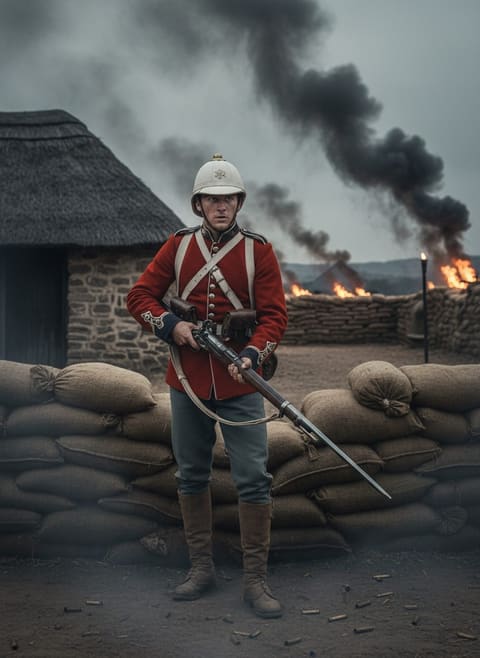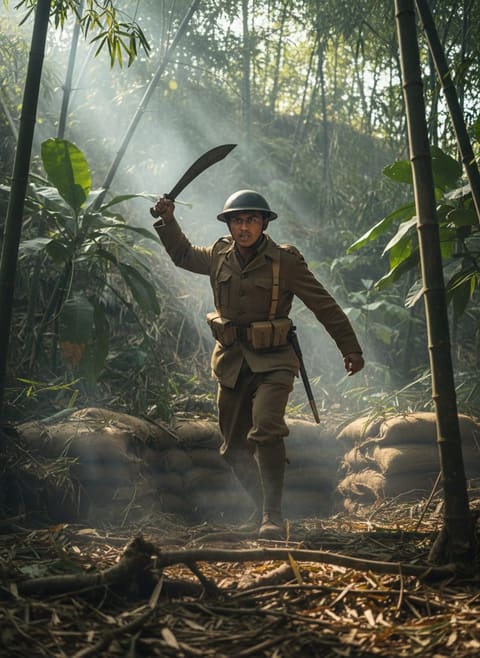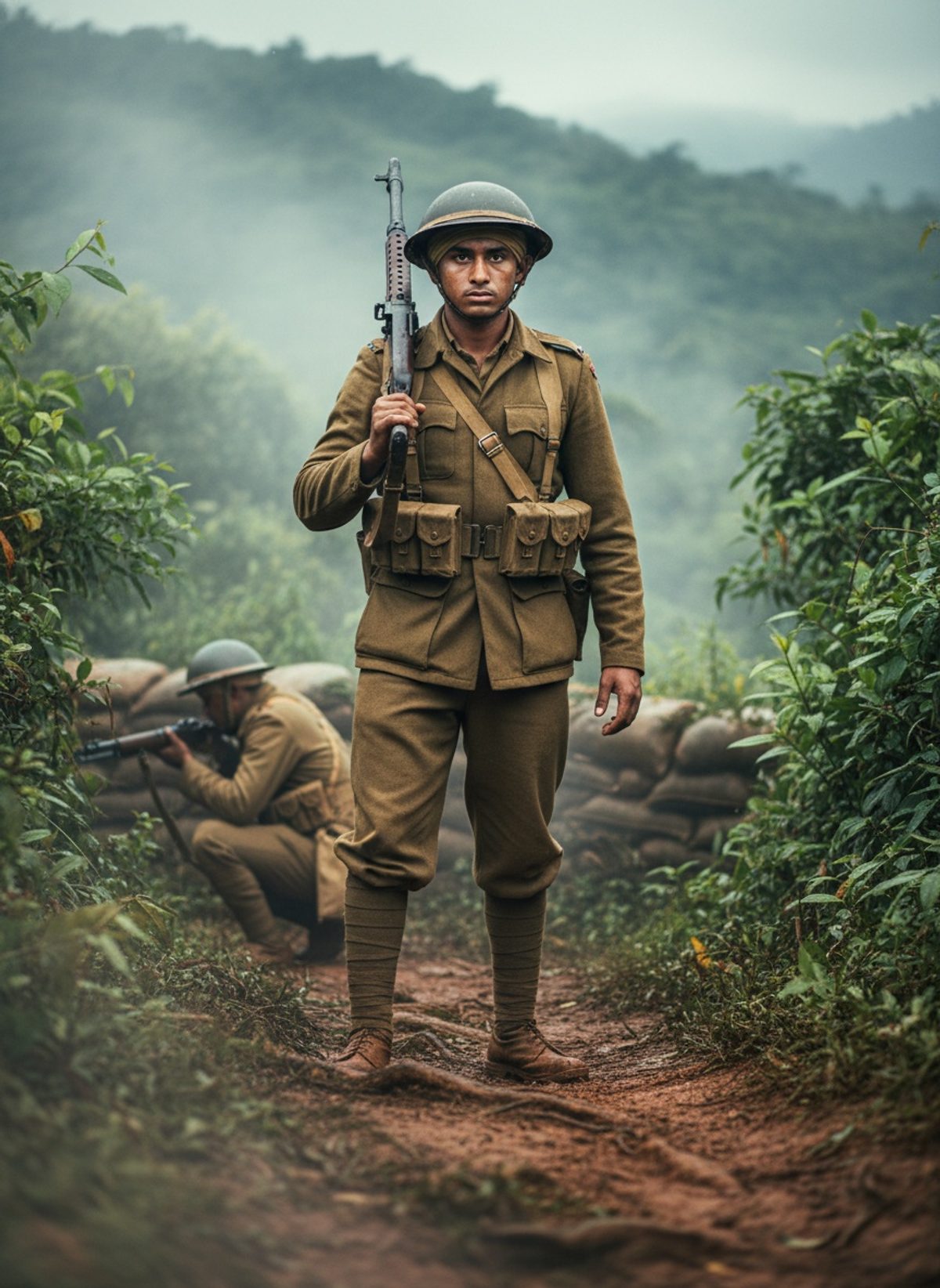
April 1944. Heavy mist hung low over the hills of Kohima.
The Brewing Storm
Nestled in the Naga Hills of northeastern India, the town of Kohima was about to become the epicenter of one of World War II's most intense and pivotal battles. Japanese forces, with their eyes set on capturing India, had advanced into British-held territory hoping to sever Allied supply lines and ignite a revolt for independence among Indians. The Battle of Kohima, along with the simultaneous Battle of Imphal, became a significant turning point in this titanic struggle.
Among the defenders stood the 1/1st Punjab Regiment, a storied unit of the British Indian Army, representing a swath of ethnicities and religions, united by the shared defense of their homeland under imperial command. For these men, the fight was personal. Their families and futures lay just beyond the next hill. Among them, Sepoy Mast Khan was about to cement his place in history.
Into the Crucible
The Japanese, experts in jungle warfare, brought with them a fierce determination, relying on stealth and surprise. On the foreboding night that became April in Kohima, the air crackled with tension. The rumble of distant artillery served as an ominous prologue to the chaos that would soon unfold. Positions were taken, and hearts steeled for the onslaught.
Read next: He Was 58, Dying, and He Still Led the Charge
As dawn clawed its way through the mist, Japanese forces surged forward, overwhelming the forward positions of the defenders. The audible clash of combat was terrifying: the staccato bursts of gunfire, shouts cutting through the din, the sickening thud of mortars finding their mark. It was here, on this unremarkable patch straddling the ridges, that Sepoy Mast Khan decided not merely to withstand the storm but to push against its tide.
The Walk of Defiance
No medals hung over his heart; no epaulets bore the marks of command. Khan was a sepoy, a rank acknowledged more for obedience than leadership. Yet, in those fraught moments when any heart might yield to desperation, he reached for the Bren gun — the support weapon of his section, its metal cold and resolute in his grip.
Without orders, he advanced. The tennis court craters underfoot, vestiges of pre-war leisure that the battle had marred beyond recognition, bore witness to his lonely walk. Fifty yards ahead, their silhouettes ghostly in the fog, the Japanese soldiers moved with lethal intent.
Khan's solitary form moved forward, methodical and unwavering. Each step he took was a gamble weighed in lead. Despite overwhelming odds, his objective was clear: to buy his comrades the time they needed to regroup and mount a comeback. Burst after burst, the Bren spat damnation into the mist, each report echoing back a message of defiance.
Read next: He Stepped Forward in Lucknow and Offered His Life
Legacy in the Mist
Though Mast Khan's actions did not turn the tide singlehanded, they embodied the stubbornness and tenacity that defined the defenders of Kohima. Their staunch resistance, coupled with reinforcements, gradually eroded the Japanese impetus. The monsoon rains would add their own misery to the desperate engagements, but eventually, the tide did turn against the Japanese forces.
In the months that followed, the battle saw many acts of heroism and sacrifice. Ultimately, the defense of Kohima and the subsequent liberation of the region marked a crucial shift. Not only did it halt Japan's northward advance, but it also served as a precursor to the strategic Allied advance into Burma.
Sepoy Mast Khan’s bold decision, taken in the heat of the moment on that April morning, highlights the often-underappreciated valor of the ordinary soldiers whose stories rarely make it beyond local tales or regimental lore. In the eyes of history, it reminds us how individual courage can cast ripples of extraordinary consequence. Today, as we look back on those gritty days of World War II, the mist over Kohima clears just enough to reveal the unsung warriors like Mast Khan, whose actions ensured that the legends of courage were not left out of our collective remembrance.