He was seven years old. He had never seen England in the sunshine.
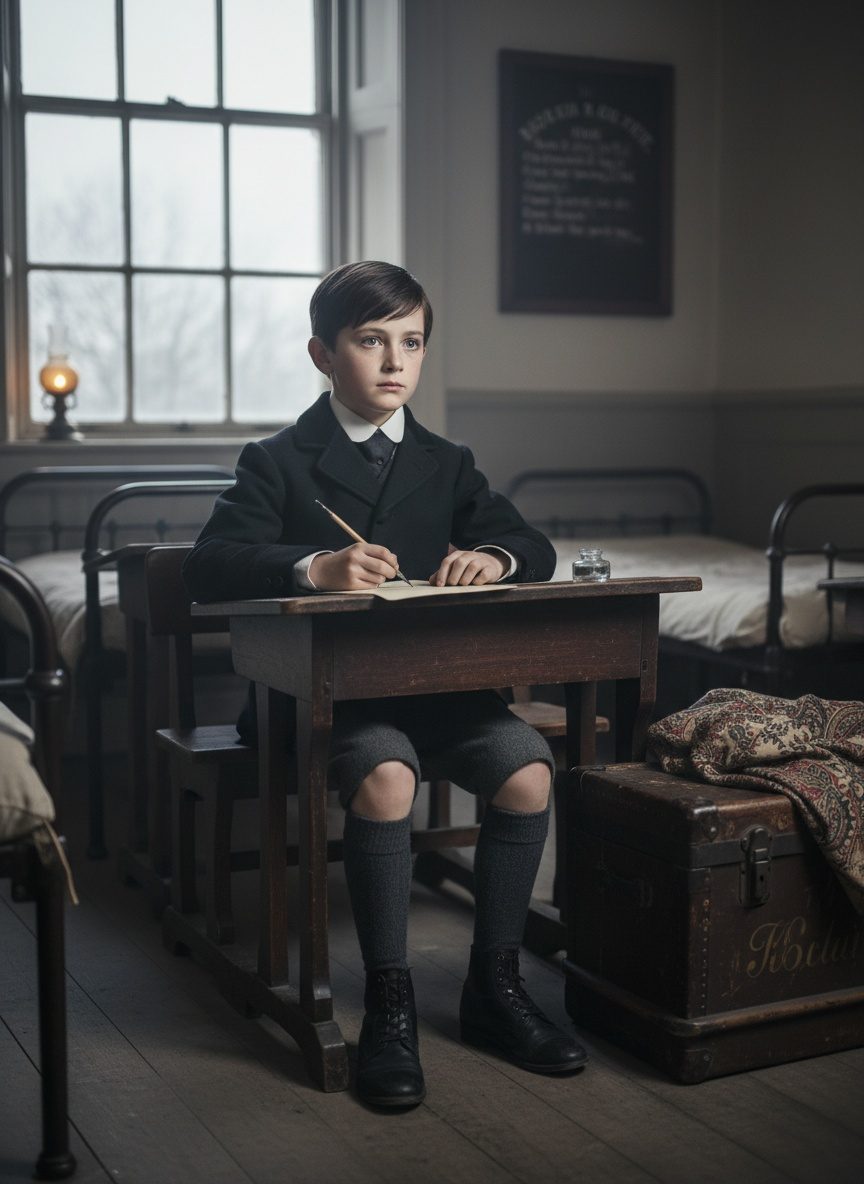
On a crisp autumn morning in 1885, a small boy sat in a draughty classroom at a boarding school in England, his feet barely scraping the wooden floors. The sprawling estate was a far cry from the vibrant, bustling streets of India, thousands of miles and a world away from the only home he had ever known. The boy's graphite pencil scratched across paper with tentative determination. His clumsy letters formed words that would go unread for weeks, a chasm of time and space that seemed impassable in the fragile heart of a child. "Dear Mama," he began, his chubby fingers oddly competent at this new mechanical routine. "I am well. Please come."
The empire's children were conveyed like precious cargo, ferried across oceans from climates of tropical warmth to the cold, distant shores of their parents' homeland. More than simply an education, they were to inherit a nation's identity, grafted onto them by stoic schoolmasters and the hallowed halls of British institutions. Yet, the irony lingered—while these children of British officers, civil servants, and businessmen were sent to 'become' British, their roots were nursed in the rich Indian soil, and their earliest memories entwined with the opulent landscape of the subcontinent.
Yet, for all its ambition, the process was harsh and ruthless. Boarding schools in Victorian England could be both grand and grim. The long, echoing corridors were lined with countless doors leading to Spartan dormitories, warmed by thin blankets rather than radiators. The aroma of boiled cabbage and porridge filled the air, reminding the young arrivals of what they'd lost—a mother's touch in form and flavor. These institutions, many of which were established during the height of the British Empire, served as crucibles where British identity was both taught and imposed.
Read next: When the Dhobi Wallahs Kept the Empire's Armies Clean
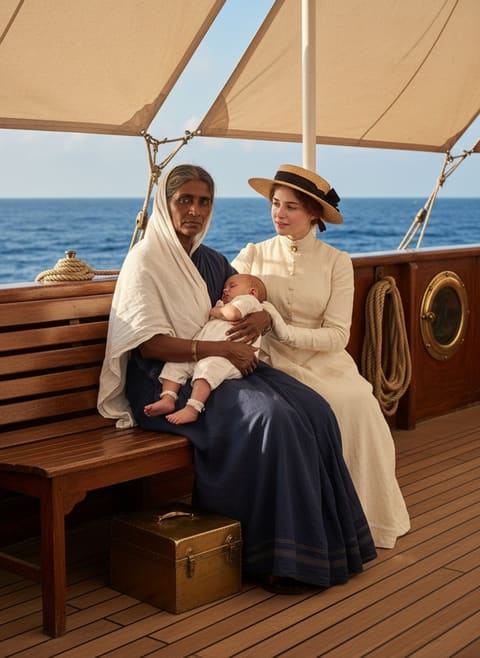
The journey alone was a trial of endurance, weeks spent aboard steamships, crossing vast expanses of ocean. The small travelers, often no older than seven or eight, were entrusted to the care of the ship's crew, facing the upheaval of a culture vastly different from both the India they left and the England they were to embrace. It was a sacrifice on the part of families, a trade made with the unspoken promise of future success and societal approval. Letters home, such as the plea of our young correspondent, were both a comfort and a necessity.
These letters, echoes of young voices in search of reassurance, were as much an exercise in adherence as they were expressions of longing. Under strict surveillance by schoolmasters, the content was often dictated, carefully avoiding any indication of distress or homesickness. "I am enjoying my studies" or "I have made many friends" were common refrains, thin veneers over the raw, tender reality of childhood isolation. Yet, occasionally, the true emotions seeped through, much like the ink blots that stained tender pages. "Please come" spoke volumes that could not be censored by duty or decorum.
Read next: When Syed Ross Masood Made Forster See India Whole, 1906
The delay of six weeks before such heartfelt missives reached their destinations was a painful quirk of the era's postal service; an intermission long enough for seasons to change, and for young minds to vacillate between hope and resignation. The geographical gap between England and India mirrored the emotional estrangement felt by children and their distant parents. By the time a comforting reply made its arduous journey back, the initial plea held a different urgency—or had dulled into acceptance of reality. After months, sometimes years apart, parental visits were rare yet cherished, punctuating the monotony of institutional life with warmth and familiarity.
Yet, such visitations often came at a cost. Families reunited for fleeting moments were sometimes rendered strangers to one another by years of separation. The excitement of placing a child into the embrace of a waiting mother or father was often tempered by mutual unfamiliarity. Children returned home with an acquired stiff upper lip, a perspective shaped by both privilege and displacement. They were British in education and speech yet foreign in sentiment and heart. This duality created a unique identity, neither wholly one thing nor another.
It is easy to underestimate the resilience required of these young children. But nestled in their letters and memories were the building blocks of future leaders and influencers, the bearers of an empire's legacy who would navigate the complexities of a rapidly changing world. They became the living symbols of a Victorian ideal, thus keeping an empire connected not just through commerce and governance but through flesh and blood.
Why does this story matter? In an age where linkages of identity, culture, and belonging are continuously renegotiated, reflecting on these historical remnants reminds us of the costs and contradictions of creating such connections. These children's experiences speak to the age-old human quest for belonging, the push and pull of cultural identity that many still grapple with today. Though the lines on the maps have shifted, the essence of their journey—the search for home within one's own heart—remains unchanged. The story of the empire's children and their letters echoes through corridors of history, asking us to consider what it means to belong and how we forge identity across boundaries vast and uncharted.