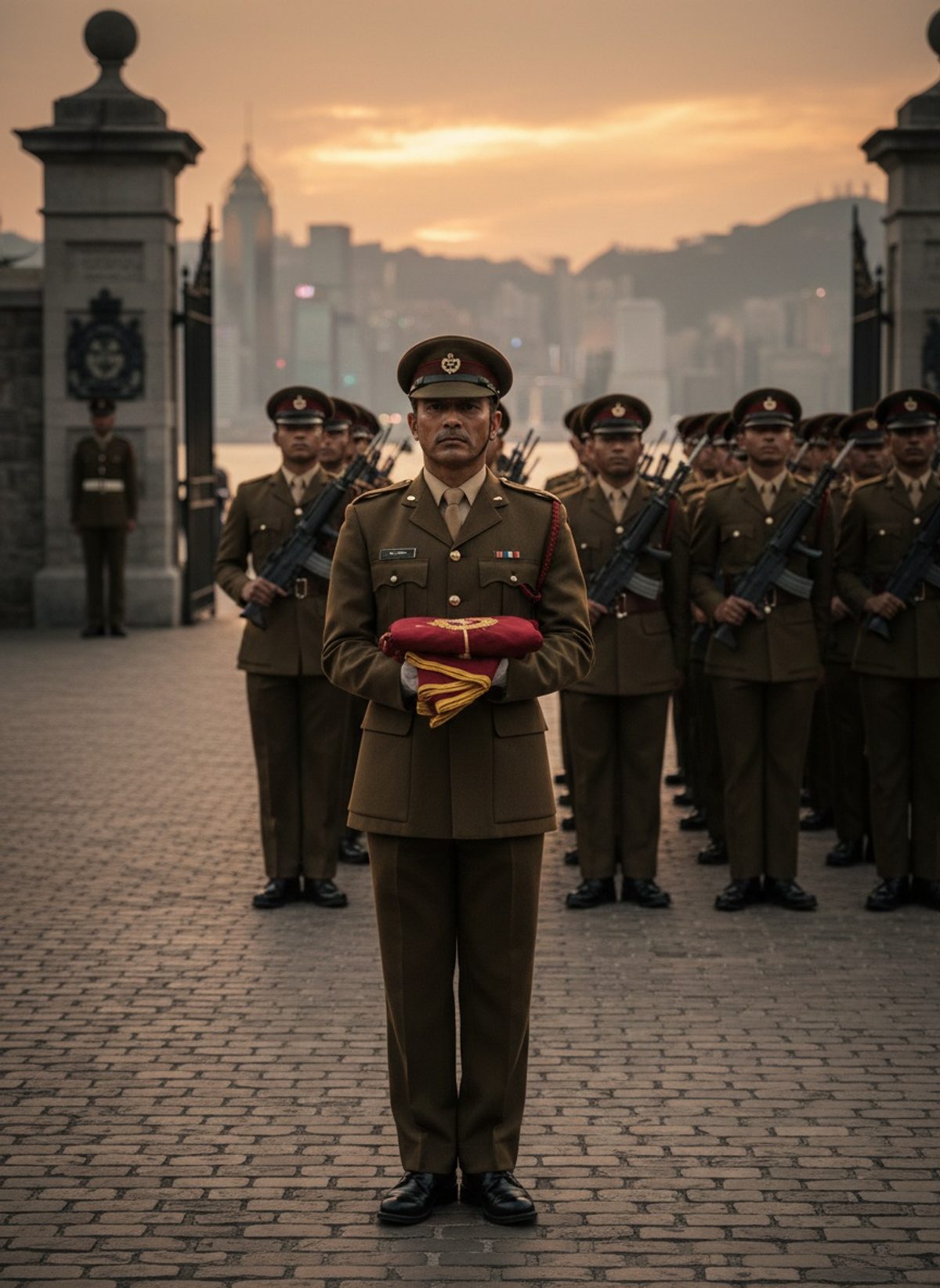
The air was thick with humidity, the June sky a soft curtain of gray draped over the city. The sound of the South China Sea lapping gently against the edge of Victoria Harbour mingled with the distant murmur of the city that never quite slept. On this day, the murmurs felt somehow different, carrying the weight of anticipation and poignant finality. On the parade ground at the British garrison, a line of Queen’s Gurkha Engineers stood, their figures sharply silhouetted against Kowloon’s skyline. The moment was more than an island preparing for the coming night; it was an empire saying goodbye.
Steadfast Service in Silence
Since their establishment in 1948, the Gurkhas have been a critical pillar of Britain’s military presence in Hong Kong. Landing on the island as part of a strategic decision post-World War II, they helped fortify the British Crown Colony amidst increasing geopolitical tensions in Asia. Yet, their presence often mirrored the silence of the fortressed hills above the vibrant city—quiet, effective, not often in the spotlight.
Hong Kong in the latter half of the 20th century was a fascination of contrasts. Skyscrapers soared upwards, while sampans bobbed rhythmically below. Beneath this exterior buzz, the Gurkhas watched, preserving a stability many took for granted. They honed skills that would make them invaluable – mastering the landscape’s unforgiving terrains, engineering demolitions, and constructing military installations that blended imperceptibly with civilian infrastructure.
Their training was rigorous, rooted in precision and discipline. As engineers, they laid roads and built bridges; as soldiers, they were trained to guard them. Few locals might have interacted with these regiments directly, yet their impact was inescapable. For decades, stories surfaced of Gurkhas’ unwavering loyalty—the mythical bravery reminiscent of their storied past in other lands. In Hong Kong, their legend was quieter but no less profound.
Read next: When the Last Governor Handed Cyprus Back, 1960
As night encroached on that significant June evening in 1997, the Gurkhas’ legacy was about to fade from the city’s streets but not from its heart. Each member in formation understood the gravity of their march, a duty fulfilled with dignity and restraint. It was a march into uncertain futures, illuminating the end of an era for the small, mountainous soldiers of Nepal on this giant, bustling island.
The Quiet Quitting of a Regiment
When the time came for the ceremonial disbandment, there was no grand pageantry. Instead, the Gurkha Engineers, holding colors folded with ceremonial care, represented a stoic dignity that needed no embellishment. The regimental colors, a shared identity woven through generations, were furled—silent testimonies to decades of sacrifice and service far from the untouched Himalayan horizons of their home.
Generations had passed since their introduction into Hong Kong. While the city had morphed into a global economic powerhouse, the Gurkhas whispered between the changing leaves of British colonial order. They represented a bond formed through not only duty but mutual respect—a relationship often expressed through quiet admiration by both local Hong Kongers and expatriates.
The ceremony was brief, each moment meticulously observed by those who understood its significance. The trooping out of the garrison carried the symbolism of countless farewells. There were whispers of longing, reflections of sacrifice, and the anticipation of an uncertain future—each a fragment of the lingering empire’s epilogue. Through it all, the famed Gurkha composure was steadfast. It was not just a moment but a mosaic of memory and history walking out in unison.
And so they marched, under the same sky that had once promised imperial predilections, yet now bore witness to the departure of the empire’s silent guardians. Their steps were neither loud nor pronounced. They left soundlessly, but the swells of legacy rippled. In their departure was an eloquent statement of bygone imperial pride, humbled yet honorable.
A Seamless Transition Under Watchful Eyes
Hong Kong’s transition that summer was watched globally. The city’s neon dreams were to trade hands, from colonial administration back to Chinese sovereignty—a transfer marked by ceremony, reflection, and cautious optimism. The Gurkhas—famed through history for fierce martial prowess in distant conflicts—had become custodians of a peace fragile yet enduring.
As the final hours of British rule approached, Hong Kong’s atmosphere was charged. The Gurkhas, ever the stoic sentinels, were not merely military figures; they were bridges in cultural exchange, unwitting ambassadors of resilience and valor. They bore witness to the metamorphosis of an island that thrived on change, an island they had silently shaped through the constructed infrastructures entwining the old and the new.
Their exit was definitively understated, yet the implications were significant—a palpable sense of curtain-closing on a theatrical grandstand that had endured decades of flux. The significance lay not in the popularity of their valor tales but in the quiet integrity with which those tales unfolded within the fabric of life in Hong Kong.
As Hong Kongers woke the following morning to a reality that was both familiar and new, the Gurkhas’ standing became an archive of loudly unsaid sentiments. When the last Gurkha left Hong Kong, he carried not just the soul song of a regiment but an era’s culmination. If legends truly reside between the testimonies written and untold, then the legacy of the Queen’s Gurkha Engineers in Hong Kong continues, whispering stories to those who choose to listen beneath the hum of the metropolis. Their exit was not a closing chapter but rather a solemn, understated hymn to history—a gateway into a new narrative for the city. In their silence lingered the echo of service and sacrifice, an enduring memory left etched on the crossroads of empire’s end.