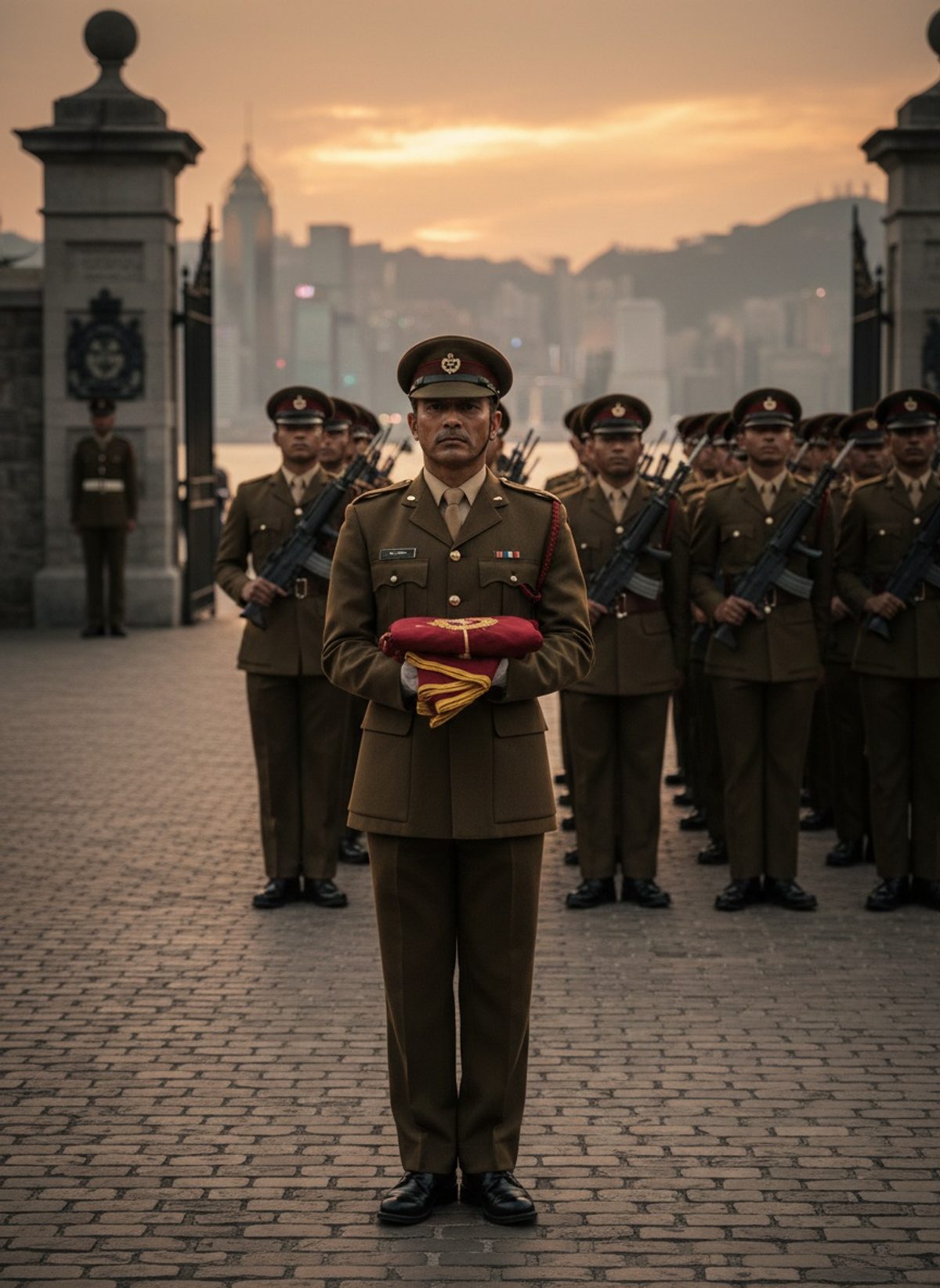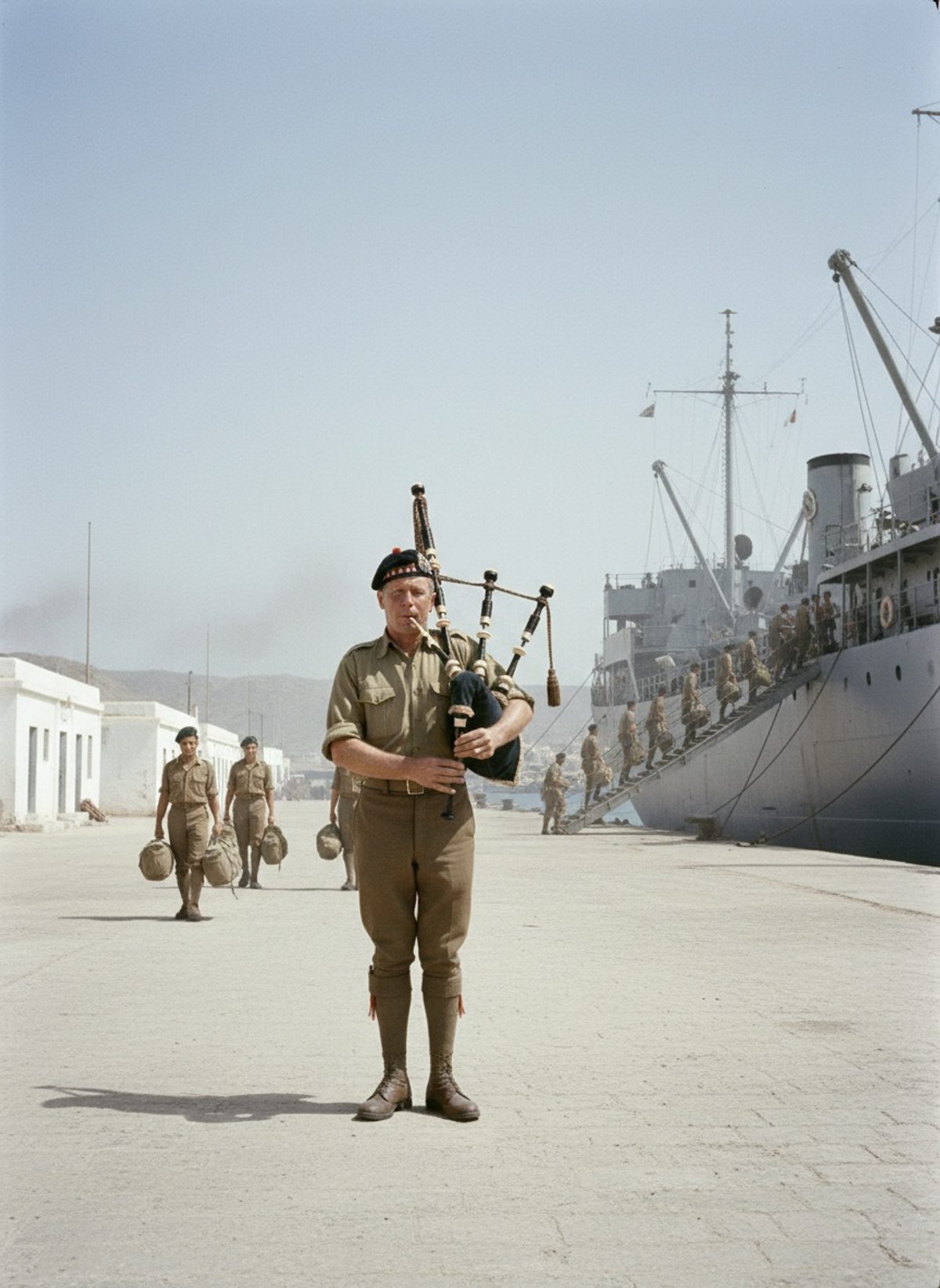
The end of an empire should be dramatic. But the empire’s departure from Aden was marked by a haunting melody played by a solitary bagpiper.
The Crumbling Colonial Pillar
In November 1967, the British colonial presence in Aden came to a close, an event that unfolded not with grandeur but under a tense, oppressive atmosphere. Aden, a critical port city located at the southern tip of the Arabian Peninsula, had been under British rule for 128 years. This strategic foothold was more than a trading post; it was a vital piece of Britain's global empire puzzle, offering a gateway to the East and control over trade routes. However, the twilight years of empire saw the fabric of colonial control unraveling across the world, and Aden was no exception. Nationalist fervor, insurgency, and geopolitical chess played out in the arid hills and bustling streets of one of the world's oldest civilizations, making an orderly retreat anything but simple.
The decision to withdraw was pragmatic, yet it bristled with irony. British forces were pulling out not out of victory nor outright defeat, but as a nod to a changing world where maintaining colonial territories was becoming increasingly untenable. Yet, with insurgents lurking and political chaos unspooling in the shadows, the withdrawal was fraught with danger. Curfew and barricades underscored each tense moment as the last few British soldiers prepared to depart.
Echoes of Highland Valor
Amidst the logistical hustle and the omnipresent tension, an unexpected moment of poignancy emerged. As the final troops embarked, one man stepped forward from the ranks. Pipe Major of the Argyll and Sutherland Highlanders, a regiment renowned for its fierce reputation and distinct Scottish tradition, chose to mark the moment in a way that was wholly personal and profoundly traditional. Not for him the formal ceremonies, the speeches, the leftovers of diplomatic protocol. Instead, his instrument was a bagpipe, and his tribute a stirring lament that would hang heavy over the harbor.
Read next: When the Warrenpoint Ambush Killed Eighteen in Two Blasts
The pipe major was driven by nothing more than an innate sense of duty to mark the end of an era with the ancient sounds of his homeland. In a land of desert heat and hostility, the Highland bagpipe spoke of Scotland—lush, green, and distant. The music, at once mournful and defiant, bridged lands and cultures, bleeding into the scorching air of Aden’s sandy docks. It was neither ordered nor planned; it simply happened because for the Scots, as with the best of warriors, tradition sang as powerfully as any command.
The Lasting Note in the Indifferent Silence
The piper's notes were not met with cheers or fanfare but with silence. The crowds that lined the street were caught in suspended animation. Hostility waned, if only for a few ephemeral moments, as the sound of the pipes swirling echoed across the water, spilling over into the gathered crowds. It spoke not to triumph but to the complex layers of occupation, resistance, and finally, departure. For many locals, the song perhaps stood as a punctuation to the long chapter of colonial rule—one characterized by both progress and suppression.
Yet, Aden was not merely receiving its independence on that fateful day; it was entering a new era. Britain’s departure left an intricate legacy that would influence subsequent regional politics. The simplicity of the lone piper contrasted starkly with the broader geopolitical shifts of the time, each note a requiem not just for Aden, but for a fading empire's reach.
The Empire’s Refrain and Our Shared Memory
Why does this moment matter? It lingers in our shared historical memory because it speaks volumes about the end of colonialism—not through high-ranking officials or policy declarations but through a simple, human act that was as genuine as it was unplanned. The pipes that day told of transition—from empire to independence, from rule to self-determination. They reminded all who heard them that history is not always shaped in conference rooms or battlefields. Sometimes, it is crafted in the heartfelt, spontaneous actions of individuals. It was in this simple melody that echoes of the past, and whispers of the future, met and mingled.
When the last pipe major played Aden into silence in 1967, it was the unofficial coda to the British Empire’s shrinking ambit. Such small, human stories are often left out of textbooks, yet they possess the power to illuminate the broader narratives of our time. In the end, maybe we're all just part of each other's stories—bound by experiences that, while seemingly minor, hold the weight of empires within their fleeting moments.