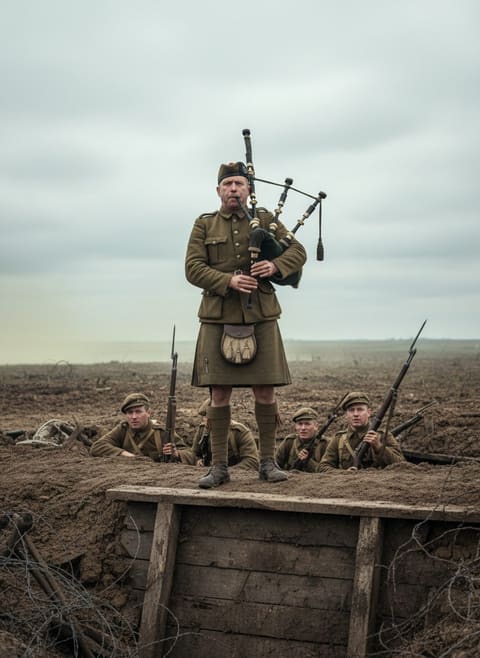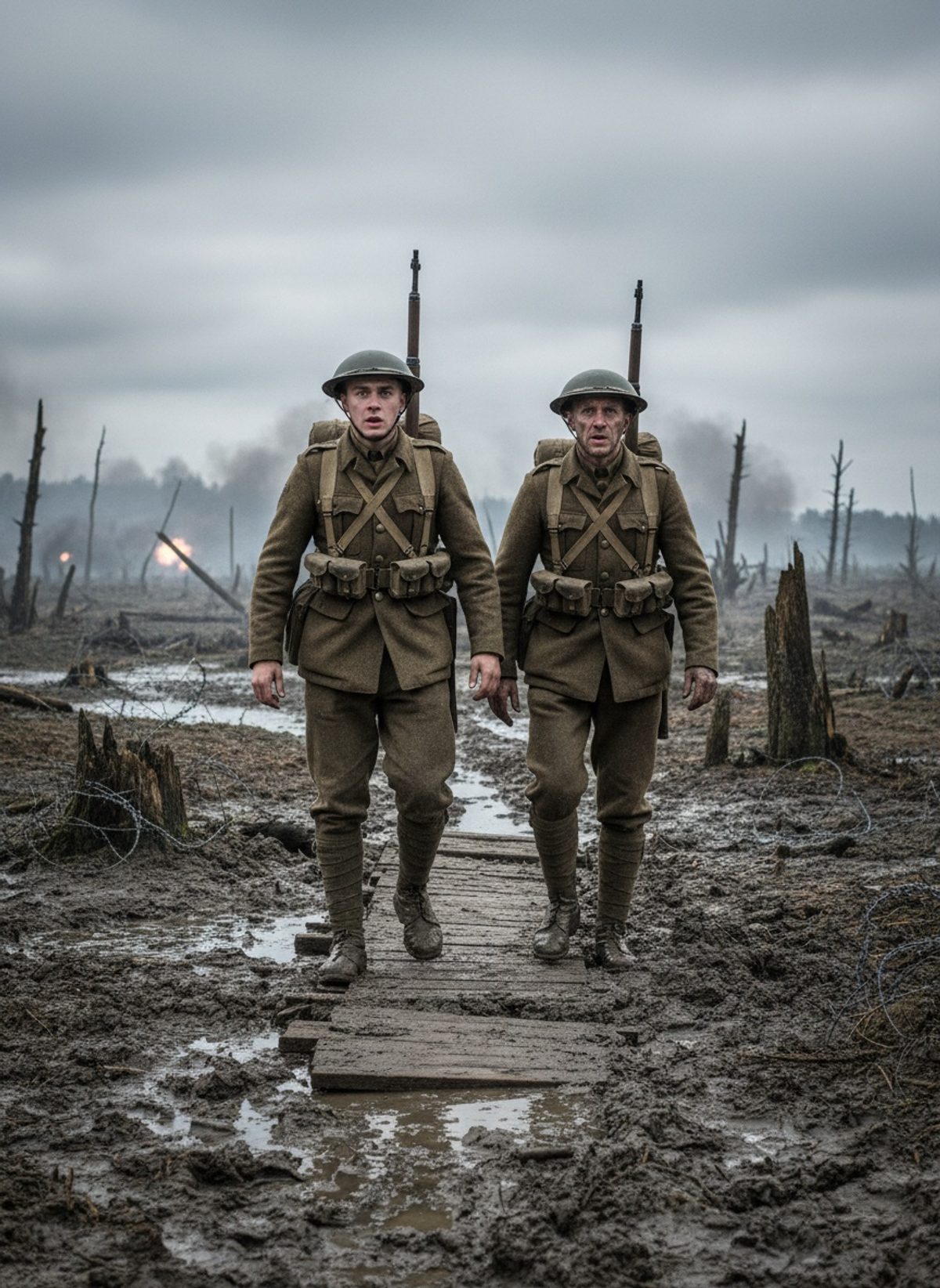
The first light of 31 July 1917 revealed an endless expanse of no man's land, a landscape defaced by weeks of relentless artillery fire. Beneath the oppressive grey sky, the once-fertile fields of Flanders lay shattered. The air, heavy with the acrid tang of cordite mixed with the earthy scent of churned mud, set the stage for what should have been a triumphant advance. But as British and Empire forces set their sights on breaking the German line, nature conspired against them. The guns had roared, only to be silenced by a force they had not anticipated: the rain, turning dreams of victory into a quagmire of despair.
The March into Mire
The offensive, intended to push through the German defenses near the village of Passchendaele, was baptized under the sign of optimism. The Allies, buoyed by the firepower of their artillery, aimed to seize control of the ridges and drain the German momentum. Yet, the battlefield had other plans. As the rain began to fall on that fateful day, it seemed innocuous at first, a light drizzle that gradually transformed into a relentless downpour. The fields, already pockmarked by shells, became waterlogged, their fragile drainage systems overwhelmed.
What had been firm ground turned to sludge, erasing trenches and swallowing craters. Soldiers found themselves not marching forward, but becoming mired in the mud. Boots were sucked from feet, and legs became leaden weights as the slough clung to them with a tenacity that was almost sentient. The mud did not discriminate, claiming men and beasts alike. Many would aptly refer to it as the greatest enemy they faced, more insidious than the soldiers entrenched opposite them.
The Unseen Foe
Your typical soldier in the Third Battle of Ypres met the quagmire head-on, under the most harrowing conditions. Rain, artillery, and chaos mingled into a cacophony of dread as one anguished cry blurred into the next. With craters now resembling pools that one dared not approach too closely, the line between ground and water blurred fatally.
Read next: He Was 58, Dying, and He Still Led the Charge
Men drowned in these mire-filled pits, unable to extricate themselves even with the cries of comrades urging them to hold on. The lucky ones found makeshift rafts of debris to navigate this sea of mud, desperate measures in desperate times. The rest were not so fortunate. Tales speak of soldiers succumbing silently, the mud sealing itself around them like a treacherous grave, robbing them of breath and hope in equal measure. It was a death sentence disguised as earth.
The Offensive Encumbered
What was to be a swift campaign of liberation devolved into a test of endurance against elements and exhaustion. British and Empire forces discovered, to their despair, that artillery craters—once potential cover—had become traps, filled with stagnant water and the scattered remnants of prior battles. The notion of forward movement was now etched with scenes of men sinking to their deaths, their cries haunting the stagnant air.
Read next: He Stepped Forward in Lucknow and Offered His Life
For three months, soldiers persisted in a marginalized form of warfare—a theater reduced to a battle of attrition against mud as much as enemy. Strategies crumbled beneath them, morale eroded by weather as much as war. This heralded a sinister new truth; the land itself, mutilated beyond recognition, had become synonymous with suffering. The name Passchendaele would forever echo with their struggle.
Why This Story Endures
Passchendaele has been etched into the collective consciousness not just as a bloody chapter of military history, but as a somber reminder of unforeseen adversities war can bring. The tale of mud swallowing men whole underscores both the futility and valor that characterizes conflicts when human ambition collides with natural elements. The landscape, so painstakingly detailed as a purgatory of mud, iron, and rain, serves to illuminate the human condition within war’s theater—a place where soldier's strength contends with forces beyond their control.
In exploring this chapter that textbooks have largely glossed over, we connect with the men who trod these desolate fields, trading earth for aspiration. It’s a story of resonance with those who struggle against insurmountable odds, reminding us that the cost of ambition can drown in seas of mire. Even now, the echoes of their ordeal linger, whispering through the annals of history to caution and inspire in equal measure.