He was a man of the sea. Yet, when the moment came, Thomas Gates chose the land.
The Brink of Abandonment
By May 1610, Jamestown was a shadow of its original promise. The colony had been envisioned as a shining example of English ambition in the New World, yet it had become a grim reminder of the harsh realities faced by early settlers. Five hundred had embarked on this transatlantic venture, seeking prosperity or perhaps mere survival, but only sixty remained—emaciated, sick, and clinging to life in what was now a skeletal settlement.
These survivors had endured what history would remember as "the Starving Time." Cut off from resupply by harsh winters and conflict with the native Powhatan Confederacy, their dreams had withered with the crops. Stories later emerged of the horrors committed in desperate attempts to survive—acts that haunt the tales of Jamestown to this day. For many in the colony, hope was as depleted as their ration of grains.
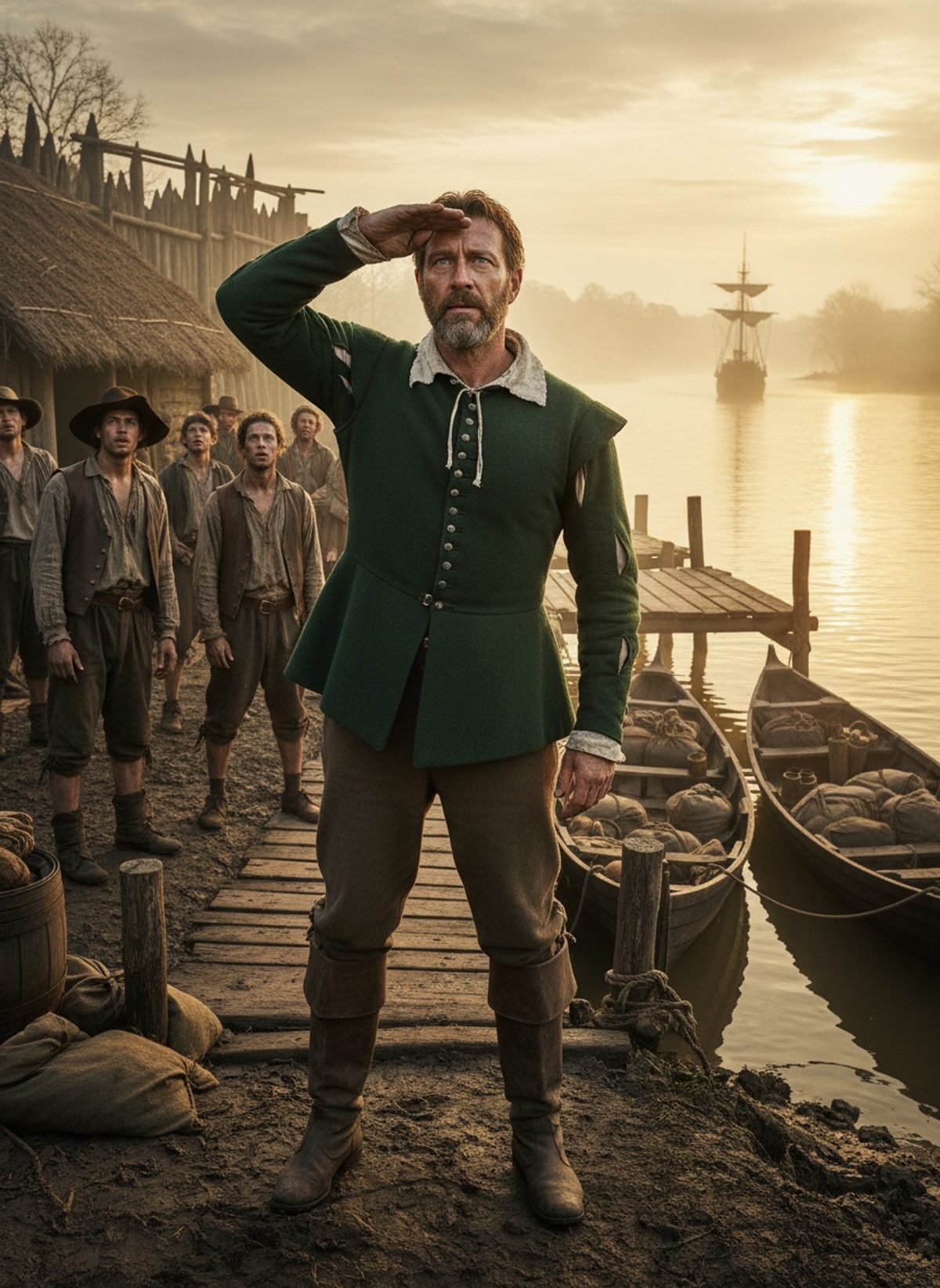
It was in this state of desolation that the newly appointed Governor Thomas Gates made his crucial decision. Arriving with the intention of salvaging the venture, Gates instead found a dire scene. The choice seemed simple: gather what was left, board the ships, and return to England. Gates ordered the ships loaded; their masts stood ready to carry them away from Virginia forever. It was not just the end of a dream but a retreat that would echo through the corridors of English exploration.
Read next: When Caroline Chisholm Fed the Starving at Sydney Cove, 1841
Incoming Tide: A Sail on the Horizon
As the settlers prepared to abandon Jamestown, fate intervened. Out of the morning mist, a sail appeared on the James River, a sight that stirred the despondent hearts of the colony’s remnants. A single ship arriving as though sent by providence, a symbol of intervention so dramatic that it felt pulled from the pages of legend.
This ship was under the command of another governor, Lord De La Warr, who carried with him not only fresh supplies but also an iron determination to see the colony survive. His fleet, though smaller than many might expect, represented new lifeblood for the settlement. Here was a chance not just to survive but to rebuild and grow.
The arrival of De La Warr’s fleet did more than restock the larders; it rekindled the spirit of those who had sunk into despair. With vigor and authority, he took command, relieving Gates of his troublesome decision. The colony, on the brink of being scattered to the winds, found a purpose anew—a redemption forged by the narrowest of chances.
The Man Who Chose the Land
For Thomas Gates, a veteran of the seas accustomed to the certainties of navigation and wind, stepping back was a testament to his understanding of leadership. Such a decision was not made lightly; it spoke of a man who put the mission above personal pride. Gates could have claimed glory by returning home with survivors, a weary hero’s tale of resilience. Instead, with the backing of a second chance, he supported De La Warr’s revitalization efforts.
Gates’s role in Jamestown’s story is often overshadowed by others, yet his actions at this critical juncture are a lesson in humility and shared purpose. He represented a generation of leaders for whom colony and crown came before self. Gates resumed the arduous task of rebuilding alongside his peers, and in doing so, ensured the survival of one of history’s most precarious experiments in colonization.
Jamestown, with its fate teetering on the edge of oblivion, survived due not only to chance but to the harrowing decisions made by men who understood the weight of history on their shoulders. Gates, who once seemed ready to turn the ships homeward, became part of an unfolding chapter of endurance and renewal.
The Fragile Web of History
History often pivots on moments so fragile that they seem to hang by a whispered breath. The threshold at which Jamestown stood was one such moment. The colony’s survival was not guaranteed by might or money but sheer fortune and the fickle favor of the tides.
The story of Thomas Gates and Jamestown, while perhaps not as popular as others from this era, offers a striking lesson. It reminds us of the unpredictability of endeavors and the resiliency required to face them. Gates’s choice echoes a broader narrative of colonization and empire—one not forged solely through conquest but through choices made at crucial junctures, where the interplay of human agency and unforeseen circumstance creates the tapestry of our past.
In the woods and waters of Virginia, an act of perseverance was immortalized. Jamestown’s continued existence would lay the groundwork for what would become a mighty expansion of English settlements, and ultimately, the emergence of a new nation. It remains a story of near failure turned foundational success, embodied in the moment a determined man saw a ship and chose to stay.