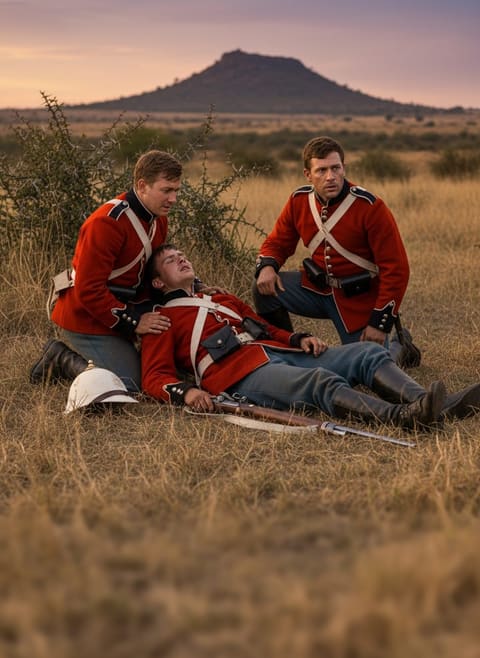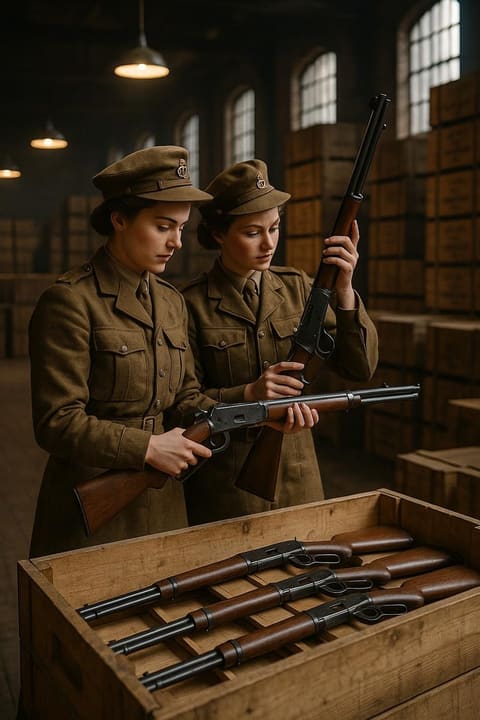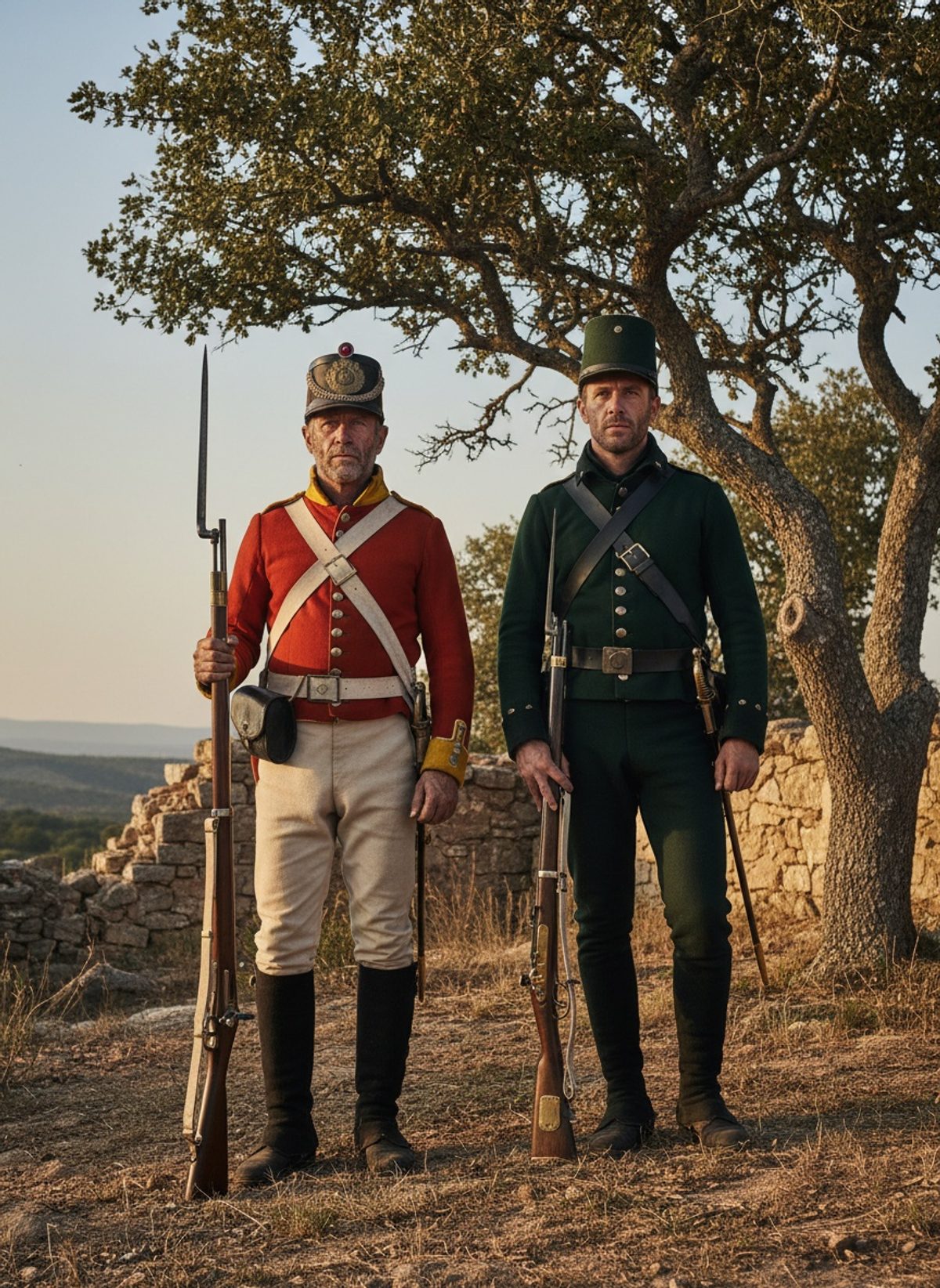
The Brown Bess was the undisputed queen of battlefields. But for some, the Baker Rifle was the crown jewel of choice.
The Dueling Visions of War
Imagine facing an advancing enemy on the vast, open fields of Europe. One weapon, the Brown Bess musket, was the backbone of the British infantry. Known for its robust design, it could unleash a formidable four volleys a minute, making it the epitome of quantity over precision. At close range, its rapid succession of shots could overwhelm French formations, turning the tide of battles by sheer volume of lead.
Yet, at the edge of this same battlefield stood the enigmatic figure armed with a Baker Rifle. This weapon, slower to fire, could kill at 300 yards with deadly accuracy. For the soldier who preferred this rifle, every shot had the potential to pierce a French officer’s hat—or his heart—at impossibly long distances. The Baker Rifle promised a new form of warfare, one where skill supplanted the brutish chaos of the musket. Soldiers had to choose their place in this clash of doctrines: reliable musket or precise rifle.
The Relentless Brown Bess
The Brown Bess was more than a weapon of war—it was a symbol of British military might during the Napoleonic era. Its name conjured images of smoke-filled fields and the thunderous roar of synchronized volleys. Weighing around 10 pounds, it was a musket made for durability and simplicity. Lined in ranks, British soldiers could blanket a field with lead in a devastatingly coordinated manner.
Read next: When the Far East Prisoners Heard the Guns Go Silent, 1945
Yet the Brown Bess had its drawbacks. Its smoothbore design was notorious for inaccuracy over great distances. Shots might fly astray, whizzing harmlessly past the enemy. The soldiers wielding it relied on discipline and the weight of numbers to cover its inherent faults. For those who sought the certainty of the Baker Rifle, the musket's random misfires and ineffective long-range performance were weaknesses too glaring to ignore.
The Precision of the Baker Rifle
Contrasting with the utilitarian musket was the Baker Rifle, an elegant work of craftsmanship. Constructed with a rifled barrel, it offered accuracy previously unimagined. The spiraled grooves inside the barrel imparted a spin to the bullet, allowing it to maintain a steady path even across the expanses of French battlefields.
This precision attracted expert marksmen, soldiers whose reasoning was more calculated, and who could afford the slower reload time for a shot that counted. The Baker Rifle was the darling of skirmishers and riflemen, those who operated on the edges of formations and preferred the shadowy reaches of the woods. But this preference came at a price—time-consuming loading and cleaning procedures that required a cool head amidst the chaos. In the swirl of close combat, fractions of a second could define life or death.
The Battle for Supremacy
As legions clashed across Europe, the question remained: which weapon truly influenced the outcome? The answer is as complex as the era itself. When considering the relentless blocks of British soldiers standing firm behind their Brown Besses, victory seemed locked in columns and file. There was a formidable psychological impact of watching unwavering ranks repeatedly fire with machine-like rhythm.
Read next: When Eleven Victor Tankers Carried One Vulcan to Stanley, 1982
Yet, the Baker Rifle found its moments of glory too. The Peninsular War provided crucial opportunities for riflemen to demonstrate their potential. Scenarios where sharpshooters picked off officers and scouts gained the respect of their musket-armed counterparts. In some campaigns, skirmishers armed with Baker Rifles operated as the eyes of the army, gathering intelligence with deadly efficiency.
A Legacy Carved in Lead
In the grand tapestry of Napoleonic warfare, the choice between the Brown Bess and the Baker Rifle did more than define tactics—it illuminated a path for future military strategies. The dichotomy between overwhelming fire and precise targeting foreshadowed debates that would shape warfare for centuries. Each choice reflected a philosophy, one not necessarily better than the other but increasingly dictated by the demands of individual battles.
As we step back from the smoke and clamor of those fields, the lessons remain potent reminders of adaptation in the face of technological and tactical evolution. For every soldier who hefted a Brown Bess, there was understanding in simplicity and brute force. For each marksman with a Baker Rifle, the value lay in every measured, deliberate shot. The British Empire, through its bloody choices between these weapons, taught armies that the nature of conflict is as much about the tools of war as the warriors wielding them.