He was a flight lieutenant, flying the reserve aircraft. He had never flown so far into the unknown.
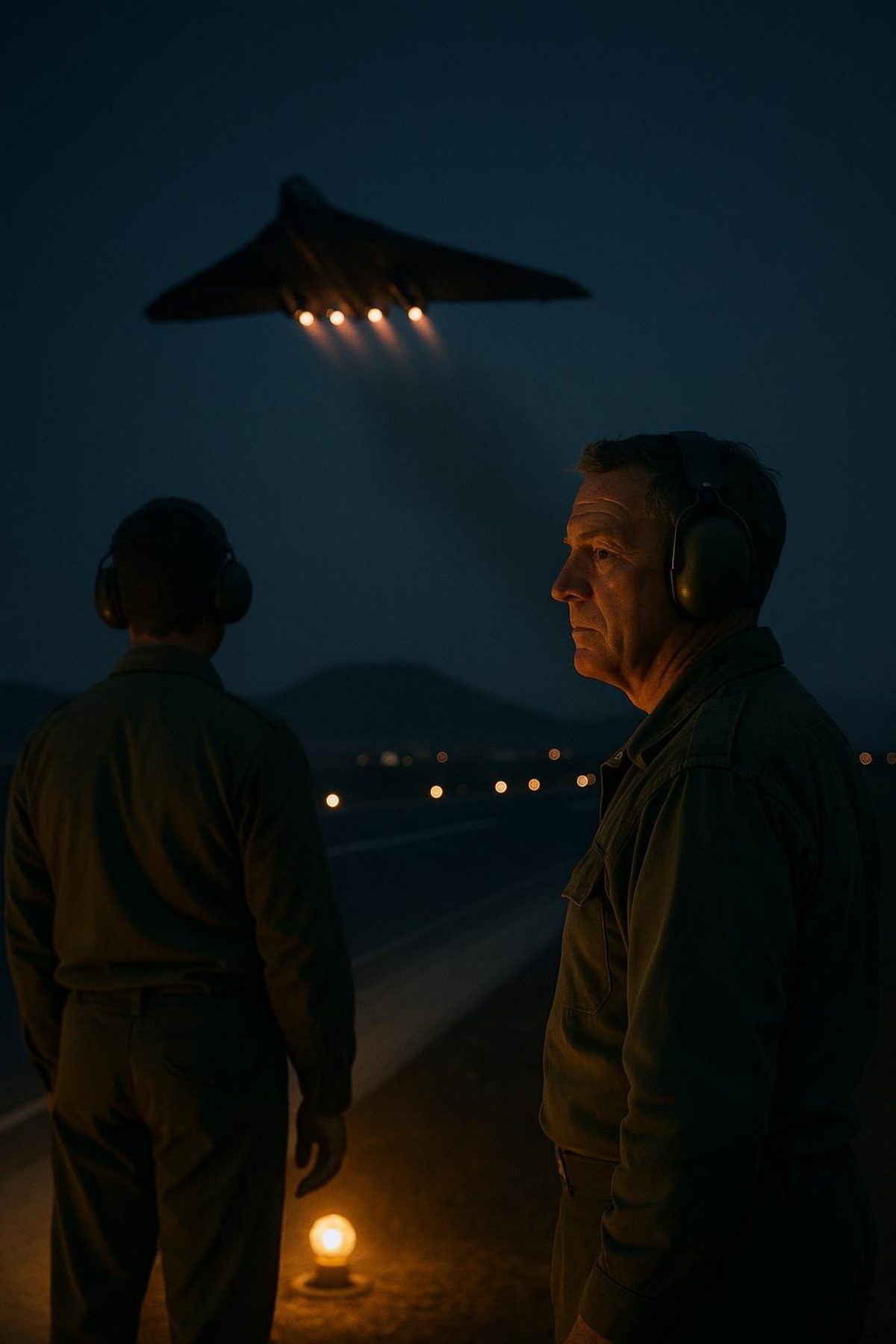
The night of April 30, 1982 was shrouded in uncertainty, as the tranquility of Ascension Island broke with the thunderous roars of aircraft engines. Lined one after the other on the island’s single runway were two Avro Vulcan bombers, flanked by the imposing presence of eleven Handley Page Victor tanker aircraft. This was the genesis of one of the most daring air missions in the annals of military history — Operation Black Buck. The objective was audacious: to launch a bombing raid on the Argentine-occupied Stanley Airfield in the Falkland Islands, an impossible distance away, and strike the first British blow of the Falklands War.
The dual Vulcans and their aerial entourage began their dance with destiny, taking off into the vast expanse of the Equatorial sky, each separated by mere minutes. They embarked on what would become the longest bombing raid of its era, almost 6,600 nautical miles across the unrelenting Atlantic. Yet, this expedition teetered on the knife-edge of failure almost immediately as the lead Vulcan, under the command of Squadron Leader John Reeve, was forced to abort due to critical failures. Into this breach stepped Flight Lieutenant Martin Withers and his crew in the secondary Vulcan, their mission now more vital than ever.
As the formation surged southwards over the ocean's azure canopy, an intricate ballet of aerial refuelling commenced — an electric hum of vulnerability. The Vulcan, a relic of the Cold War designed for Europe’s shorter missions, lacked the range to reach the Falklands independently. Ingeniously, the Victor tankers had to refuel in mid-air, feeding each other before topping up the Vulcan, like an aerial symphony that demanded precision but was drenched in chaos. Ballooning logistics quickly shredded the meticulous plan, and by the final refuelling, just three aircraft remained: Withers's Vulcan and two tenacious Victors.
Read next: When the Royal Marines Yomped 56 Miles Across East Falkland, 1982
The unique bond formed between aircrew and machine was palpable as Squadron Leader Bob Tuxford executed the mission’s pivotal last transfer of fuel. Even then, Martin Withers received 7,000 pounds less than expected, thrust into an alarming race against the confines of time and resources, alone. As the endless waves of the South Atlantic slipped beneath his wings, Withers urged his lone bomber into the stormy abyss of the Falkland seas.
The mission’s climactic crescendo staged itself over the dark skyline of Stanley. Withers made his bombing run at 10,000 feet, releasing twenty-one 1,000-pound bombs in a calculated diagonal drop across Stanley airfield. The Vulcan recoiled skyward in a fierce embrace against gravity, its engines howling into the echo of an explosive gale blossoming behind as each bomb struck earth. It was an audacious peacocking of aviation prowess, the runway below cratered by a single bomb.
Passage back over the task force at sea unfurled a single code word into radio silence: "superfuse." The air crackled with voltage as pride surged through the men, knowing the attack had achieved its purpose. Yet, triumph was tempered with urgency as Tuxford, having sacrificed his own fuel reserves to get Withers to the target, now faced the bleak expanse between his Victor and salvation. Only when "superfuse" resonated through radios did he break silence to call Ascension for vital assistance. The air danced between elation and foreboding until an additional Victor met and rescued him from peril’s grasp.
Strangely, the influence of the solitary crater wrought by Withers's payload lingered as a phantom on Stanley’s airfield. Within a day, Argentine ground crews had patched it sufficiently for C-130 Hercules transports, yet the runway’s vulnerability was bared starkly. Fast jets would not risk its flawed surface, rendering the raids’ message indelible: British resolve had crossed hemisphere’s width to assert a message of defiance.
The orchestration of Operation Black Buck revealed a tapestry of exceptionalism woven through a backdrop of wartime constraint. Intelligence insights gleaned in March 1982 warned of brewing South Atlantic tensions, but the RAF faced the near-impossible challenge of resurrecting a long-dormant capacity for ultra-long-range operations aboard the Vulcan. It was not merely strategic initiative but also a visceral response to reclaim British territory that had been audaciously occupied on April 2 by Argentine forces. The decision rings reminiscent through the halls of history because of its audacity — to gamble the limited feasibility of aerial refuelling across vast distances without pre-positioned tankers was ambitious and potentially explosive.
Upon the chill of April’s end, as fourteen Victors raced to Ascension with Vulcans following in their wake, life teetered between method and madness. Crews prepared under relentless pressure, navigating unseen skies pressed south against the global curve. Flight systems refurbished, navigational equipment was hastily upgraded, cumulating in long surveillance sorties that attested to their capacity for extraordinary reach crucial to Black Buck’s grim procession.
Read next: When the 11th Hussars Waited in the Desert Heat, 1940
As Flight Lieutenant Withers and his co-pilot reflected upon their journey in the flight’s dim cocoon, life coursed through memory, and spirit relived each pendulum of the mission. Decorated thereafter with a Distinguished Flying Cross, Withers immortalized the humanity within that mechanical beast. And Squadron Leader Tuxford, with a well-earned Air Force Cross, saw his tenacity recognized, the unseen strands woven tightly across air and resolve culminating in their return.
Operation Black Buck endures as a testament to the lengths a nation will journey to uphold its sovereign claims, a creative canvas painted with grit and the fortitude of collective willpower. In a world where distance and risk are weighed against outcomes frequently, such stories echo, remembrances standing firm amid the ceaseless passage of time. Through the distant thunder of engines and the silent departure of those lost to history, this saga reminds us that extraordinary acts endure quietly as emblems of fortitude and resilience.
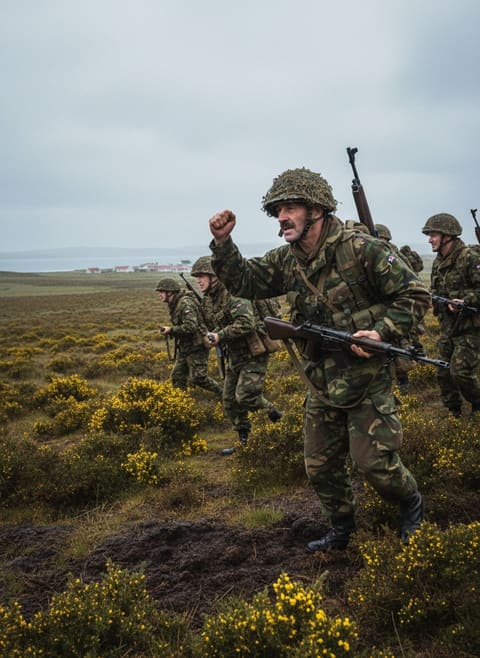
Last week, British paratroopers were back on the islands, rehearsing a landing.
Part 4 of 24: One Falklands story a day until Remembrance Sunday