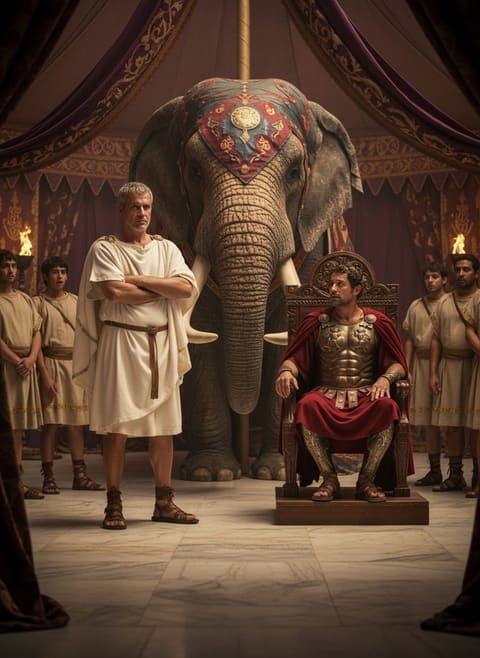
The morning light of March 15, 44 BC, filtered through the windows of the grand villa in Rome, casting elongated shadows across the columns and marble floors. The city's usual bustling noise seemed distant on this portentous day. A chill hung in the air despite the warming sun, and a weighty silence filled the room where Calpurnia lay restless, haunted by a disturbing vision from the night before. Her dreams had been vivid, filled with ominous symbols and foreboding bloodshed—the kind that even the most devoted of rationalists would leave shaken.
Calpurnia was no ordinary Roman matron. She was the wife of Julius Caesar, the most powerful man in Rome—a man who had reshaped the Republic and stood on the brink of being declared king in all but name. Born around 76 BC to Lucius Calpurnius Piso Caesoninus, a man who once held the esteemed rank of consul, Calpurnia was familiar with political machinations. Yet, she preferred the shadows, the quiet support behind Caesar's tumultuous life of public affairs and private indiscretions.
On that fateful morning, Calpurnia acted against her usual reserved nature. The dread from her nightmare was more than she could dismiss as mere imagination or the result of last night's dining excess. She approached Caesar, her voice etched with urgency and genuine fear. She implored him to stay home, to avoid the Senate and to ward off imminent danger she could not quite name but felt deep within her bones. She even attempted to placate the gods with offerings, hoping for a change in the fixed stars that appeared to loom darkly over her husband’s fate.
Caesar, ever pragmatic and guided by an indomitable will, had initially been swayed by the strength of Calpurnia's conviction. Her unease was palpable, and for a moment, he allowed his thoughts to entertain the notion of a quiet day spent in the safety of his abode. Yet, the hand of fate is often accompanied by those who unwittingly aid its course. Decimus Brutus, a trusted ally, was among those who arrived that morning to escort Caesar to the Senate. With soothing words, Decimus appealed to Caesar's pride and sense of duty. Was a Roman leader to be guided by dreams and fears traditionally dismissed as feminine whims?
Read next: Paulinus Had One Legion. He Chose to Fight Anyway.
The debate within Caesar was brief but decisive. Rome awaited him; his influence was based on strength and presence, not hesitation or superstition. He instructed attendants to prepare his litter, and with a final consoling touch to Calpurnia’s shoulder, assured her there was nothing to fear. Thus, he departed the house, leaving behind the chilling premonitions of his wife.
The day, that would forever clinch a notorious date in history as the Ides of March, unfolded with an eerie sense of inevitability. The Senate session was to be held at the Theatre of Pompey rather than the usual Curia, a location surrounded by Caesar’s political achievements but also vestiges of past animosities. Men had gathered, each carrying not only their scrolls of state but also concealed daggers of conspiracy. Among these men was Marcus Junius Brutus, whose loyalties were divided between the avuncular affection he held for Caesar and the whispers of duty to the Republic that rang in his ears from colleagues and kin.
As Caesar entered the chamber, the conspirators closed in on him with calculated precision. The scene crescendoed with violence. Knives struck quickly, each thrust echoing like a chorus of Rome’s discontent. Reports say Caesar fought initially, struggle coursing through him until Brutus, his Brutus, stepped forward. With legend’s chilling gift for the dramatic, accounts retell the moment Caesar saw Brutus amongst his attackers and submitted to his fate with a resigned “Et tu, Brute?” It is said he drew his toga over his head, meeting his demise with a dignity befitting his stature.
Read next: Regulus Was Freed. He Walked Back to His Death.
Back at the villa, the repercussions of that fateful decision weighed heavily. Calpurnia, now widow to a legend, carried the burden of her visions; dreams that had gone unheeded yet realized at a terrible cost. Rome had indeed changed forever that day. The assassination came to epitomize the volatile milieu of politics in the dying days of the Roman Republic, serving as a catalyst for years of civil war, and ultimately, the rise of the Roman Empire under Augustus.
Calpurnia fades into history after the events of 44 BC, her life post-Caesar largely undocumented, eclipsed by the enormity of the legacy left by her husband’s death. Yet her story, that of foresight and the impotence to alter fate, remains enduringly human. It highlights the intersection of power, politics, and the personal—a dramatic tapestry uniquely Roman yet timelessly universal.
The story of Calpurnia’s warning serves as a stark reminder of history’s ever-turning wheel, reflective of our ongoing fascination with power’s thrill and tragedy. It poses the question: when the stakes are highest, do we trust in logic or the quieter, unspoken wisdom that sometimes illuminates the path ahead? Though Calpurnia's voice was lost to the din of ambition and authority, history remembers her whispered fears, forever inscribing them in the annals of a world that refused to pause and listen.