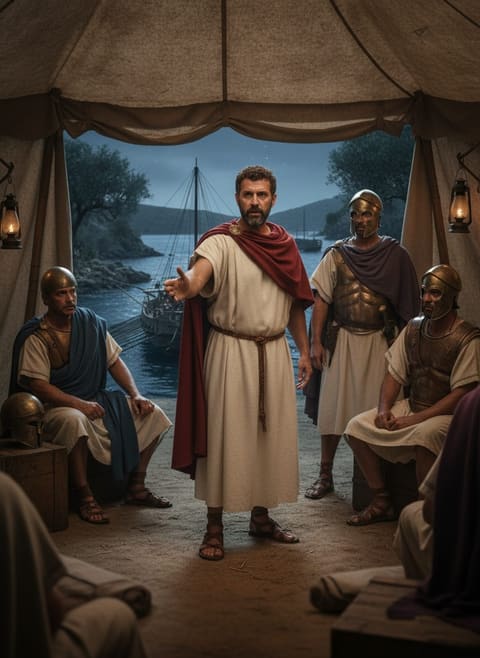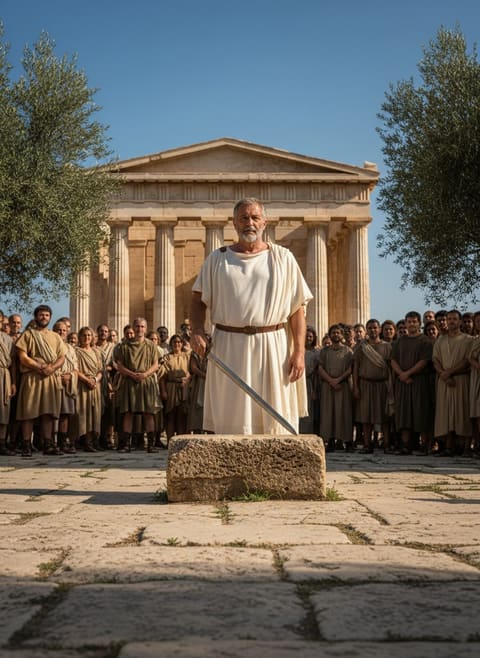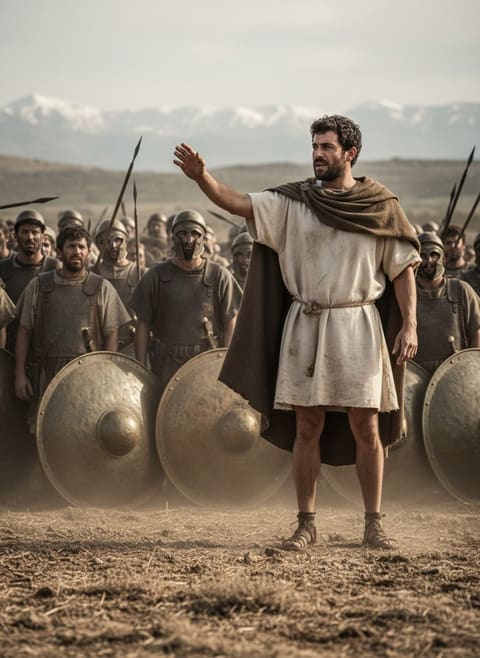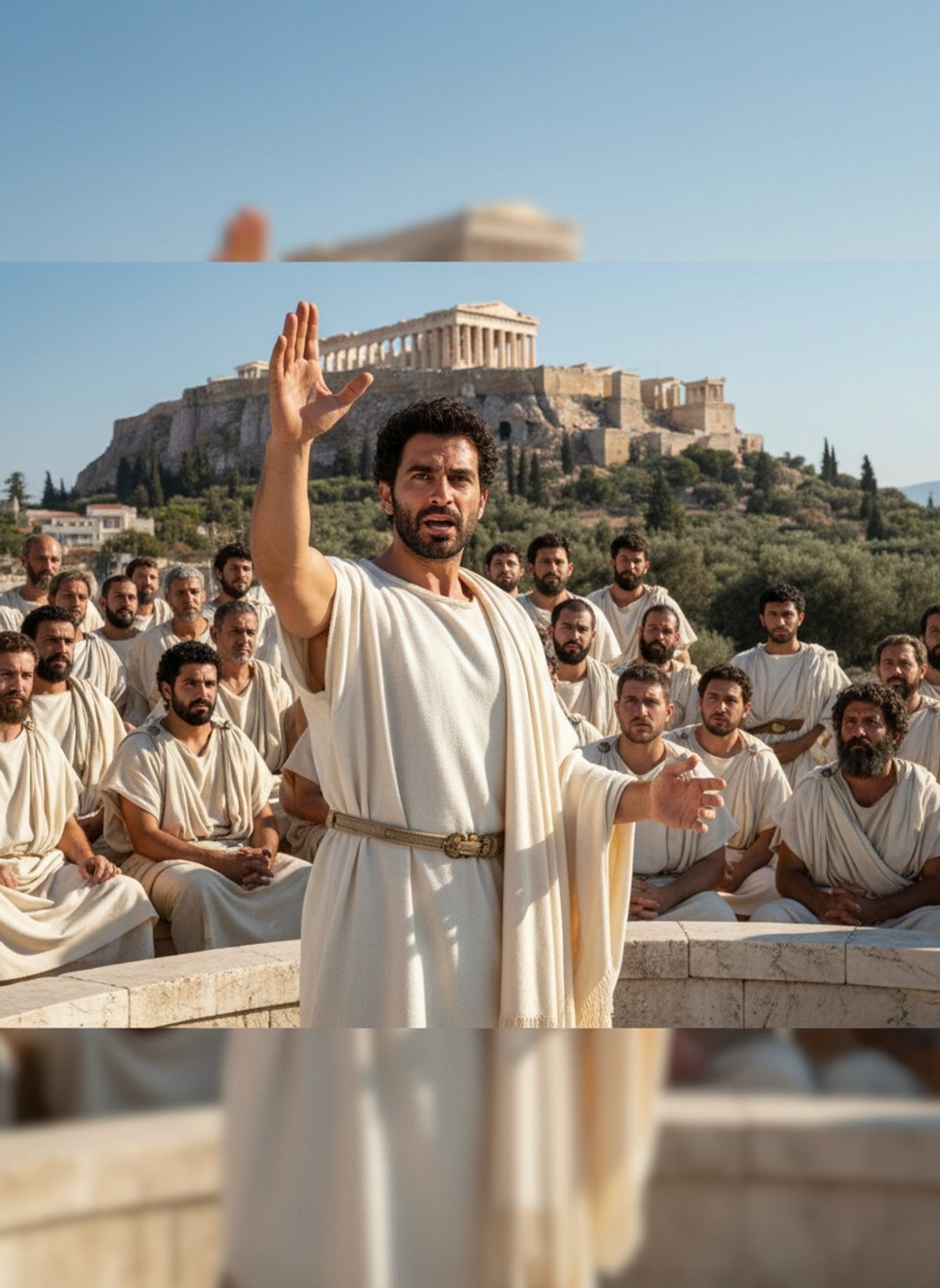
351 BC. The bustling Agora of Athens brimmed with the noise of traders and the chatter of Athenians debating the imminent threat on the horizon. Among the clamor, a solitary voice sought to rise, one that had been honed far from this crowded assembly in the privacy of a rocky, wind-swept seashore.
The Athenian Cassandra: A Voice Silenced
In the 4th century BC, Athens stood at a crossroads. The city-state, once the heart of the Greek world and a bastion of democracy and intellect, faced a threat unlike any it had encountered before. In the north, Philip II of Macedon was marshaling his forces, his gaze set firmly on the lands to the south. His ambition to unite the Greek city-states under his rule posed an existential threat to the fiercely independent nature of the Hellenic world.
Enter Demosthenes. Born in 384 BC, this son of a wealthy sword-maker had not enjoyed the smoothest of paths to prominence. Orphaned at seven, his inheritance was mishandled by unscrupulous guardians, compelling him to pursue oratory out of necessity. But the orator's journey was not one of immediate success. Demosthenes possessed a speech impediment and a weak voice, problems that for many would serve as insurmountable barriers in a world where public speaking was the key to influence and power.
Yet, in 351 BC, Demosthenes, undeterred by his personal challenges, took the floor in the Athenian Assembly. His message was as stark as it was urgent: Macedon was advancing, Athens was doing nothing, and action was needed. The audience, however, responded with scorn and laughter. The assembly saw the caricature of an orator, not the looming specter of Philip. They laughed him out of the hall that day, failing to see the lion hidden in the mane of unruly rhetoric.
Read next: Phocion Was Condemned to Die. He Tipped the Executioner.
Resilience Forged in Solitude
Mocked and derided, Demosthenes retreated—not into obscurity, but into solitude and determined self-improvement. According to the chronicler Plutarch, Demosthenes constructed an underground study where he could practice speaking without interruption. He even shaved half his head, ensuring that he would remain indoors and focused on his transformation.
There is a tale of him reciting entire verses while running up steep inclines to improve his breath control, a testament to the rigor of his self-imposed discipline. Moreover, the seashore became his unlikely ally. There, amidst the crash of the waves, he trained his voice to rise above the din, turning nature’s cacophony into the tutor he desperately needed. The stones across the beaches of Greece would bear witness to a metamorphosis. The natural barriers hardened his resolve, transforming his frail voice into a tool of formidable power.
Demosthenes' pursuit of clarity and persuasion extended to the eloquence of syntax and logic, inspired by the works of past masters. His focus lay not just in overcoming his defects, but in harnessing them, making them features of his distinct style. Soon, this tireless dedication would pay off—both for him and the city he loved.
The Return: A Voice Cleared of the Stones
When Demosthenes returned to the Athenian Assembly, it was with renewed vigor and refined skill. This time, the laughter was absent. A stuttering lawyer had transformed into one of Greece’s most persuasive orators. The richness of his speeches won over audiences, his warnings now cutting through Athens’ complacency like a well-crafted blade.
Demosthenes delivered his famous Philippics, a series of fiery and incisive speeches that exposed the menace posed by Philip II. He deftly articulated Greece's collective identity, contrasting it against the encroachment of Macedon. The speeches were passionate calls to action, crafted in the style of a master rhetorician who had learned from failure and used it as a foundation for success.
Read next: Polycrates Held the Aegean. One Letter Ended Him.
The effect was electrifying. Demosthenes ignited a new era of Athenian patriotism and resistance. Though Philip’s advance was relentless, the city had managed to respond in part due to the burning clarity of Demosthenes’ orations. His persistence made him a statesman not just of Athens, but of the entirety of Greece, as he tirelessly worked to unite the fractious city-states against a common enemy.
A Legacy of Words and Will
Despite his monumental efforts, Philip’s ambitions could not be fully quelled. After Philip's death, the emergence of Alexander the Great posed new threats, and Athens’ attempts at resistance ultimately fell short. Yet the legacy of Demosthenes' speeches endured beyond the immediate political outcomes. His orations—captured in works such as the Philippics and later the Olynthiacs—served to cement his place among the greatest speakers of antiquity.
Demosthenes represents more than the attainment of personal triumph over adversity. His life serves as a testament to the idea that the weight of words can shift the course of history. Heeded too late to stop Philip, his warnings nonetheless underscored a critical juncture for Athens and Greece itself—an enduring lesson on the power of eloquence in the face of looming catastrophe.
The echoes of Demosthenes’ speeches still linger in the annals of history, influencing both the arts of rhetoric and politics. His life is a reminder of the potency of the human spirit when matched with determination and the courage to stand against seemingly insurmountable odds. It matters not that he was ignored at first; the essence of his work took root and flourished long after his voice was silenced, a beacon for generations that followed. Indeed, every enduring democracy owes something to that determined soul who once stood on a rocky shore, shouting his truths to the oblivious waves.