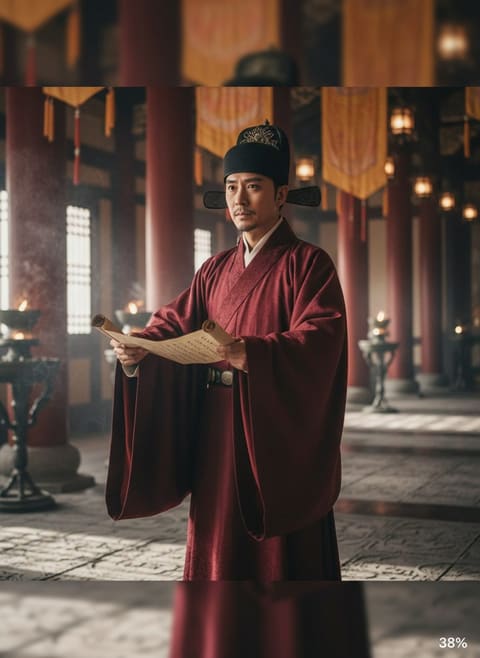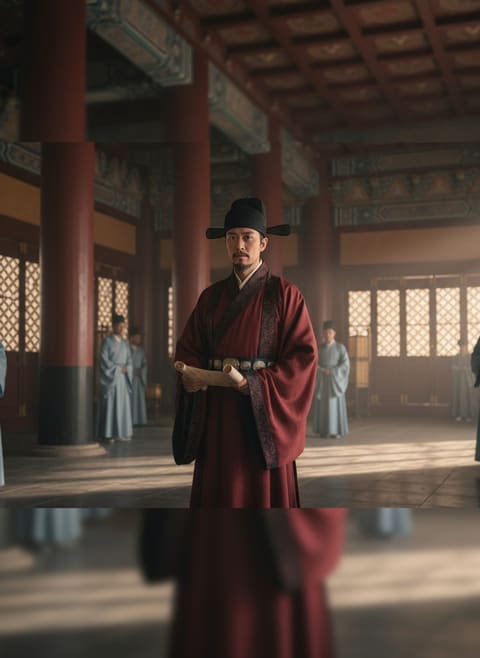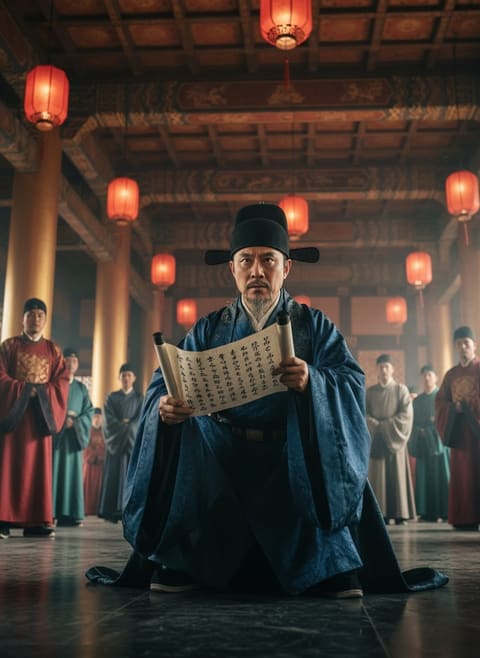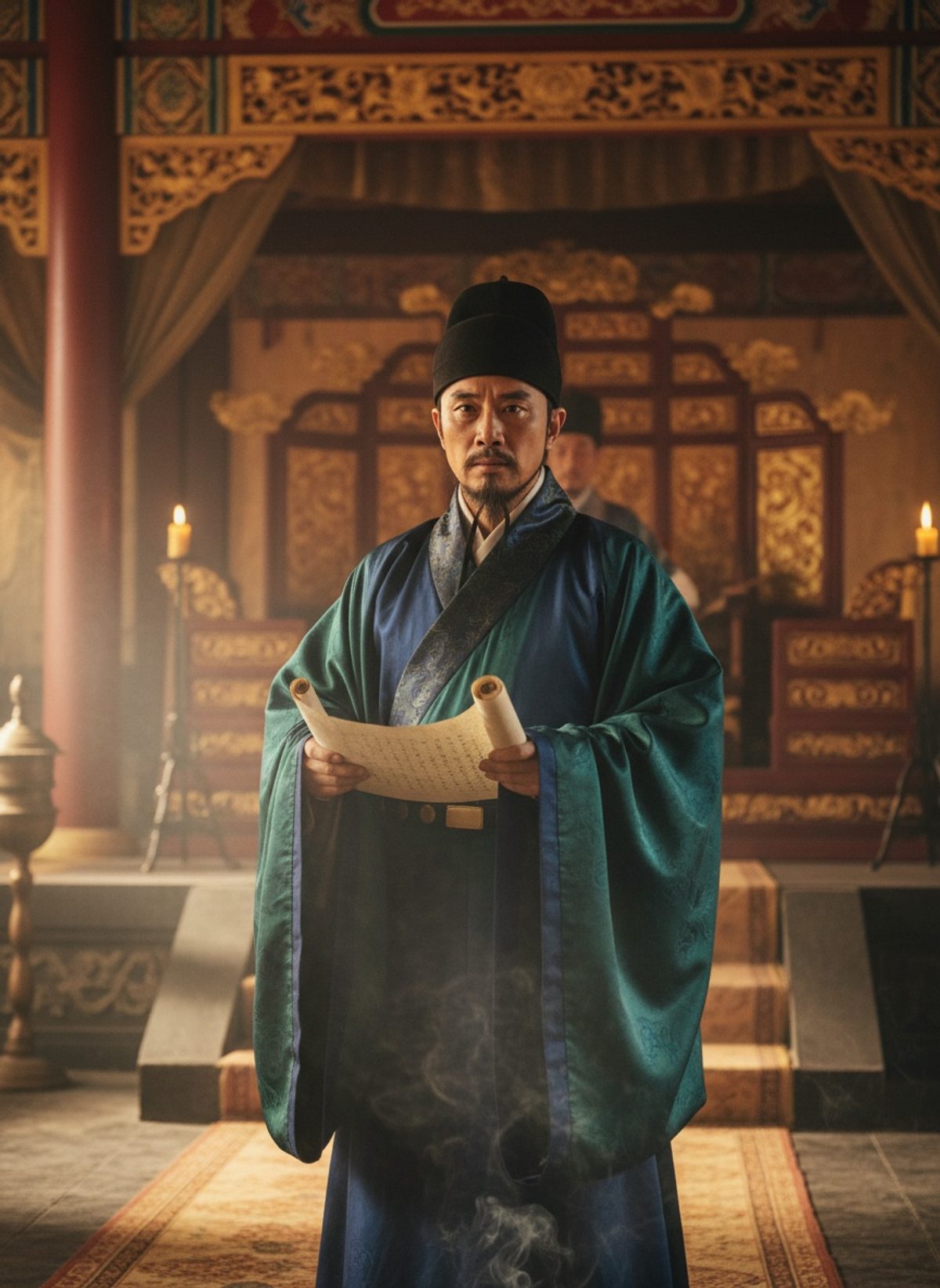
819 AD. The air was suffused with the faint scent of incense mingling with anticipation and tension.
The Scholar's Conviction Against Tradition
In an era when the echoes of religious ceremonies resounded through the bustling streets of Chang'an, a solitary letter penned in fine calligraphy set the capital ablaze with controversy. The Tang Dynasty, renowned for its cosmopolitan culture and intellectual pursuits, also cherished the stabilizing presence of Buddhism. But within the intricate tapestry of imperial China, one voice dared to challenge the status quo.
Han Yu, a respected scholar-official and celebrated man of letters, found himself at the nexus of this storm. While others adorned temples and paid tribute to Buddhist relics without question, Han Yu wielded his pen with unyielding conviction. His infamous letter, sent to Emperor Xianzong, criticized the court-sanctioned worship of a bone purportedly belonging to the Buddha. Han Yu saw this as an affront to Confucian ideals and a divisive influence on Chinese society. Boldly declaring it an embarrassment to China, his words reverberated with singular audacity.
For Han Yu, his missive was not mere rhetoric. It was an act of defiance, a steadfast commitment to principles he held above his own survival. His penmanship, decorated with the elegance of traditional Chinese prose, concealed the potential for wrath far beyond conventional discourse. As whispers of the scholar's insubordination reached the emperor’s ears, the calm façade of the royal court cracked, revealing deeper tensions.
Read next: He Stood Before the Emperor. He Burned His Own Memorial.
Emperor Xianzong's Swift and Severe Response
In Emperor Xianzong's court, such impudence could not be left unchecked. The Tang ruler, a figure of supreme authority, found his patience obliterated by what he deemed an unforgivable slight. Surrounded by officials demanding the scholar's execution, Xianzong grappled with a public challenge to both imperial doctrine and religious harmony. His response was swift and uncompromising—Han Yu was condemned to death.
The court, both visually magnificent and intensely intimidating, buzzed with speculation. This was a place where hierarchy governed even the air one breathed, deciding fates and dictating the rhythms of power. Emperor Xianzong, seated upon his ornate throne, embodied the paradox of a leader tasked with both preserving tradition and navigating the currents of change. To many observers, Han Yu’s challenge was akin to confronting the emperor with his own blade.
Yet, the clemency demanded by the more reflective whispers within the court and beyond suggested that Han Yu's predicament resonated beyond mere punishment. It was a clash of ideals, as much as it was a personal vendetta. The emperor’s pragmatic advisers, while loyal, recognized the intellectual merits of preserving a voice that epitomized the courage to question and the wisdom of ancient philosophical tradition.
Resonance of Han Yu's Stand
Among the scrolls and cryptic shadows of the imperial court, a countercurrent of sympathy for Han Yu swelled. His reputation, as steadfast as the mountains and as eloquent as the ancient odes, provided a platform for introspection not just for the literati but even for the ruling class. Key figures, influential but cautious, found themselves caught between venerating tradition and valuing the unfettered spirit of a true scholar.
Han Yu’s refusal to recant his letter, despite the mortal threat it posed, underscored the profundity of conviction. There was an undeniable magnetism in his audacity; here was a man willing to risk it all not for material gain, but for the purity of his ideals. Within the grand corridors of power, his situation provoked a deeper consideration of what it meant to be not just a subject or a scholar, but a visionary in an age bound by doctrine and reverence.
This narrative spread across the empire. From secluded monasteries to bustling market towns, the story of Han Yu’s stand against the adoration of relics resonated with those yearning for authenticity amidst the perfumed distractions of devotion. His words became more than an epistle—they emerged as a quiet revolution, inviting debate and reflection across all strata of society.
The Unexpected Reprieve
As the day of reckoning loomed, an unexpected intervention altered Han Yu's fate. While execution seemed certain, Emperor Xianzong, influenced by voices advocating mercy, commuted Han Yu's sentence to banishment—exile to the distant and desolate regions of Chaozhou. This was a fate harsh in its own way, stripping the scholar of his audience, yet offering him the precious gift of life.
Read next: He Held the Emperor's Edict. He Tore It Apart.
For Han Yu, exile was a bittersweet reprieve. The remote landscape of Chaozhou, with its rugged hills and whispering winds, became a new canvas for his writings. It was here, isolated from the intellectual currents of the capital yet undoubtedly aware of them, that Han Yu's dedication to his beliefs unfurled further. Deprived of the crowded alleys of Chang'an, he found solace in contemplation, knowing his words had planted seeds of doubt and courage across the empire.
The scholar's story from condemnation to clemency serves as a poignant testament to the power of the written word. Through his courageous dissent, Han Yu sketched a nuanced portrait of a man not just bound by history but one who sought to shape it—a symbol of the eternal dance between power and principles.
The Echoes of Dissent Through Time
In the centuries that followed, Han Yu's story continued to inspire scholars and thinkers, symbolizing the timeless struggle between authority and intellectual freedom. Today, his challenge resonates as a historical touchstone, reminding us of the dynamic interplay between tradition and reform. The episode of 819 AD reveals more than a conflict over religious relics; it exposes the enduring dialogue between change and continuity, the courage to question, and the resilience of the human spirit.
The story of Han Yu is an anthem of courage that transcends time and culture, urging all who encounter it to reflect upon their own convictions and the measures they would take to defend them. The tale is a reminder of the infinite possibilities when individuals stand firm in their beliefs, regardless of the blade, setting a precedent for courage in face of an unyielding establishment.