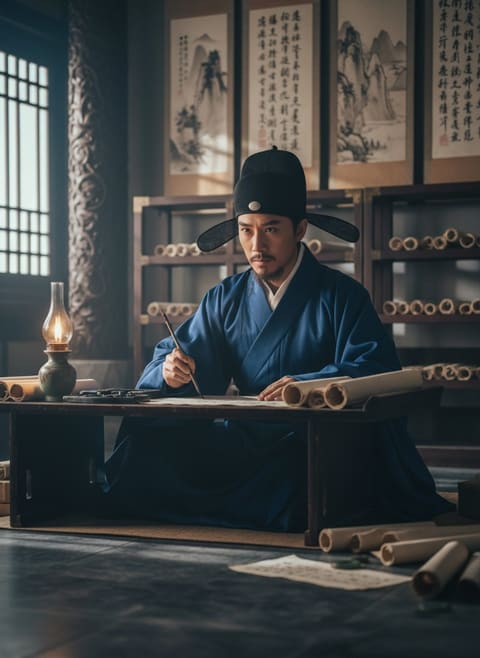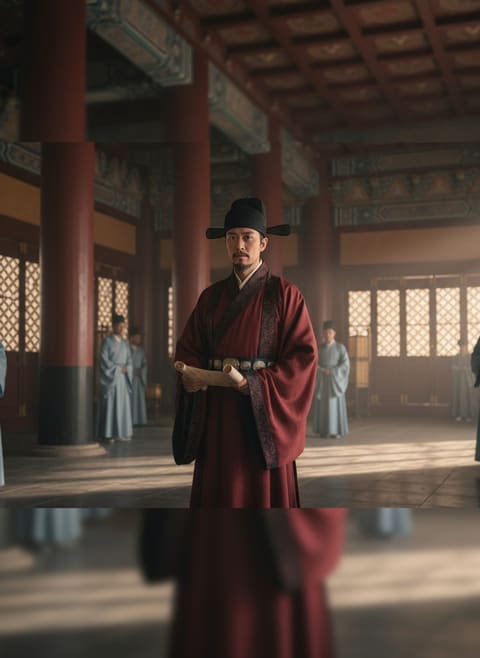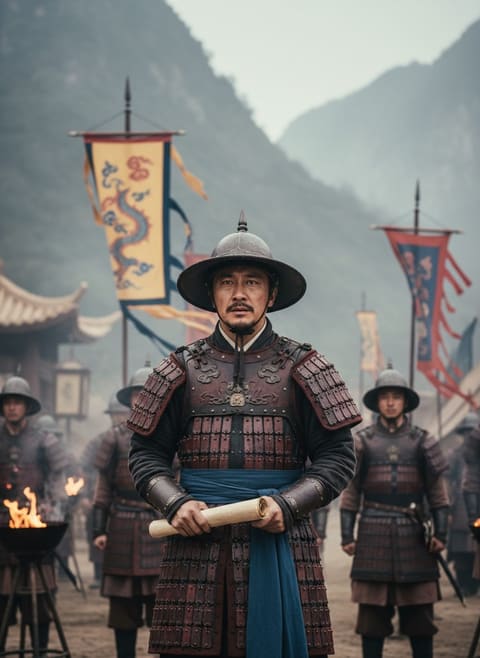
819 AD. The towering walls of the imperial palace loomed under a myriad of fluttering banners as the capital of Chang'an prepared for an unprecedented spectacle. The city buzzed with life, a swarm of officials and commoners alike surging toward the palatial gates. In the midst of this organized frenzy stood Han Yu, an astute scholar-official, his mind as sharp as the winter's chill that nipped at his robes.
The emperor of the Tang dynasty, in a bid to solidify his pious image and perhaps rally the loyalty of his subjects, had decreed a grand procession to welcome a sacred relic—a fragment of the Buddha's finger bone. Such relics were considered immensely holy, symbols of the Buddha's continual presence in the world. Thousands converged to witness its arrival, their hearts a blend of reverence and curiosity. Yet, amid the fervor, one man stood apart, his convictions casting a shadow over the jubilant air.
Han Yu keenly observed the ceremony, but his heart was heavy with dismay. To him, this was more than misplaced reverence; it was a disturbing embrace of what he viewed as pernicious superstition. Buddhism, already deep-rooted in China, was diverging from Han Yu's Confucian ideals of rational governance and disciplined order. For him, the emperor's endorsement of such a complex and foreign religion was not just misguided—it was a threat to the ethos of the state itself.
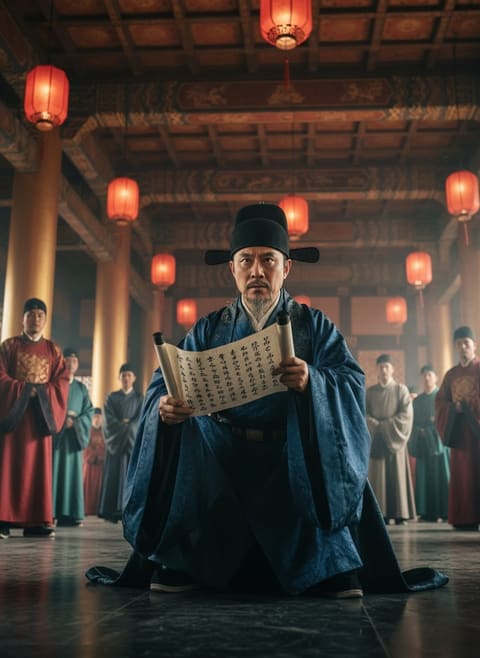
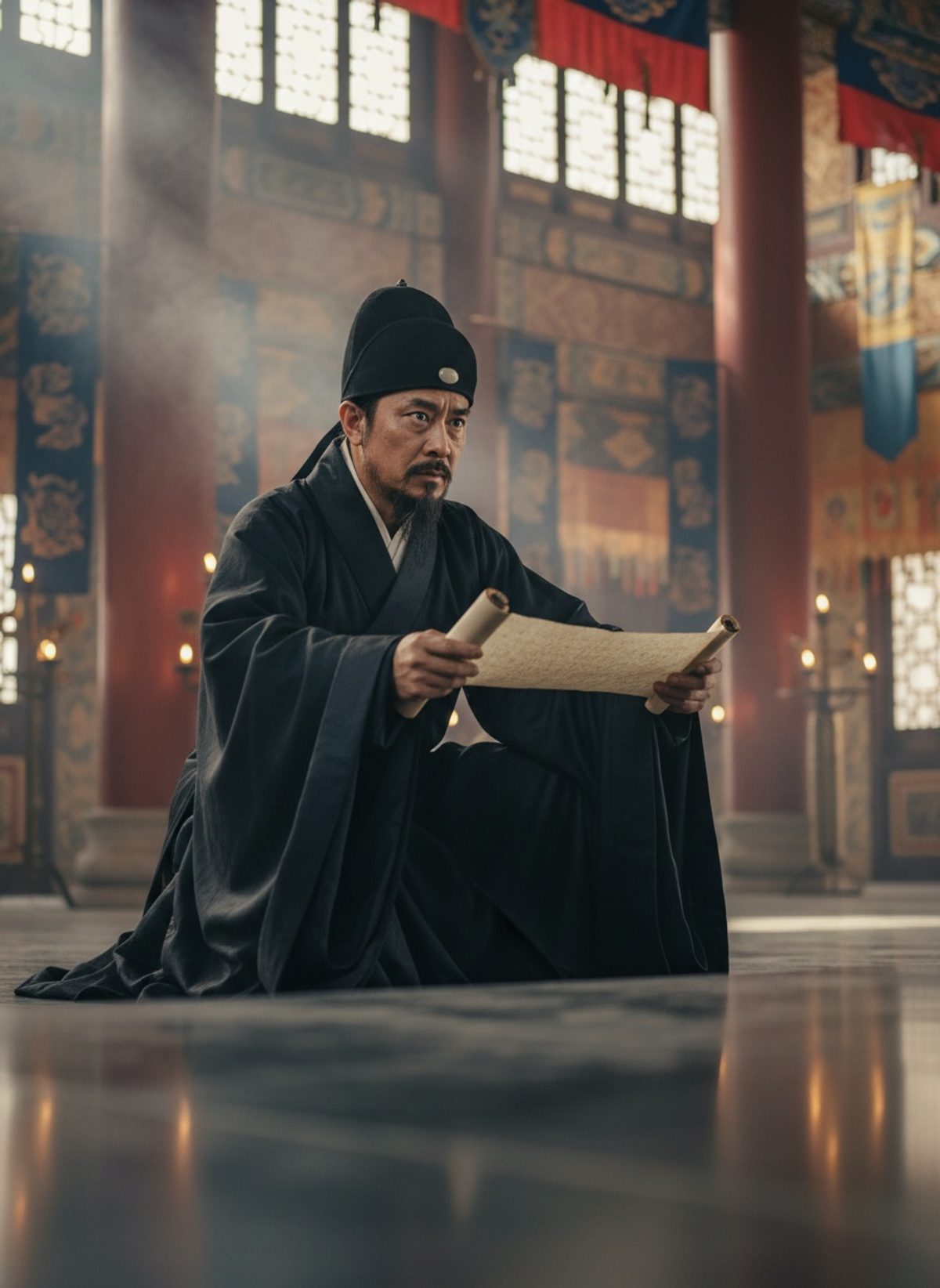
With the procession as a grim backdrop, Han Yu's resolve steeled. He penned Memorial on the Bone of the Buddha, a letter directed at none other than the emperor himself. In a bold and daring move, Han did not mince words. He criticized the emperor's decision to glorify the relic, denouncing it as an affront to traditional Chinese values. He implored the sovereign to reconsider, weaving his plea with a thread of urgent sincerity.
Read next: He Faced the Emperor's Wrath. He Would Not Move.
The memorial reached the emperor swiftly, carried through the proper channels by officials who unwittingly delivered Han Yu's near-death sentence. The emperor's response was swift and severe. Incensed by what he perceived as an insolent diatribe, he ordered Han Yu's execution. It was a decision that reflected the delicate tension within the imperial court, charged with the complexities of faith, governance, and personal belief.
However, the historian's ink had yet to dry upon this narrative. Fate, it seemed, bore Han Yu in its favor. Before the execution could be carried out, several influential figures within the court intervened, arguing for clemency. It was a testament to Han Yu's reputation and the persuasive powers of his allies. Instead of death, he was exiled to a distant and inhospitable post on the southern fringes of the empire. The scholar, though spared his life, found himself severed from the very heart of the intellectual and political world he cherished.
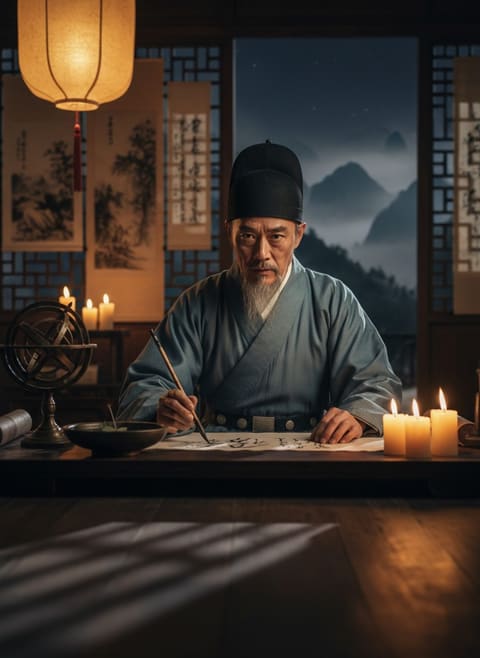
Banished to what felt like the edge of the earth, Han Yu wrestled with his newfound isolation. The southern landscapes, while lush and vivid, only served to accentuate his solitude. But even in exile, his intellectual vigor did not wane. He continued to write, his exile becoming a period of profound reflection and literary production. His works from this time bear the marks of an undaunted spirit, one that defied the iron grip of imperial decree.
Read next: He Stood Before the Throne. He Spoke for the Starving.
Han Yu's ordeal was emblematic of broader tensions simmering within the Tang dynasty, a period marked by its cultural brilliance as well as ideological strife. The adoption of Buddhism was not merely a matter of personal faith; it was a seismic shift within the cultural and social fabric of China. Traditional Confucian scholars like Han Yu saw it as an invasion of foreign ideas—threatening to unravel the values that had bound Chinese society for centuries.
The decision to burn his own memorial was an act steeped in symbolism and defiance. It was not a rejection of his beliefs but a willingness to sacrifice his own standing for the greater good as he saw it. Through this act, Han Yu set ablaze the concept that conforming to popular belief was not synonymous with righteousness. His life served as a conduit for a larger narrative about the nature of conviction in the face of overwhelming pressure.
In the grand tapestry of history, stories like Han Yu's teach us about the intricate dance between progress and tradition. They illuminate the challenges of holding onto core beliefs amidst changing tides. For Han Yu, the battle was not solely against the tangible aspects of his world, but against the creeping shadows of doubt and conformity. His narrative is a reminder that history is often shaped not by those who yield, but by those who dare to stand firm—even before an emperor.