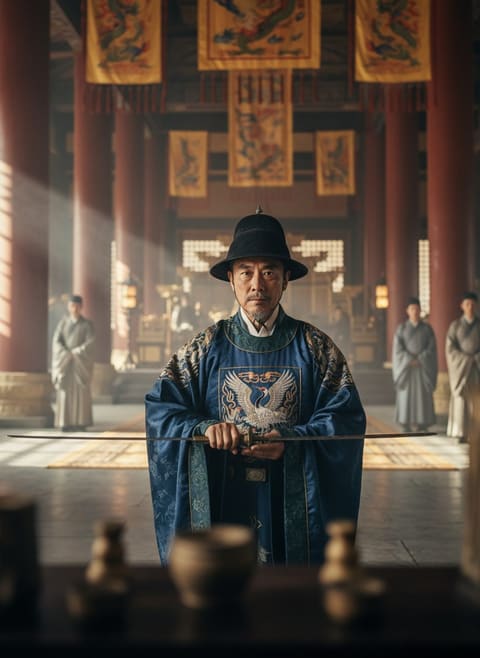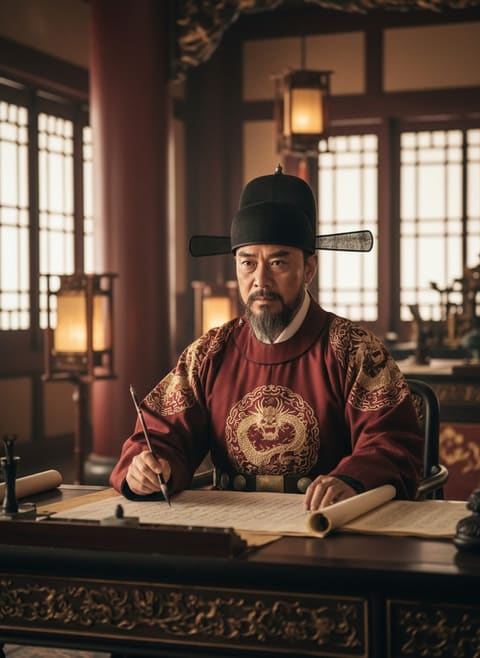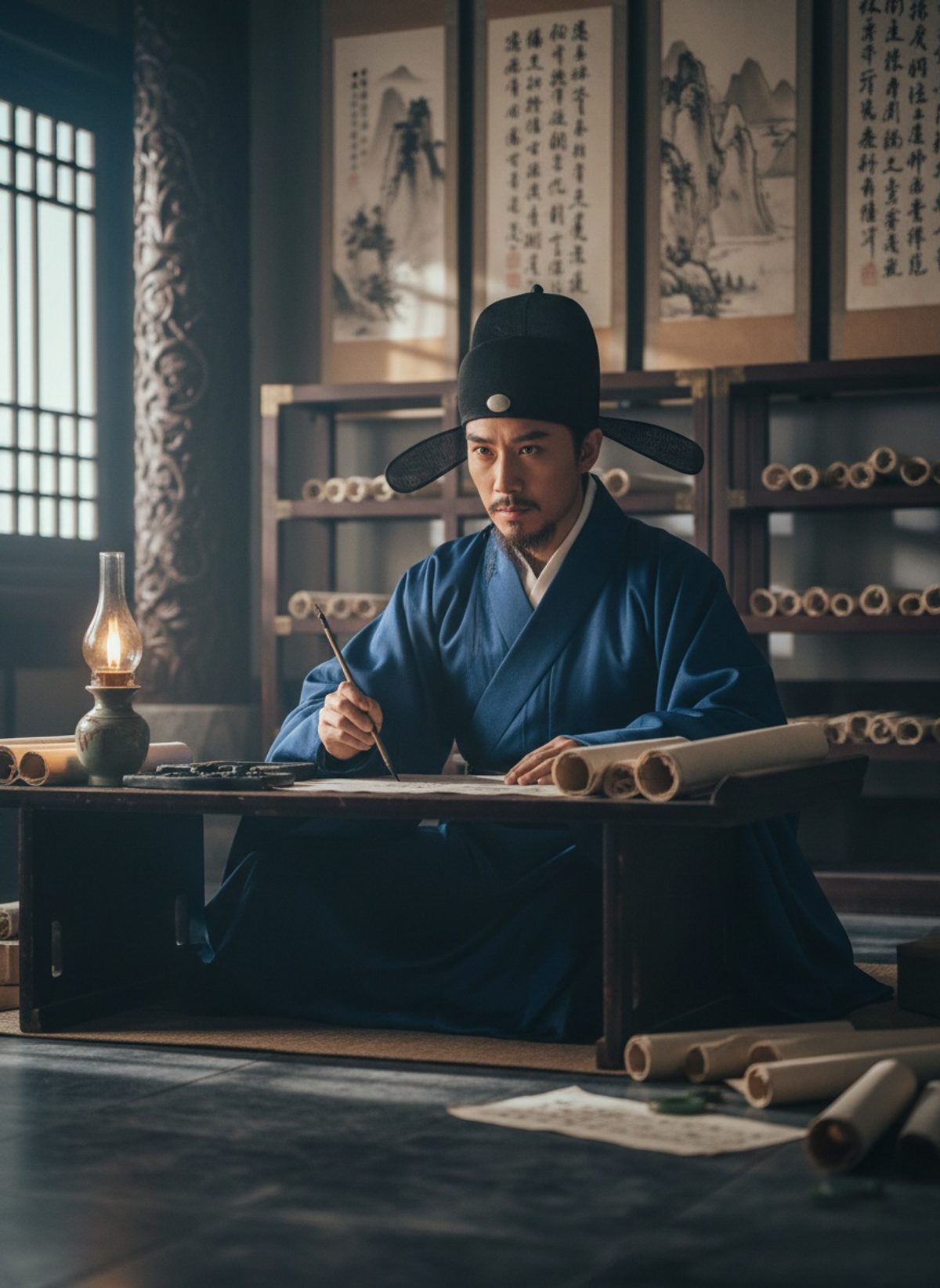
The court fell silent as the rustle of heavy silk robes subsided. A quill scraped against paper, the only sound except for the rhythmic tapping of an official's fan against his palm. All eyes turned toward Ouyang Xiu, the man who dared to speak for the voiceless. With deliberate movements, he unfurled a scroll and began to read aloud a document that would echo through the ages. Each word was a brushstroke of courage, painting a stark picture of the kingdom’s underbelly, a reality the court had long been content to ignore.
The Unseen Cloak of Power
Ouyang Xiu, elegantly robed yet with a countenance marked by a sincerity rarely found in imperial circles, was a rarity among his peers. His ascent within the Song Dynasty's expansive bureaucracy had been meteoric, thanks to a blend of sharp intellect and moral fortitude. This was not a man seduced by the trappings of his office. Despite the power vested in him by Emperor Renzong, Ouyang’s heart remained tethered to those who truly needed his guidance—the empire's downtrodden and forgotten.
In 1043 AD, as court life hurried along its predictable paths of opulence and intrigue, Ouyang was summoned to contribute to the court reforms brewing within the highest echelons. With confidence placed in him by the emperor, he could have chosen the safe route, to align with the prevailing sentiments suiting the ministers whose futures depended on quelling any whisper of discord. Instead, he audaciously wielded his newfound power to craft the document that astounded the imperial court, detailing every grievance the kingdom's poor faced.
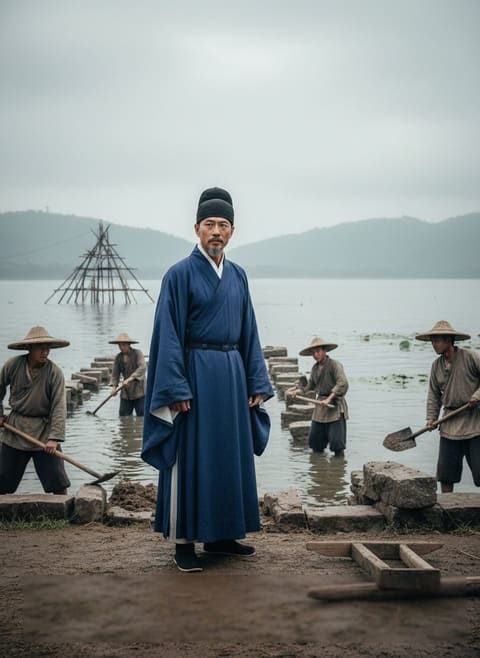
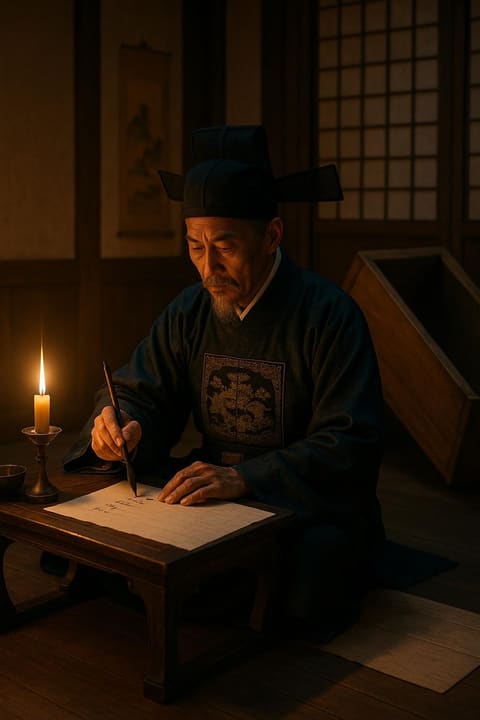
The gates of his mind opened to the flood of complaints from farmers crushed by unreasonable taxes, the artisans left out of commerce by corrupt guild leaders, and soldiers who bled for a nation unwilling to provide for them once their service ceased. These were not abstractions to him, nor mere metrics of governance. He had listened to the whispers of those in despair, and his pen danced across the parchment to translate their wordless cries into indelible ink.
Read next: He Walked Into the Emperor's Court. He Said No.
Ouyang's memorial was not merely words on paper. It captured the hearts of those listening, each sentence a window into the suffering that shamed them all within the glow of courtyards thick with incense. It was a call to action, carved and burned upon the collective consciousness of an empire teetering on the edge of reform.
The Courage to See
As the scrolls unfurled before the court, Ouyang spoke in a measured cadence, his voice the anchor holding steady against the potential wrath he knew could snap at any moment. He addressed the unsung burdens of agricultural laborers subjected to the insatiable appetites of tax collectors, their livelihoods decimated and dreams trampled beneath governmental decree. He lamented the loss of artisans whose crafts disappeared into obscurity, swallowed by the complexities of systemic neglect.
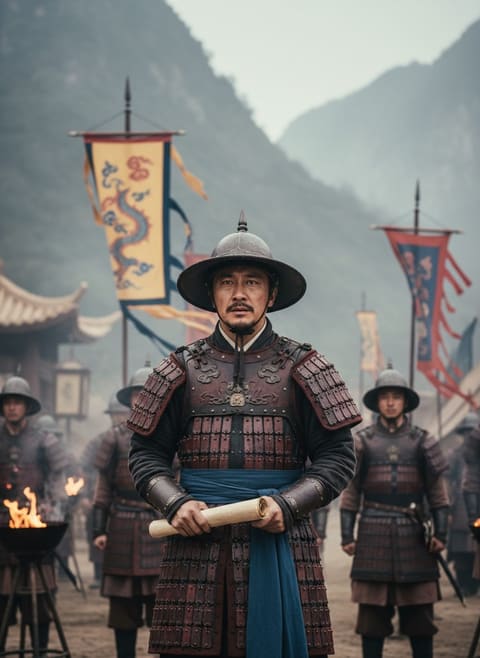
Ouyang also confronted the plight of the imperial army. Soldiers who had once been the shield of the dynasty found themselves mere shadows of their former stature. His account illuminated the dark truth of veterans impoverished and abandoned, forgotten by an ungrateful nation. He implored the emperor to see them not merely as tools of war but as citizens deserving of dignity and care.
His words hung in the air, a challenge to those seated in supposed comfort. A memorial, boldly asserting that greatness was not solely within the hands wielding power but in the compassion extended to the powerless. He thrust a mirror towards the courtiers, demanding they witness the true state of their world and recognize their role in its reformation.
Read next: Shen Kuo Mapped the Stars. The Emperor Exiled Him.
For Ouyang, this act of bravery was not born of ambition, but of an unyielding duty to the truths he held dear. To acknowledge the woes of the marginalized was a matter of integrity and humanity—a responsibility that he believed superseded the insular games of politics. This moment was more than an appeal; it was an invocation to awaken the conscience of a dynasty sleepwalking towards its precipice.
A Legacy Whispered Through Time
The court, stunned into an uneasy silence, had felt the weight of Ouyang's revelations. The repercussions of his memorial resonated far beyond the walls of the imperial palace. Though the changes he advocated would come slowly, his document ignited a shift in consciousness, a ripple effect that forced the empire to reckon with its ideals and responsibilities. It was a clarion call for introspection during an epoch defined by its splendor and its stark social dichotomies.
Ouyang Xiu’s courageous act is a testament to the enduring struggle for accountability and justice, exemplifying the transformative power of truth when unfurled in the light of scrutiny. His document, tethered to the unobserved realities of common lives, illuminated pathways towards change that would inspire generations of reformers who followed. In advocating for those who had long resigned to muted despair, he redefined what it meant to wield power with honor.
Today, the legacy of Ouyang Xiu is one imbued with a profound relevance. The courage to articulate the injustices that others might choose to ignore remains a clarion call to all who inherit power to do better, to see those hidden in plain sight, and to act with empathy for the greater good. It echoes the timeless truth that the mightiest empires and the most enduring legacies are built not merely upon grand palaces or storied victories, but upon the foundational virtues of justice and compassion.