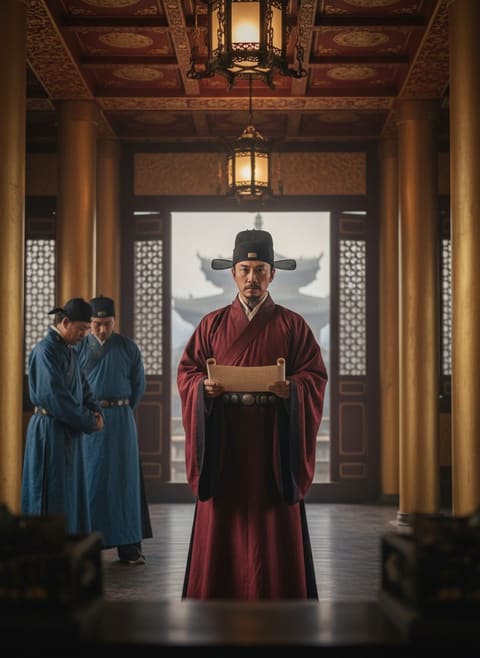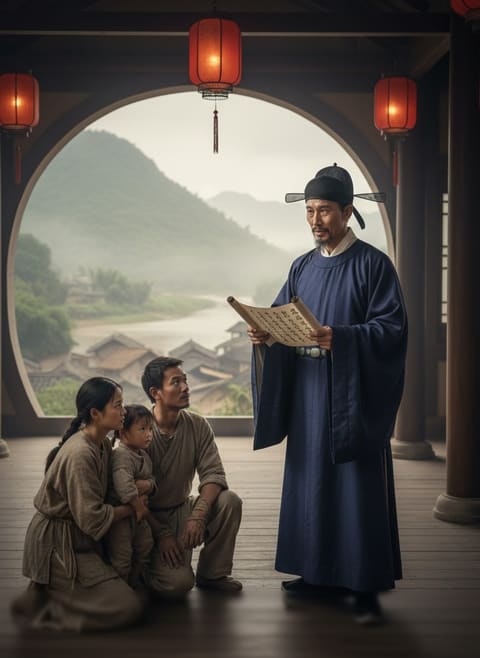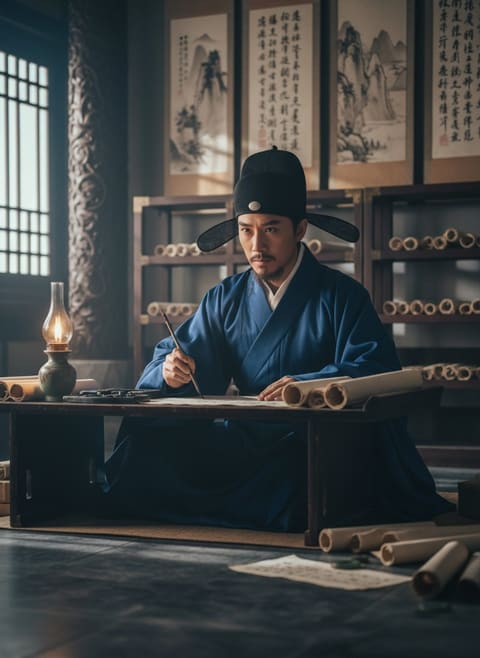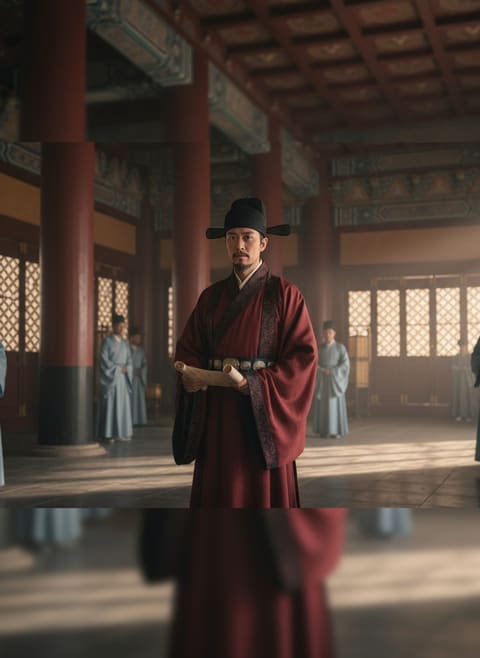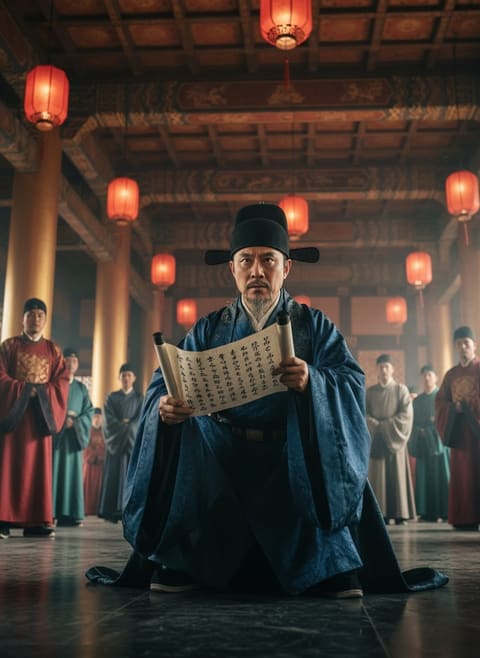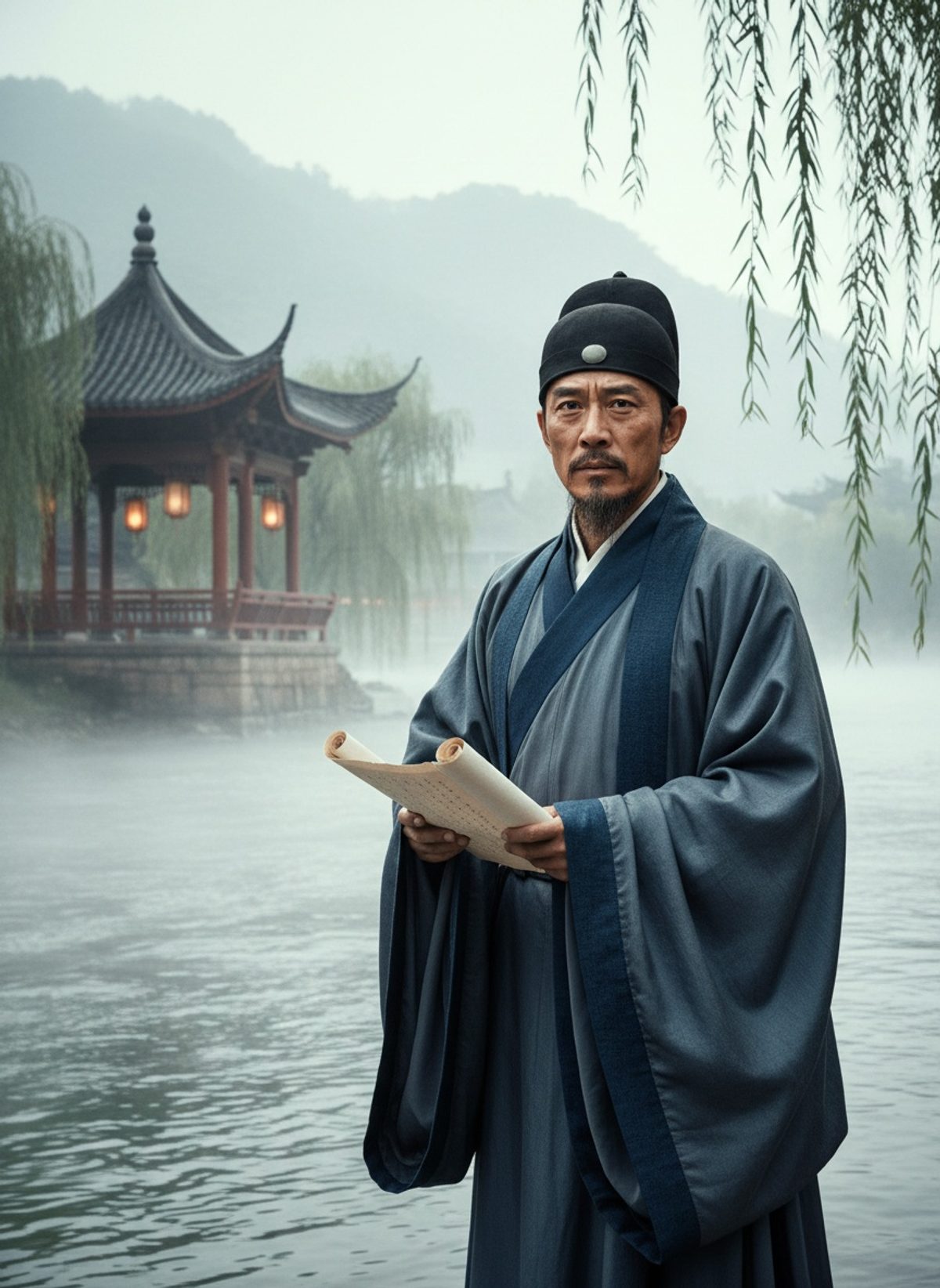
The mist hung low over the riverbanks, weaving its way through the lush foliage that lined the shores. The morning sun barely filtered through the haze, casting ethereal shadows on the slow-moving waters of the Gan River. Somewhere, a bird's call pierced the tranquil air, a singular note in the vast, waking world. Yet for Han Yu, the famed scholar-official of the Tang Dynasty, this serenity masked profound peril. Clutching a scroll that marked his death, he made the choice that would define his centuries-long legacy.
The Scholar's Gamble
In 819 AD, the Tang Dynasty was a powerhouse, its imperial court bustling with influence and intrigue. Emperor Xianzong sat on the throne, a ruler feared for his ruthless efficiency in dealing with dissent. At this time, Han Yu, known for his incisive wit and unwavering commitment to Confucian ideals, stood as one of the most learned men in China. Yet, it was precisely his devotion to these values that propelled him onto a collision course with the Emperor.
Buddhism had found fertile ground in China, attracting millions even as Confucian scholars like Han Yu viewed it with skepticism. To them, it was a foreign intrusion, an affront to Chinese values and hierarchy. When the Emperor ordered a Buddha relic tour to consolidate his power and curry favor with the Buddhist population, Han Yu saw a dangerous blurring of church and state lines. With poignant candor, he penned a petition urging Emperor Xianzong to halt the ceremony—a bold move, as dissent could easily cost a man his life.
Words as Weapons
Han Yu's letter to the Emperor was vehement, tinged with the passion of a man whose convictions knew no compromise. It lamented the Emperor’s apparent endorsement of Buddhism, accused him of defying China’s philosophical traditions, and warned of the heavens' displeasure. While eloquently composed, Han Yu’s message was an unambiguous critique of the imperial policy—no small affront in a time when emperors were adored as semi-divine figures.
Read next: He Held the Emperor's Order. He Tore It in Half.
The court erupted; such a letter to the emperor was tantamount to a death wish. Whispers of Han Yu's undue boldness swept through the corridors of power. His colleagues watched, some with admiration, others with the quiet schadenfreude reserved for a peer's downfall. Emperor Xianzong himself, furious at this impertinence, decreed Han Yu’s execution.
From Death to Exile
Yet, in a twist of fate, the imperial decree that was to mark the end of Han Yu was altered. Emperor Xianzong, perhaps swayed by the pleas of other officials who recognized Han Yu’s talent, or seeking to impose a more merciful facade, commuted the death penalty to exile. Banished from the grandeur of Chang’an, Han Yu was sent to the far reaches of the empire, to Lingnan—a region as wild as it was distant, effectively the edges of civilization.
Walking out of the city, the weight of Han Yu's fate seemed embodied in the scroll he carried with him: his own words, now an imperial death warrant turned token of survival. At the river, instead of holding onto this artifact of reprieve, he tossed it into the current—a symbolic gesture of his unwavering commitment to his beliefs. This act was both release and refusal; a relinquishing of authority’s binding power over a man’s moral compass.
Read next: He Stood Before the Emperor. He Burned His Own Memorial.
The Wilderness and the Pen
In Lingnan, the wilderness that greeted Han Yu was a stark contrast to the ordered world of the capital. Here, nature reigned supreme, untamed and indifferent to the politics of men. The flora and fauna of the region thrived in chaotic harmony, and it was this raw vitality that inspired Han Yu to persevere. Immersed in this alien environment, Han Yu’s exile became an odyssey of personal and philosophical reckoning.
Though isolated, he refused to let silence be the last word. Han Yu's exile saw the birth of some of his most profound works, which subsequent generations would cherish as masterpieces of Chinese prose. His essays and poems, crafted in the crucible of banishment, wove vivid tapestries of both his internal strife and the wonders of the natural world around him. He wrote truth to power, a testimony to the enduring spirit of intellectual freedom in the face of authoritarian control.
The Legacy that Endures
The story of Han Yu stands as an emblem of intellectual defiance. His actions highlighted a vital debate: the tension between state orthodoxy and free thinking, a theme that resonates throughout history. He paid the price of his convictions with his career, but his legacy has outlived the empire that sought to silence him. His advocacy for Confucian values helped catalyze the later Neo-Confucian movement, transforming a relic of history into a guiding force for future generations.
In the gentle flowing of the river where Han Yu discarded his life’s condemnation, we find a metaphor for historical currents that transcend the boundaries of their time, influencing unknown shores. The tale of Han Yu is not just a whisper from the past but a narrative pulse, reminding us of the profound strength within voices that choose truth despite peril. It is the story of a man who, facing the vast wilderness, wielded his pen with a courage that made his words undying, surviving both time and tyranny alike.