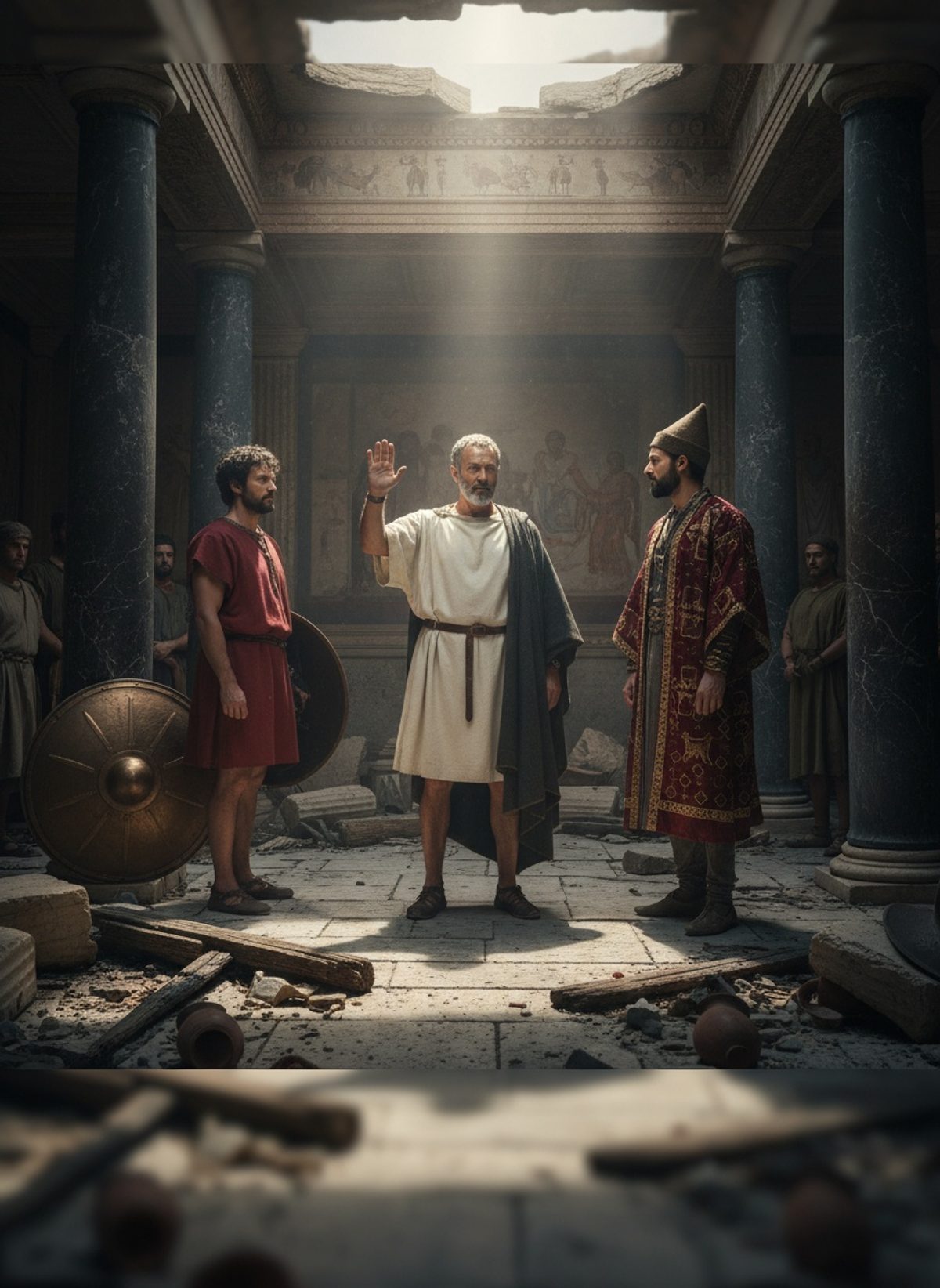
The sun beat down mercilessly, bouncing off the broken stones and burnt timbers of a ruined city that once resonated with the vibrant pulse of Athenian life. Amidst this scene of desolation, a small group huddled in the remnants of a grand hall, their brows furrowed in deep thought. Athens had been razed once more by Mardonius’s forces, its people scattered or enslaved. Yet here, in the shadows of their own shattered temple, the Athenian council convened to deliberate an offer that glittered like a hook baited with the finest gold—a lure sent directly from Mardonius himself.
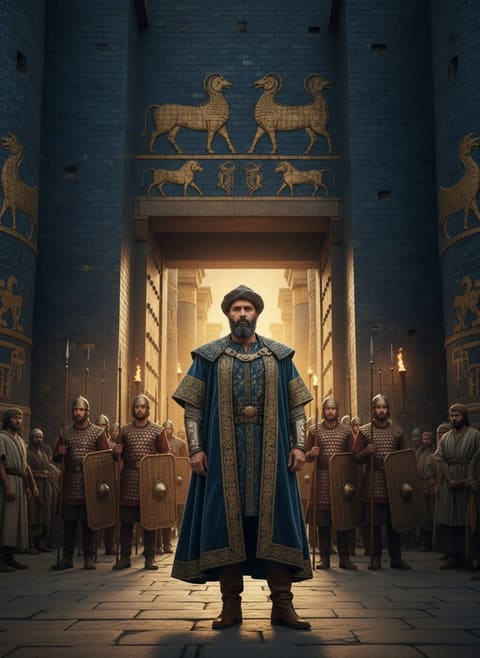
It was 479 BC, a year deeply mired in the ongoing turmoil of the Greco-Persian Wars. The mighty Persian Empire, under the strategic eye of General Mardonius, sought to capitalize on Athens’ devastation and fragility. Mardonius, nephew and trusted advisor to the Persian King, Xerxes I, had witnessed firsthand the power of Athenian fury, and he knew that breaking the spirit and alliance of the Grecian peoples required subtlety as much as might. So, he sent envoys to Athens with an overture of peace that seemed almost too generous to refuse—peace, autonomy, and gold. These lavish promises were wrapped in words of honey, spoken through the lisping Persians who dared to speak them in the heart of Athenian ruin.
To the Athenians, the temptation was palpable. They had suffered greatly; their city had been pillaged, their families had felt the cold grip of Persian wrath, and their sanctuaries lay in ruins. Monumental sacrifices had been made in the name of Greek unity, sacrifices made keen by the loss of their homes. Yet, what Mardonius offered was simple and intoxicating: the cessation of hostilities, a return to prosperity under the benign gaze of the Great King, all for the cost of leaving their allies alone to face the Persian juggernaut. But, contrary to what Mardonius might have hoped, fear had not dampened the fiery spirit that lay at the core of Athens.
News of this offer rippled swiftly across the Greek world, reaching the ears of the intensely worried Spartans. As adept soldiers, the Spartans understood war’s intricate web, realising how critical Athenian allegiance was against Persian dominance. If Athens accepted, the Grecian resistance would crumble like fragile pottery. Thus, Spartan envoys, clad in their red cloaks, arrived with urgency in the stricken city, their presence a stark reminder of the serious stakes at play. They pleaded with the Athenian council to see through Mardonius' gilded promises, to remember their oath to Hellas and to the greater good shared by all Greeks.
Read next: Darius Was Dying. She Walked In and Changed the Law.
The Athenian leaders, despite heavy hearts burdened by war’s trials, knew in their souls that liberty was beyond valuations of gold. Liberty was the fibre stitched into their very beings; it was, perhaps, Athens’ truest legacy. The solemn assembly listened, deliberated, and rose united. The letter from Mardonius was torn asunder, a symbolic gesture but one that carried the weight of an ironclad resolve—a refusal that echoed through time as a testament to Athenian pride.
Yet, if we draw closer to the characters of this drama, the shades and hues of their motives blend intriguing complexities. Mardonius himself was a figure both celebrated and reviled. His military prowess during the initial invasion signified him as a general of courage and strategy—able to gain victories amidst adversity, as seen when he swiftly maneuvered through Thrace and Macedonia, securing critical territories for Persia. But his ambition was not easily sated. History remembers him also as a man with a fraying conscience, who despite his ravaging armies, attempted early initiatives like instituting democracies among the Ionian Greeks to prevent rebellion—an act surprisingly progressive for a Persian commander.
Read next: Darius Offered Him Wealth. He Asked for Seeds Instead.
As the weeks turned and the air hung tense with expectation, the stage was set for a confrontation. Mardonius, undeterred by Athenian defiance, prepared his troops for what would be one of the defining clashes of the Greco-Persian conflicts—the Battle of Plataea. Here, he would meet his end, struck down amidst the clamor and crash of war. His death marked not just the end of his own ambitions but the turning of the Hellenic tide against the Persian threat.
This episode, often overshadowed by the clamor of more famous battles, unveils a tapestry of resolve and principle that adds layers to our understanding of historical Athenian governance. Athens, at its core, embodied more than a mere city-state striving for survival; it represented an unyielding commitment to ideals that transcended material wealth or temporary relief from suffering. The choices made in that smoke-tainted council hall speak to a narrative woven in the threads of duty, the weight of allies, and the indomitable pursuit of liberty against overwhelming odds.
In revisiting this once-shrouded tale, one is drawn to consider the enduring capacity of ideals to challenge empires. The story of Athenian resistance breathes life into the concept of alliances forged not by convenience but through unfaltering faith in shared aspirations. It’s a message echoing forward—a reminder of how steadfastness can, even when surrounded by ruin, redefine history's arc. Such reflections, gleaned from the past’s shadows, invite us to consider the complexities of resistance and unity, bearing relevance as enduring now as it was amidst the dust and ash of 479 BC.