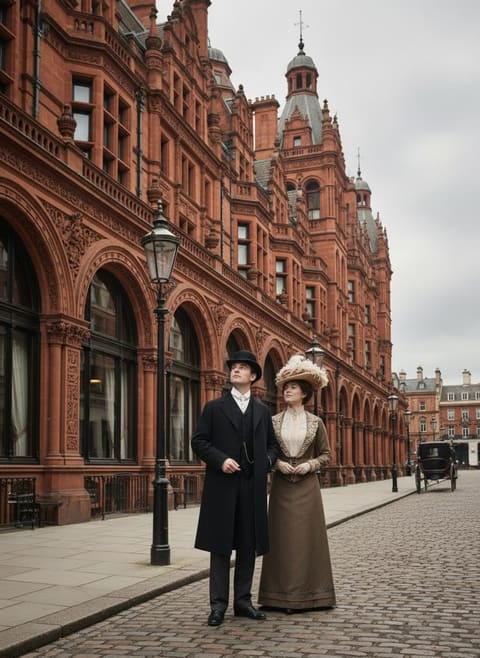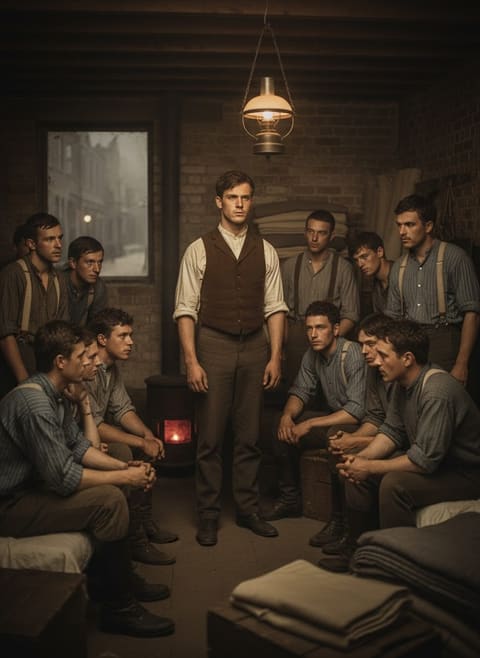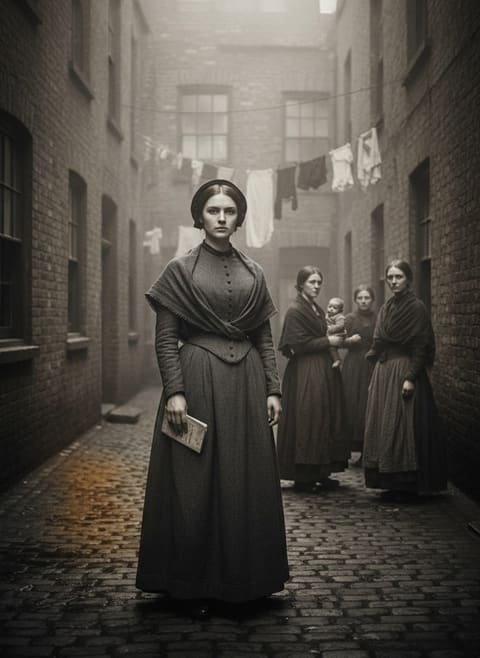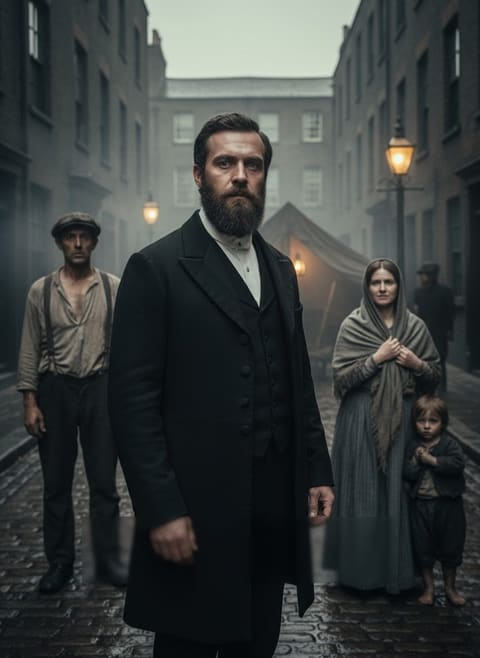
He was sleepless, hunched against the chill night air. The Bass Brewery clerk queued through the London darkness, clutching a bold red triangle to grasp the future.
The Triangle That Started It All
On January 1, 1876, Britain’s Trade Marks Registration Act came into force. Overnight, companies could legally register trademarks, protecting their brand from imitators. Bass Brewery, well aware of the booming beer market's competitiveness, was intent on being the first. What better symbol to embody their top-selling pale ale than the striking red triangle? Clad in determination, a Bass clerk had positioned himself as the inaugural customer at the Patent Office, securing Britain's very first registered trademark.
This simple geometric emblem became synonymous with quality. The red triangle was more than a clever marketing strategy; it was a beacon of consistency and an innovator's spirit. It marked kegs, labelled barrels, and bedecked the facades of numerous pubs that dotted Victorian Britain. Consumers might not remember the law that enabled Bass’ brilliant move, but the vivid triangle immortalized it in commercial lore.
Beer and Empire
Traversing beyond British shores, Bass Brewery's reach extended into the vast expanse of the British Empire. During the reign of Queen Victoria, the pale ale that painted the pubs of mainland Britain found a place in far-flung markets, stretching from city streets in London to the colonial outpost of Lahore. The brewery catered to the thirst of British expatriates and troops stationed across the globe, turning the simple act of enjoying a beer into a shared cultural moment.
Read next: The Printer Who Built a Cathedral Facade in Glazed Tiles
The popularity of Bass pale ale was more than a nod to national loyalty; it was a testament to the brewing brilliance that attracted diverse clientele throughout the Empire. As tasting the ale in exotic locales became a novelty, its reputation grew exponentially. This invisible thread of shared experience linked patrons worldwide, not through coercion or enticement but willingly, one glass at a time.
Brick, Tile, and Stained Glass: Brewing Foundations
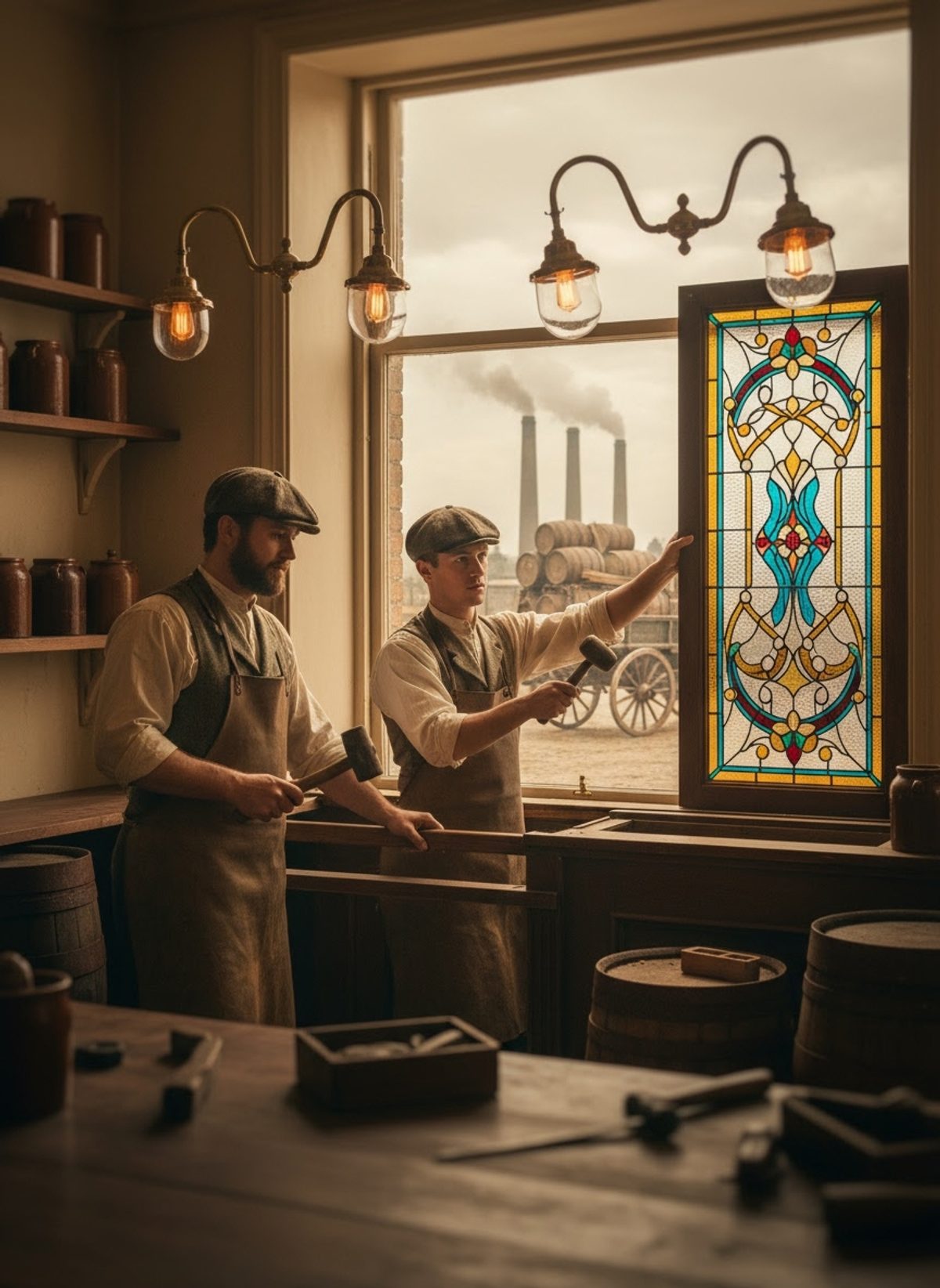
Bass Brewery, alongside other brewing giants, reshaped the very architecture of social scenes in Britain. These companies invested heavily in constructing pubs, distinct not just as sellers of liquid comfort but as architectural showcases. The trademark red triangle became a familiar sight, not merely for its position on glassware, but as integral parts of building façades adorned with vivid tiles and ornate glasswork.
These public houses were more than mere drinking establishments. They were community hubs where the warmth of wood panels met the glow of stained glass, and the hum of conversation found rhythm amid decorative mouldings. Their designs reflected regional architectural styles: a pub in the heart of the Midlands could appeal as uniquely as one on the edge of Cornwall's cliffs.
The Pub: A Social Alchemist
During this era, Britain's transformation into an industrial powerhouse was marked by bustling urban centres and burgeoning factory towns. These were challenging times; work was demanding, and leisure moments were precious. Public houses, sponsored and occasionally built by breweries like Bass, offered respite and camaraderie. They were spaces where differences blurred over ale-filled glasses, and tales of hardships and dreams flowed freely.
Read next: The Victorian Mother Who Sat With Her Dead Child Every Night
The enduring popularity of these establishments illustrates their role as social alchemists, distilling community sentiments and fostering shared identity. They provided sanctuary in a brick-and-mortar refuge from an unforgiving world. Pubs clasped the working class and elite alike, creating a mosaic of society tied together by the collective clinking of cups.
Bass and the Legacy of British Brewing
The legacy of Bass Brewery's bold initiatives is visible today, far beyond the preservation of the red triangle as a trademark icon. The company’s foresight paid dividends, creating a blueprint for brand recognition that modern enterprises endeavor to replicate. More than a pioneer in marketing, Bass stood at the intersection of business and cultural evolution, forming foundational elements of Britain's identity.
Through beer and bricks, this story weaves the fabric of an era that defined a nation honing its industrial prowess. It reminds us that stories of legacy are not only found in grand conquests but also in the quieter currents—public houses and the flavor of a shared pint, an empire not built on battlefields but brewed in barrels.
As we gaze upon the familiar sight of a red triangle, we are transported to a time when simplicity met ambition, crafting experiences and etching an enduring story into the annals of history.