The Crystal Palace survived the greatest war the world had ever seen. Yet, it would succumb not to bombs, but to flames in a matter of hours.
A Monument of Innovation
The mid-19th century witnessed the rise of groundbreaking innovation and industrial prowess. At the forefront stood the Crystal Palace, an audacious feat of engineering that defined an era. Designed by Joseph Paxton, this architectural marvel was originally constructed for the Great Exhibition of 1851. With its towering iron frame and nearly 90,000 panes of glass, it embodied the ambition of a nation at the height of the Industrial Revolution.
The Crystal Palace quickly became a symbol of British ingenuity. Six million visitors from across the globe flocked to marvel at its transparent walls and vast space filled with exhibits showcasing the marvels of modern technology and culture. Yet, beyond its opulent displays and grandeur, it was a statement of progress, symbolising the boundless possibilities of humankind.
The Jewel of London
Following its initial success, the Crystal Palace was relocated from Hyde Park to Sydenham Hill in South London. There it continued to enthrall visitors and remained a centrepiece of British culture. It hosted exhibitions, concerts, and events that drew visitors from around the world, cementing its status as a cultural hub.
Read next: The Victorian Mother Who Sat With Her Dead Child Every Night
Over the decades, it withstood challenges that threatened its very existence. Financial difficulties plagued its later years, but these failed to dim its allure. Even war could not tarnish its reputation. During the First World War, its vast halls were repurposed, serving as a location for training and even a hospital. The Palace endured, its glass walls still glimmering across London's skyline, a beacon of resilience through turbulent times.
The Night of Flames
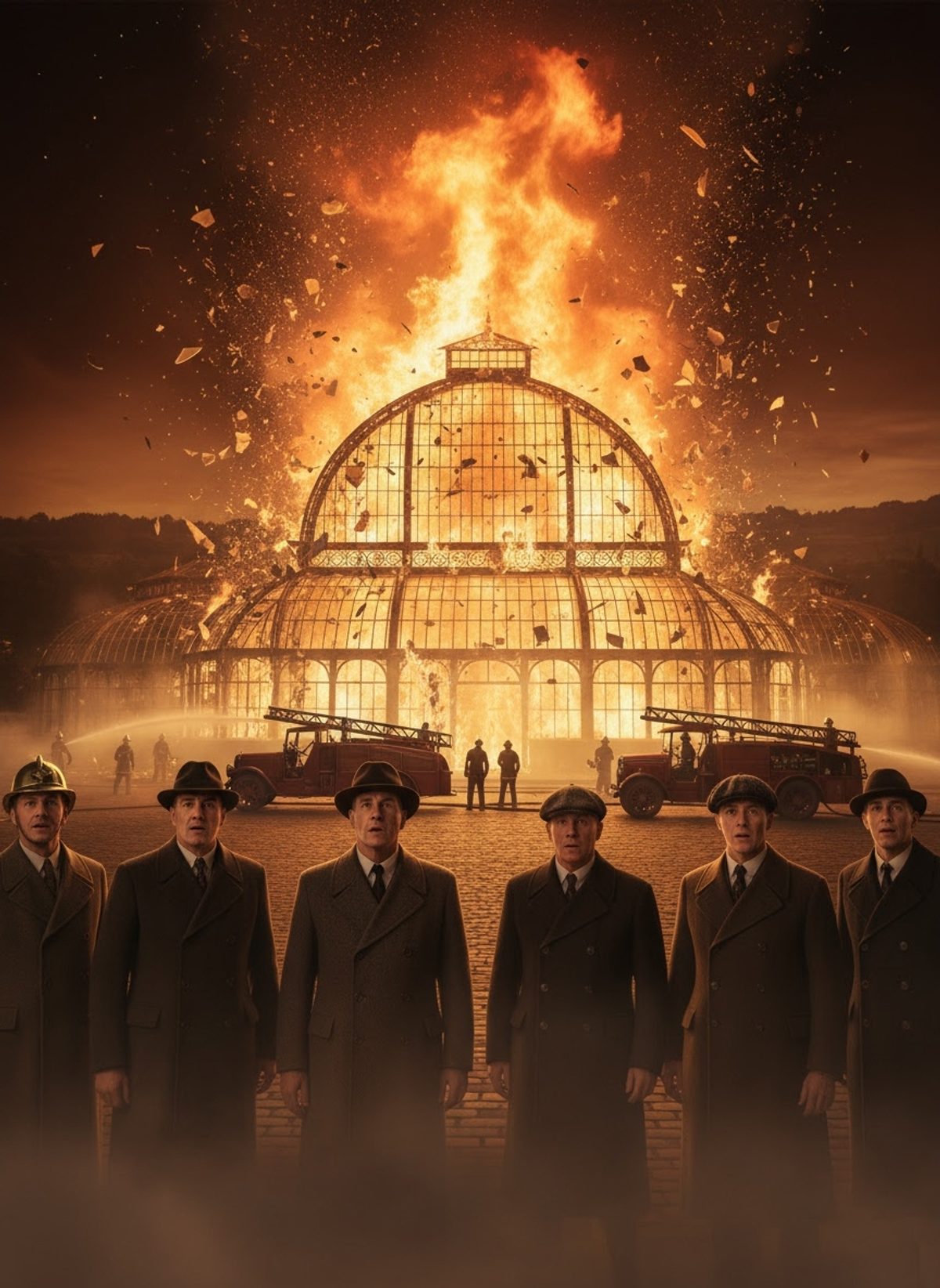
Yet, the might of engineering and history crumbled in the face of nature's fury. On the evening of 30 November 1936, the unthinkable occurred. Flames erupted within the Palace grounds, igniting a catastrophic blaze that swept swiftly through its iron skeleton and glass skin.
In an era before modern fire-fighting technologies, over two hundred firefighters fought valiantly to save the storied structure. Despite their efforts, the Palace's fiery light filled the skies, visible from Brighton nearly fifty miles away. The intense heat shattered the glass panes, cascading showers of molten shards to the ground.
By dawn, more than a structure was lost. It was a ghostly carcass of twisted iron and a reminder of temporal beauty laid waste. Eyewitnesses recounted the scene with a mixture of awe and despair, realising they were witnessing the final chapter of a beloved icon.
Read next: The Edwardian Hotel That Swallowed a Whole London Square
The Legacy of Ash
Despite its tragic end, the Crystal Palace's spirit endures in the memories of those it touched. Its innovative design and the legacy it left behind influenced architectural practices and culture for years to come. The site where it once stood remains a place of reflection and inspiration, rooted deeply in the history and identity of Britain.
Today, echoes of the Palace can be found in landmarks around the world, where engineers and architects continue to draw inspiration from its groundbreaking design. The tale of the Crystal Palace resembles a fleeting dream, a powerful lesson in the impermanence of human achievement.
A Symbol of Transience and Triumph
The story of the Crystal Palace is not just a tale of innovation, destruction, and loss. It represents the broader journey of human creativity—a journey that strives for greatness despite the fragility of its creations. Its brief existence served as a testament to the heights we can reach and the trials we must endure to get there.
As we look back on the night when the skies over London were alight with its burning form, we are reminded of the resilience innate in human ambition. The embers of the Palace, now dimmed but never forgotten, continue to illuminate our past and inspire our future.