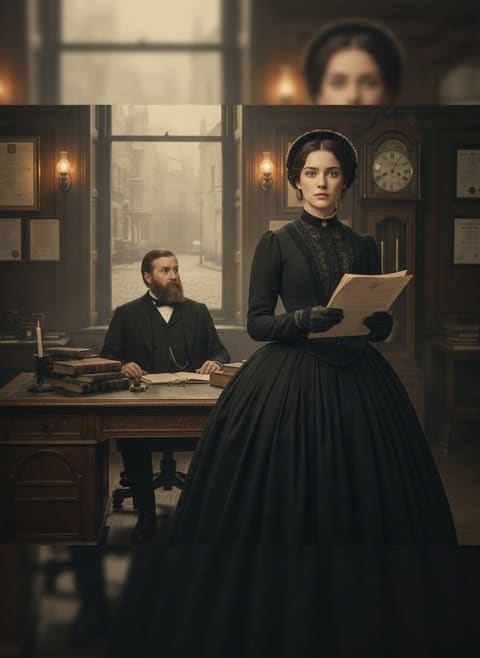
She spoke to the child every night. The comforting ritual might seem strange to most; the child had been dead for years.
A Dark Nursery: The Grief Customs of Victorian Mothers
In the heart of Victorian England, a peculiar and poignant tradition evolved: mothers sitting through the night with their deceased infants. It was a time when the sting of loss was ever-present, as Victorian England saw one in six children die before their first birthday.
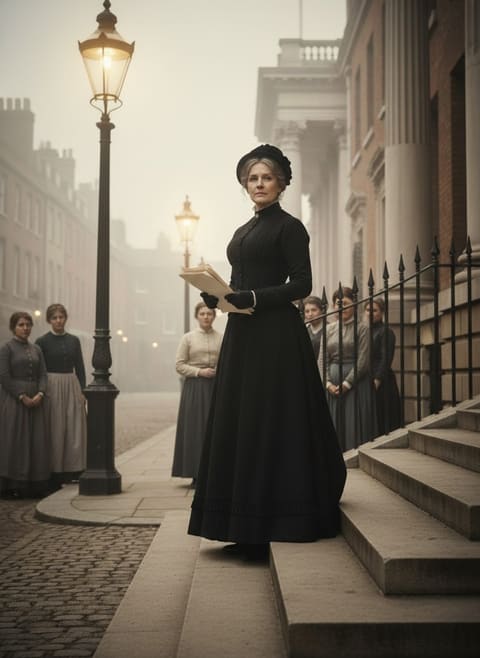
Grief was more than just an emotional journey; it was woven into the very fabric of daily life, guided often by social norms and manuals dictating proper mourning etiquette. Mothers were clad in black crepe dresses, their mourning extending into every facet of their own lives, yet even these societal scripts often fell short of consoling true maternal grief.
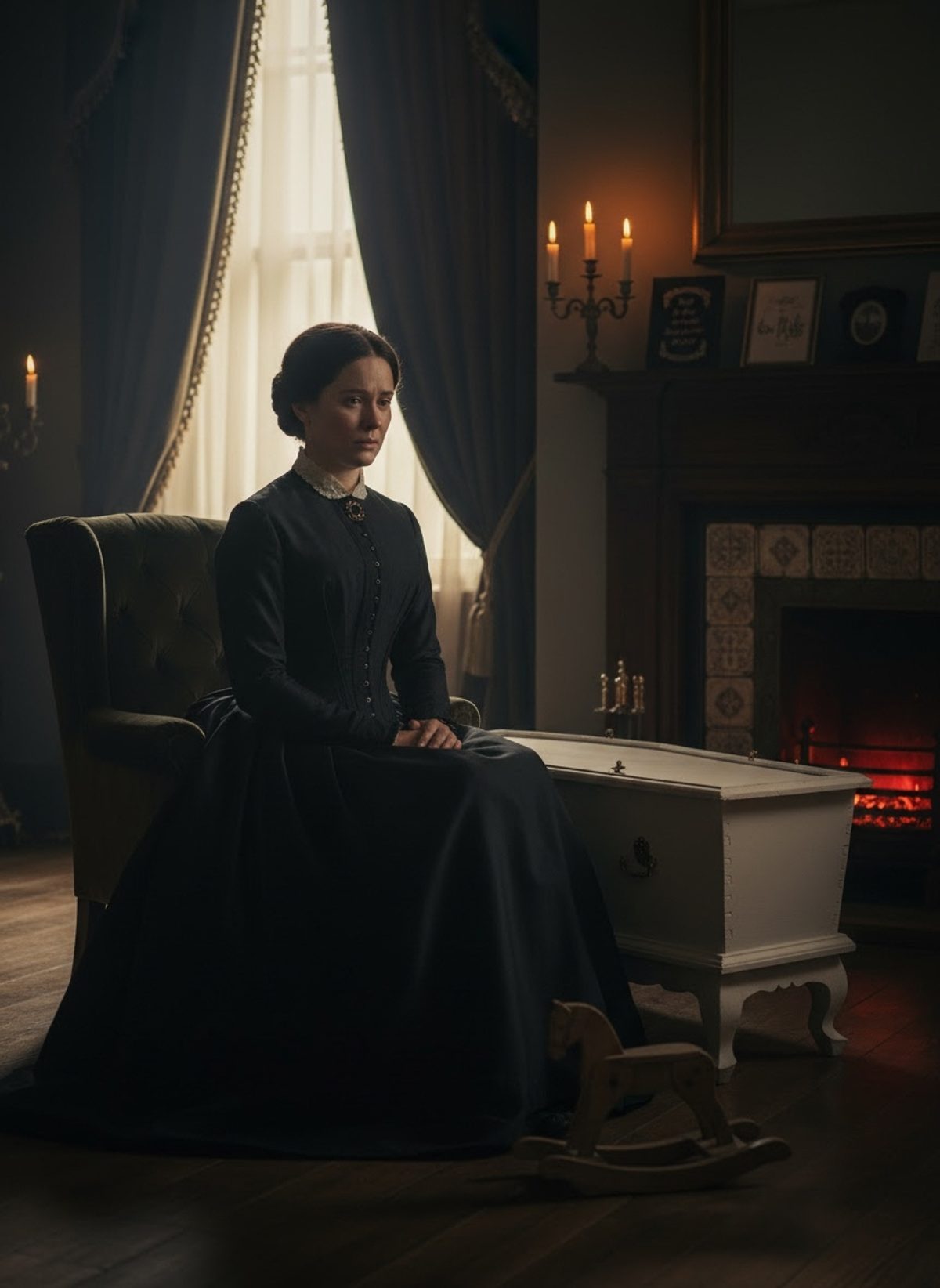
These dark nights spent with lost children were rarely spoken of, even as they occurred in the quiet homes of London and beyond. Imagine a room shrouded in shadow, a candle flickering softly in the corner as the mother sits silent vigil, the body of her child gently resting where it almost seems to breathe.
Read next: The Night a Victorian Acrobat Leapt Into History at the Alhambra
This was an act so deeply personal and raw, untouched by the cold hand of burgeoning medical science, which slowly began to offer explanations but few solutions. These women, bathed in grief, turned to what brought them solace: an unsanctioned communion with their lost children, a final act of devotion that defied practicality.
The rituals of mourning in Victorian England were elaborate, extending far beyond the privacy of one’s grief. It was an era where every corner of life was touched by mortality, and thus the boundaries between the living and the dead were blurred in ways almost unfathomable today.
Mothers’ mourning was particularly protracted, and often prescribed indefinitely by social expectation—yet the ritual of sitting with a lost child sprang from a need that defied prescription. In the dark, in whispered voices and quiet tears, there was a tranquil rebellion against the forwards march of time that bore their child away.
The Inconsolable: Connection Beyond the Mortal Coil
The societal backdrop of the late 19th century only deepened the chasm of grief. Despite rapid advancements in some areas of medicine, the high child mortality rate endured, making death a common facet of everyday life. Yet amidst the burgeoning industrial hum of Victorian cities, these personal traditions flourished in silence. This perseverance of ritual amidst progress serves as a testament to the complexity of human emotion and the eternal nature of maternal love.
Infant mortality during the 1870s and 1880s drove many aspects of life. Grief manuals became prolific, advising mothers on how to properly channel their sorrow into socially acceptable mourning practices. Yet for many, these directions were insufficient, failing to capture the uniqueness of each child's presence in their world.
The cultural practice of mourning was deeply ritualized: from the attire a mother donned to the length of her mourning period, dictated by societal norms. Within these prescribed periods, mothers found the societal permission to express their sorrow; but what about beyond the crepe and customs?
Central to this phenomenon was the enduring need for connection, especially when medicine only offered cold statistics. In a time when explanation was scarce, these women chose a visceral connectedness to the spirit of their children. Perhaps it was the whispered words, the soft caress upon the child’s brow, or the silent assurances that nothing—not even death—could separate them. Whatever the method, these nightly vigils were the mothers’ way of erecting a lasting memorial more profound than any headstone.
Read next: The Night George Williams Lit a Lamp in a London Warehouse
Why We Remember: The Enduring Legacy of Unspoken Traditions
While the imagery of a mother sitting with her deceased child may unsettle modern sensibilities, it remains a poignant reminder of a time when grief was not meant to be concealed. It speaks to the Victorian era's intricate relationship with death, where mourning was both public performance and deeply personal experience. These mothers, through their defiant devotion, carved spaces where grief was allowed to rest alongside love without judgment or shame.
This almost-private mourning emerged as a sanctuary, a space for mothers to reconcile the cruel dance of life and loss. It was and remains an expression of raw, undiluted emotion—a powerful statement of unconditional love that echoes through history. As the norms of mourning evolved beyond the Victorian age, so too did customs surrounding death, but the essence of holding onto lost loved ones lingered like a soft echo, quietly influencing the resilience of grief rituals across generations.
The story of these Victorian mothers challenges us to reconsider the balance of progress against human emotion, urging us to remember that while time marches forward, the heart still holds sacred the intimate dances of love and loss.
This tale, though unsung in formal texts, resonates as a testament to the enduring spiritual bonds that defy the temporal chains of mortality. It is a narrative that calls into question not only how we handle grief but its rightful place within our journey—a journeystill traveled by any who have loved and lost.