The fog settled heavily over Bristol as autumn winds bent low the treetops. It was the kind of day where the ground bore the weight of its own dampness. In the heart of this ancient city, among the bustling markets and industrious chimneys, a spectacle of unexpected grandeur was coming into view. Where one might expect a humble factory facade, something truly remarkable was taking shape—a monument of artistry and defiance.
The dawn of the twentieth century was a time of great change, innovation, and, at times, struggle for identity and immortality through lasting creations. It was in this context that Edward Everard, a prominent printer from Bristol, set out to craft something beyond mere productivity—a canvas in tile and imagination that would etch his aspirations across a city skyline dominated by brick and mortar.
The Vision Behind the Tiles
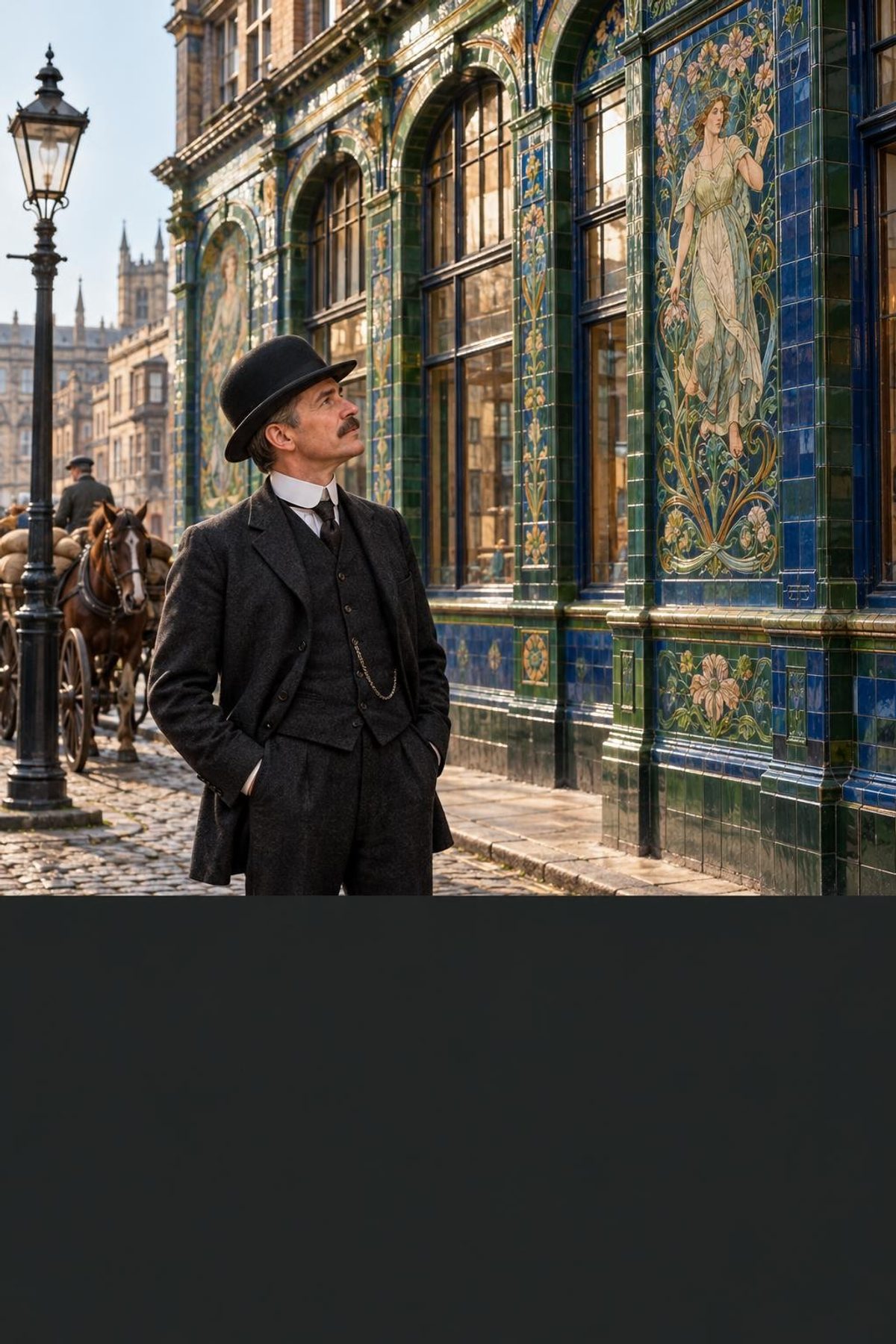
Edward Everard was no ordinary printer. In the era when ordinary was the currency of an industrial Britain, Everard yearned for the exceptional. His vision was clear as he sketched plans for his new printing works in 1900: the structure itself would speak, etched in a language of motifs and grand imagery. He turned not to brick or stone, but to glazed tiles—a medium as durable as his determination to make a statement.
Everard's choice of glazed tiles was not merely aesthetic but symbolic. These tiles held echoes of craftsmanship revived by William Morris, a figure who had, until his death in 1896, championed the union of beauty and function in the arts.
Read next: The Edwardian Hotel That Swallowed a Whole London Square
Having revolutionized fine printing, Morris's legacy resonated deeply within Everard’s aspirations. Thus, the tiles became not just decoration, but a narrative in their own right—a quiet tribute to a man who had left an indelible imprint on the world of printing.
A Cathedral Facade in the Heart of Industry
As the facade took shape, it became evident that Everard was crafting an open book of artistry on the side of a factory. Here were scenes filled with allegorical figures, intertwining scrolls, and vibrant colors that defied the soot and grey of Bristol's industrial aesthetic. Everard's facade was an invitation to stop and reflect amid the mechanical grind—the rhythm of machines counterpointed by the eternal promise of art and craft.
The facade itself was a vast fresco rendered in tile, showing figures like Johannes Gutenberg and William Morris standing sentinel over the city, forever frozen in the act of creation. It was the largest decorative glazed tile facade in England, spanning the entire breadth of the building. These tiles, fired with colors that defied the muted tones of their surroundings, became a conversation with an entire city—a discourse on creativity, innovation, and homage.
The Lure of the Unseen
It is a curious twist of fate that while Everard’s facade became celebrated for its beauty and scale, the name he quietly admired—the name he immortalized in tile—whispered through the art itself. William Morris, who had labored tirelessly not just to produce fine works, but to inspire others through a marriage of art and industry, was given a kind of everlasting presence on Everard’s wall.
Read next: The Night a Victorian Acrobat Leapt Into History at the Alhambra
Therein lay a wonder of historical happenstance: a Bristol printer, in crafting something to be seen, honored another whose essence was thoughtful introspection. Everard, by spending lavishly on this grand facade—a salute cast in clay—ensured that Morris's philosophy and influence endured far beyond the printed pages they had each occupied. This was a quiet monument, a resolute statement captured in porcelain, echoing through the ages.
A Legacy Etched in Glaze
As decades flowed like water into the millennium, the facade remained—a static drama played out over glazed surfaces. It’s a story of a city, a craft, and two men whose lives, art, and ambitions crossed paths. Travelers and residents alike continued to pause at its boundary, held captive by the mosaic of colors and forms that spoke across time, whispering of ideals and creativity.
Edward Everard’s facade endures as more than brilliance clashed against the mundane fabric of industry; it’s an insight into the synergy of art, homage, and the eternal human longing to create something lasting. In honoring William Morris, Everard also carved out a piece of history for himself—a testament under Bristol’s ever-changing skies.