The chill of a Crimean dawn clung to the air as mist rolled down from the jagged hills, settling in tendrils around the British encampment. Grey waves lapped listlessly against the shores of Balaklava's harbor, a place where whispers of the sea were overshadowed by the thundering warnings of war. On that pivotal morning of October 25, 1854, the stakes could not have been higher. In just a few hours, 500 Highlanders would find themselves as the lone barricade between a supply base critical to the British effort in the Crimean War and a formidable Russian cavalry. Outnumbered and outgunned, they had a scant line of sand beneath their feet, but their hearts were resolute.
The Scant Line of Sand
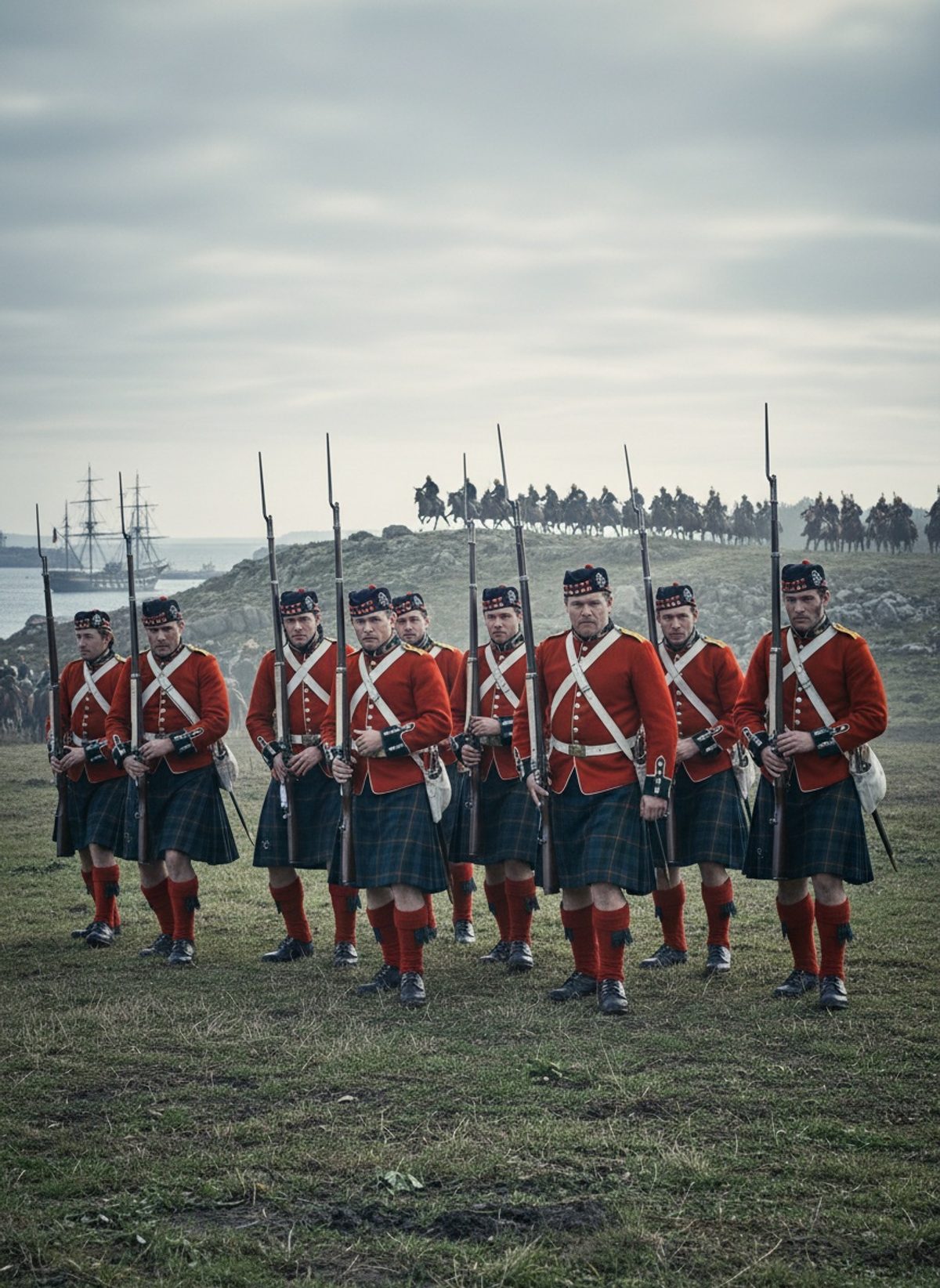
At first light, the low hill outside Balaklava was merely a speck in the larger tapestry of the conflict. The British had established their supply base here, vital for sustaining the allied forces amidst the grinding gears of war. Five hundred Highlanders, famed for their fierce fighting spirit and loyalty, stood as the last bulwark. The landscape was deceptively tranquil, yet every shadow seemed to harbor impending doom. Commanding officer Sir Colin Campbell glanced at his men, the mist mingling with their breaths as they stood, not as soldiers in a line, but as a phalanx of determination.
Their mission was clear—hold fast, or risk losing the lifeline to the entire army. These Scotsmen, clad in kilts that fluttered in the wind, understood the gravity of their post. Colin Campbell's instructions were as unwavering as the nearby rocky outcrops: "There is no retreat from here, men. You must die where you stand." The words hung heavy in the chilled morning air. Their sole duty was to stand firm, their iron will a potent force against an overwhelming adversary.
The Charge of the Heavy Brigade
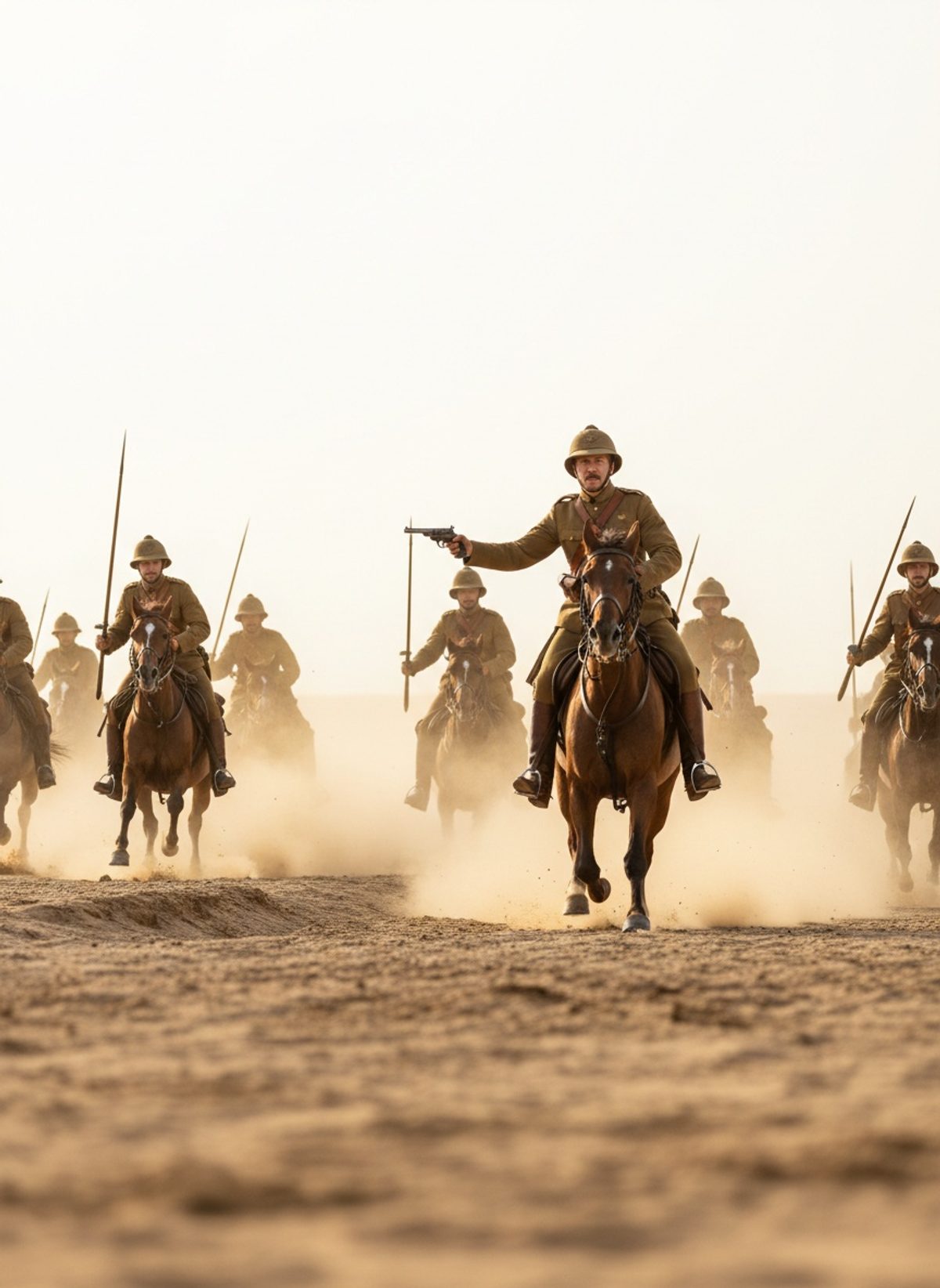
As the sun crept higher, the distant clamor of hooves intensified, heralding the approach of the Russian cavalry. Two and a half thousand horsemen bore down, their sheer numbers a tempest of impending destruction. Dust rose in their wake, a spectral beacon of the threat soon to crash upon the Highlanders' meager line. Yet, amid the din of pounding hooves, there was a strange stillness among the Scots.
Read next: The Day a Victorian Doctor Defied His Hospital to Save the Poor
Campbell's strategic acumen had brought the Highlanders into a staggeringly thin line, barely two men deep. Such an unorthodox formation seemed suicidal to any seasoned tactician. However, Campbell knew that conventional wisdom had no place here, where the enormity of the threat required desperate measures. His gamble was simple: present a line so narrow that it might just stretch wide enough to cover the breadth of the hilltop. 'Into the mouth of hell,' as Tennyson would later write in another context, but it was more than charge and counter-charge— it was a waiting game, one reliant on steel nerves.
The Echo of the Pipes
Amidst the tension, a curious sound cut through the air—the haunting melody of the bagpipes, carried on the wind. The mournful yet stirring notes seemed to ripple over the field, a reminder to every Highlander of the hills and glens they had left behind. It was a call to courage, a tether to their heritage, warming their spirits against the frosty clutches of fear.
The sound of the pipes echoed like a memory of their homeland, its ancient call urging them to stand. As the Russian cavalry charged, the air thickened with anticipation and adrenaline. Each Highlander, with bayonet primed and breath steady, prepared to face the storm head-on. The clash would come not as a tidal wave, but a battering ram, testing the mettle of the Scottish resolve.
The Unyielding Stand
In the chaos of battle, with cavalry swirling around their meager line, the Highlanders held their ground. Steel clashed with steel, cries of war mixed with the screams of wounded horses and men. The Russians, expecting a swift breakthrough, pounded again and again at this thin red line, as unyielding as ancient blood flowing through stone. Yet, despite the crush of numbers, the Scots did not falter.
Campbell's audacious decision to form two deep rose to meet its moment. As comrades fell, others surged to fill the gaps, bonds forged in fire holding their resolve. The flanks were not merely held—they became a crucible where the Russian advance was tempered, checked, and finally turned. In this maelstrom, a resolve born of necessity and heritage wrought a miracle—a standoff where none was thought possible.
A Lesson in Courage
As the sun dipped towards the horizon, the acrid smoke of battle drifted across the field. The Russians, bloodied and frustrated, withdrew. The line, though battered, had held. History remembered this day not only for its audacity but for its potent lesson in the synergy of bold leadership and unwavering courage. The small hill outside Balaklava may now rest silent under the Crimean skyscape, but on that breath-stealing morning, it was a pivot point in a war where men's hearts and their sacrifice made all the difference.
The tale of the Highlanders at Balaklava stands resonant in its demonstration of human resolve. In today's fast-paced, ever-shifting world, it reminds us that sometimes standing firm is the greatest victory. The sound of the pipes has long faded into the annals of history, but the enduring spirit of that day lingers—proof that courage, like the steel of swords, cuts through the tide of disparity.