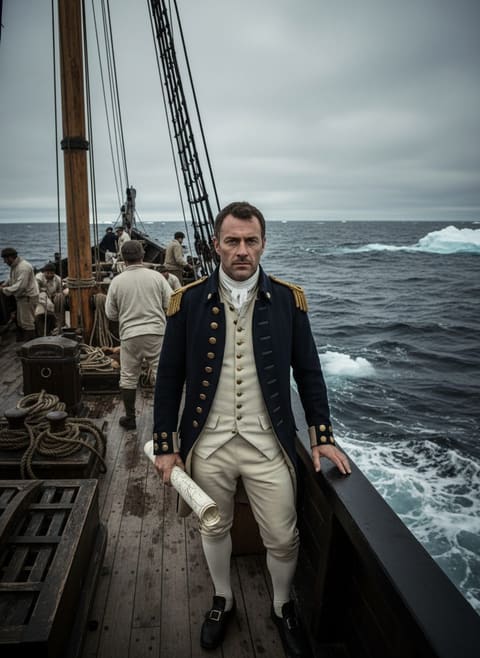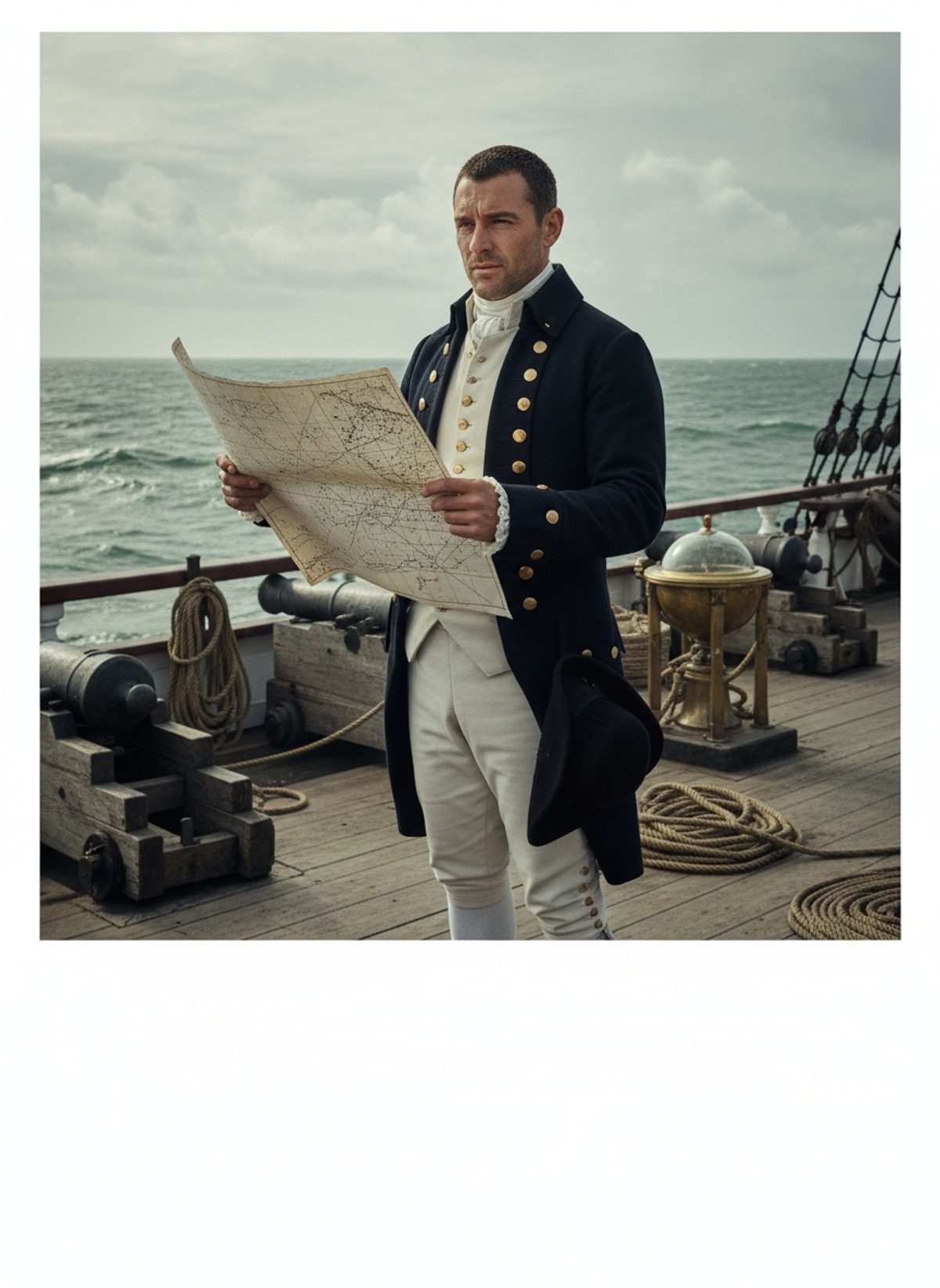
The relentless wind howled through the rigging as James Cook felt the spray of saltwater on his cheek. Standing firm on the quarterdeck of the Endeavour, Cook watched the thin line of the Devon coast slip below the horizon, carrying only faith and unmarked charts. A man of humble origins now commanded a ship navigating into a world unknown to European eyes. What lay ahead was as uncertain as the turbulent waters below.
The Unlikely Captain
James Cook's story began far from the bustling docks of England. His roots were firmly planted in Marton, a tiny village in Yorkshire. Born to a Scottish farm laborer and his wife, Cook's early years gave no hint of the journeys that would elevate him to the annals of history. Without the benefits of wealth or noble lineage, Cook's path was wrought from grit and an insatiable curiosity about the world.
In an era when lineage often dictated destiny, Cook navigated through societal ranks with remarkable tenacity. Apprenticed to a Quaker shopkeeper in the coastal village of Staithes, fate would have it that Cook's love affair with the sea began when he transferred his apprenticeship to a ship-owning family in Whitby. Here, as a humble seaman on North Sea colliers, Cook mastered the skills of navigation and honed an eye for mapping the world's coasts with precision — skills that would later redefine the known world.
By the time Cook was offered command of the Endeavour for his ambitious voyage, he had already charted some of Newfoundland’s treacherous waters with meticulous detail. The Admiralty, recognizing his brilliance, entrusted him not just to sail but to rewrite geography, to be the eyes through which Europe would glimpse the vast Pacific for the first time. In August of 1768, James Cook departed from Plymouth, pushing beyond the comfort of familiar shores into the chasm of the unknown.
Read next: The Day a Welsh Naturalist Walked Into a Burning Jungle Alone
The Vessel That Could
The Endeavour, a converted Whitby collier, was not a vessel adorned with the grandeur one might expect for such a monumental voyage. Her keel was flat-bottomed, designed more for the shallow, shifting sands of England's eastern coast than for the uncertain tides ahead. Yet, it was this sturdy build that offered resilience against the mighty Pacific swells and earned her a place in the pantheon of exploration ships.
Bathed in the golden hues of a Devon sun, the Endeavour’s deck was a bustling hub of activity. She carried a complement of scientists and artists, including the renowned botanist Joseph Banks and a team ready to catalog the continent's unknown species. This alliance of seamen and scholars marked one of the first times such collaboration was attempted, promising not just new maps, but new knowledge of the flora and fauna that inhabited these distant lands.
Below deck, the scene was vastly different. Sea chests and casks lined the cramped quarters, mingling with the scent of salted meat and pitch. Life on board was far from romantic, demanding sacrifices from all aboard. Yet, it was this very spirit of endurance and unity amid hardship that stitched together a tapestry of discovery — a fact often omitted from tales of golden age exploration.
The Edge of the World
As the Endeavour sliced through waters charted only by whispers and tales, Cook's ambitions were tested against nature's formidable backdrop. Many believed a vast southern continent lay hidden beyond the horizon, a myth that had captivated European imaginings for centuries. It was Cook's mission to find it, if it existed at all.
The endless expanse of the Pacific exposed the men to both its beauty and brutality. They weathered fierce squalls, sought refuge in hidden bays, and faced the merciless toll of scurvy — a seafarer's plague that debilitated many of the crew. Despite the adversity, every shoreline etched onto Cook's charts came alive with the promise of new frontiers and possibilities. And with each confirmed longitude, a clearer picture of the world began to emerge.
Read next: The Day a One-Eyed Captain Sailed Into the Frozen Unknown
The lands they encountered were rich with new life and cultures. For many aboard, the encounters with indigenous peoples were their first glimpse of societies shaped by isolation and the maritime wealth of the Pacific. Such encounters were delicate; marked by initial misunderstanding yet punctuated by moments shared over offerings, gestures, and the universal language of curiosity. Cook’s diplomatic tact often turned suspicion into curiosity and conflict into cooperation, revealing aspects of leadership often overshadowed by his navigational prowess.
A New World Mapped
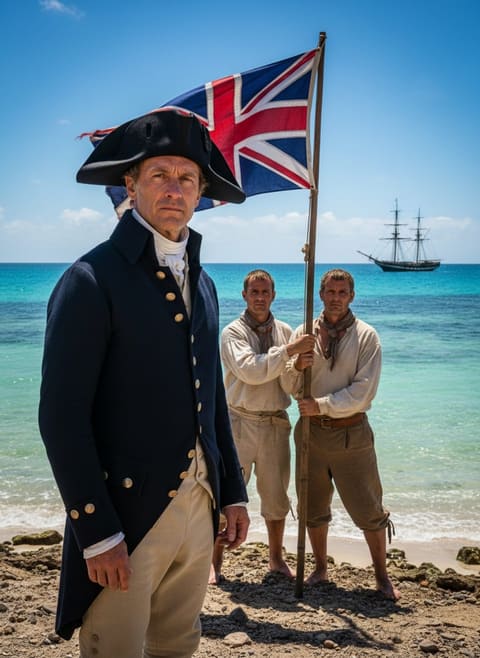
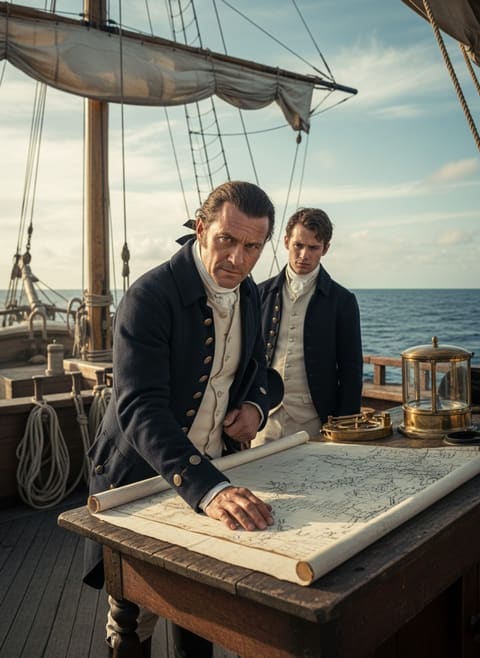
When James Cook returned to England, his charts and reports were more than mere documents; they were keys that unlocked the mysteries of the great southern hemisphere. The maps that Cook produced depicted coastlines with an accuracy that astonished contemporaries, laying to rest many myths about a southern continent and cataloguing vast stretches of the Pacific, which were previously blank. Cook’s journeys challenged the boundaries of human understanding, shifting Europe’s view of the world itself.
Cook’s legacy did not rest on conquest or riches but on the profound expansion of knowledge and understanding. His journey marked a transformative era in mapping and exploration, where science stood as a central pillar alongside seafaring courage. The world, once perceived as a dominion splintered by unknown seas, became a global tapestry, rich in diversity and endless in its potential for discovery.
As we reflect on the audacity of a butcher's son from Marton embarking on such an odyssey, we are reminded that the spirit of exploration transcends conditioning and circumstance. It calls upon the brave to venture beyond the known, to question what lies beyond the horizons of certainty, and to embrace the uncharted with open hearts and minds. Such was the essence of James Cook's voyage into the ends of the Earth, charting more than just new lands, but the ever-expanding limits of human possibility.