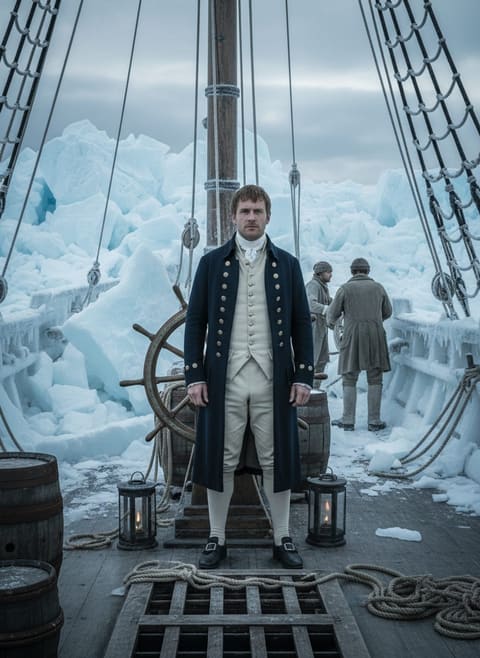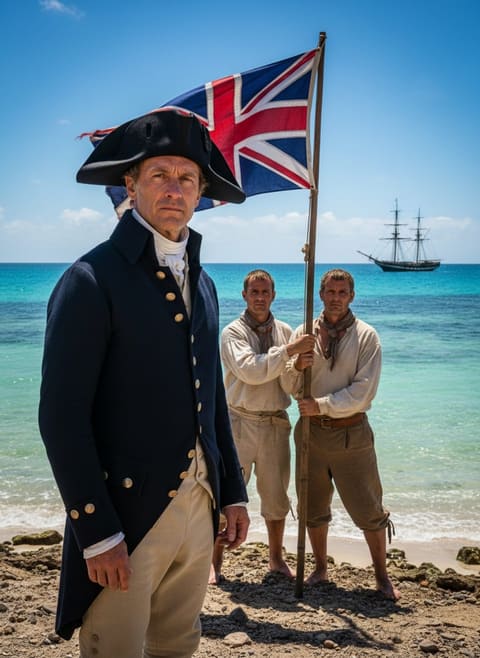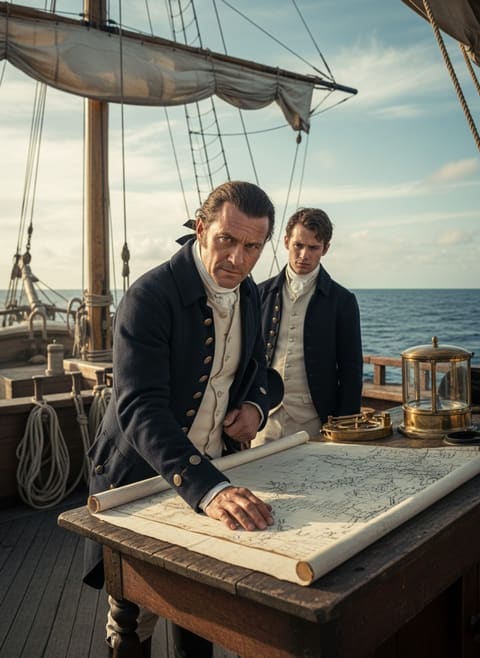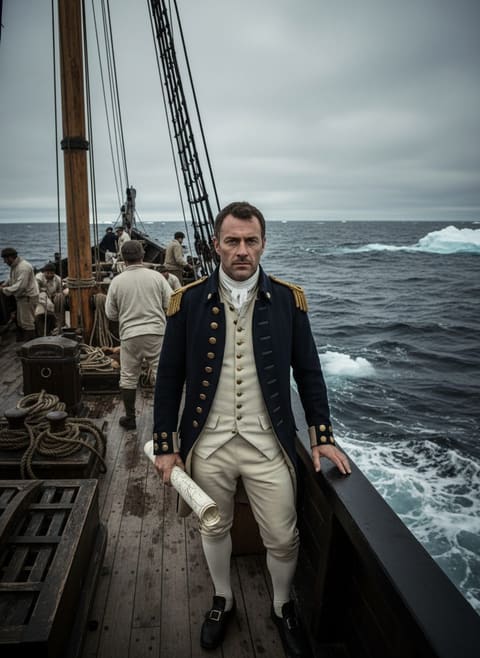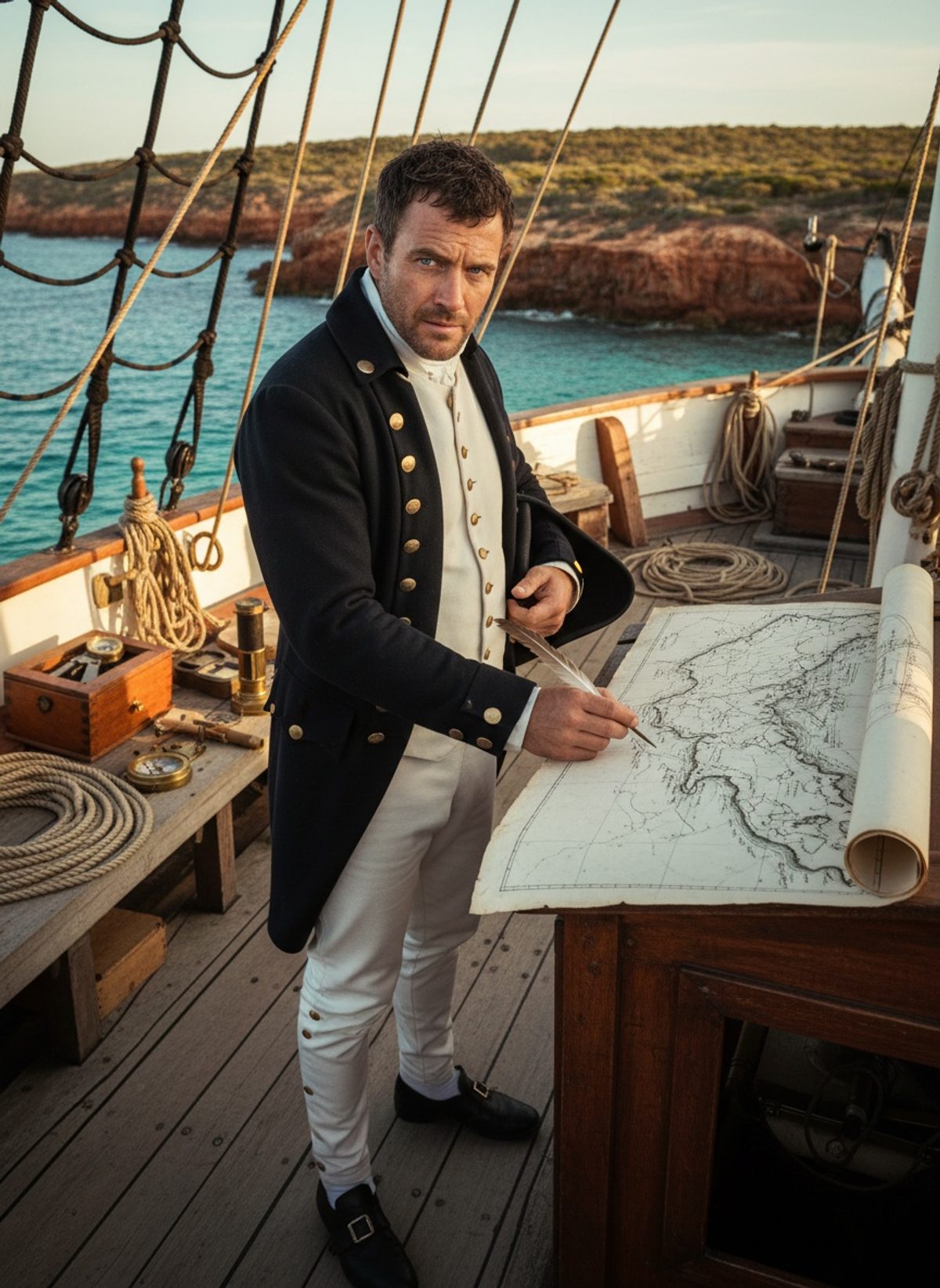
He had a reputation as a perfectionist. This perfectionism would lead him into uncharted waters, quite literally, when he took on the challenge of mapping an entire continent's coastline.
In the first year of the 19th century, the British Empire's horizons were vast, yet there were still corners of the world shrouded in mystery. Enter Matthew Flinders, a young and daring Royal Navy lieutenant driven by the ambition to uncover the secrets of an elusive continent we now know as Australia. This wasn't mere wanderlust; Flinders was part of a bold British initiative to establish territorial claims and secure new resources, showcasing diplomacy in tandem with exploration. Flinders was tasked with mapping the breathtakingly vast and perilous Australian coastline—a task unlike anything attempted before that demanded a meticulous mind and an adventurous spirit.
The HMS Investigator, the ship assigned to Flinders, seemed less a vanguard of a grand British venture and more a leaky bucket of dubious seaworthiness. A testament to both the limited resources of the time and perhaps a testament to Britain's own sense of overconfidence, it was understandable that many saw this ship as only fit for the scrapyard. Yet, Flinders and his crew, which included his ever-faithful cat, Trim, embraced their creaky vessel with vigour and determination. Here was a team drawn together by fate and necessity, tasked with navigating and charting vast waters no Englishman had ever fully grasped.
In truth, Flinders was not alone in appreciating the gravity of this mission. Navigation until this point had relied heavily on rough sketches and scattered accounts from earlier Dutch and French explorers. Each shoreline was a new discovery, each inlet a mystery waiting to be unveiled. Flinders approached the task with the diligence of a man who understood that history was yet to write itself, and he would be its guide wielding the quill. The mission was more profound than military or commercial gain. It was about the complete understanding and connection of disparate parts of this vast land, many themselves threaded together only by the smallest of paths.
Read next: The Day a Welsh Naturalist Walked Into the Unknown Alone
With a modest crew of like-minded adventurers, Flinders set sail. As the Investigator defied the odds riding the vast blue swells, this voyage took them to breathtaking landscapes, both harsh and stunningly beautiful, carving their names into the toponymies of Australia—places like Port Lincoln and Bass Strait bear testimony to the sheer ground covered. Each discovery bore reflection on the triumph and challenge an empire faced, building the foundation of a modern Australian nation. These places would eventually serve as the commercial and cultural bastions of what would become one of the most vibrant countries in the world. Flinders' chronicled journals brimmed with fascination and detail, creative fuel inspired from the very land itself.
The task proved perilous, with the Investigator's dubious integrity constantly threatening disaster. Tense encounters with maritime storms could have easily meant the loss of the vessel, or worse, the lives aboard it. Through these trials, Flinders commanded not just respect but inspiration from his men, bolstering morale and instilling the belief that what they were doing was nothing short of monumental. All was bound together by the fortitude of one man, his love of knowledge and navigation steadfast among the constant perils of a journey that pointed perpetually into the unknown.
Read next: The Day a Scots Botanist Walked Into the Jungle and Never Came Back
When Flinders successfully navigated around the Cape York Peninsula, relief gave way to triumph. Yet his return to England was delayed by perhaps the greatest twist of misfortune, an unexpected six-year detention by the French on Mauritius. Despite the loss of time, Flinders never lost sight of his mission. The maps he painstakingly crafted eventually emerged, turning once nebulous coastal lines into a cohesive continental silhouette. These charts were not only revelatory maps but true documents of artistry, each stroke capturing both the promise and peril of the land yet to embrace its future.
And therein lies the significance of Matthew Flinders' work. This journey into the terrifying unknown, aided by a crew from all corners of the Empire, united under one purpose, transformed speculation into solid, useable knowledge. They returned not just with maps, but with a new understanding of the world, new encounters with Indigenous Australians that lodged Australia firmly in the grasp of Western imagination and imperial ambition. Matthew Flinders left us more than maps; he left aspirations, grandeur, and the sense that no horizon was too far. The echoes of Flinders' voyage continue to ripple through time, whimsically influencing the course of history.
Today, Matthew Flinders is immortalised in numerous ways, including the names of countless geographic locations, a testament to past adventures. But more importantly, the work Flinders did laid the groundwork for an enduring relationship between Britain and Australia, bridging oceans and cultures. He captured a place not within oceans but in history, and not by conquest of arms, but by discovery and curiosity. The story of Flinders and his tireless crew is about how a continent was woven into the fabric of understanding, one nautical mile at a time, by a sailor who dared to draw the edge of the world.