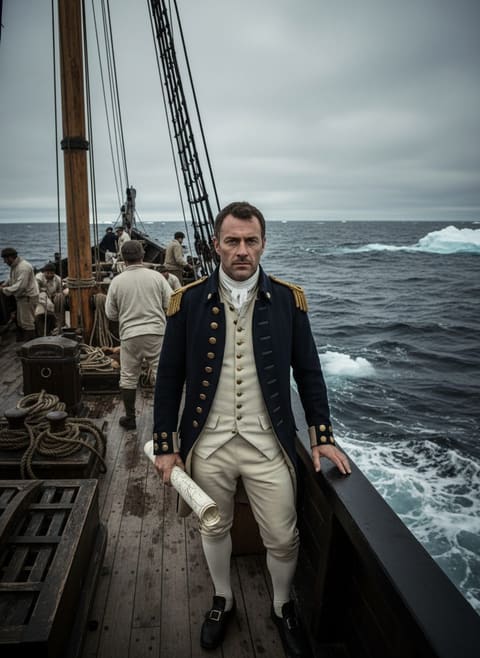
The Arctic Circle in the heart of summer is an ethereal paradox. The sun clings to the sky with an unyielding embrace, denying the horizon its nightly descent, while the chill in the air whispers remnants of winter's harsh touch. The silence is profound, pierced only by the creaks and groans of icebergs, colossal sentinels adrift in icy waters. In the frosty expanse of July 1773, the stillness of this icy world awaited a breach from an intrepid interloper, a ship sailing further north than any had dared venture before. At its helm stood Constantine Phipps, as intrepid a mariner as his age had ever known, peering into the frozen unknown.
The Royal Navy Ventures North
By the latter half of the 18th century, the Royal Navy was in constant pursuit of discovery, securing Britain's imperial interests and mapping the uncharted corners of the globe. However, no waters remained as impenetrable as those veiled by polar ice. The idea of a navigable route through the icy northern passages had captured the collective imagination of explorers and financiers alike. It was in this fervent spirit that Captain Constantine Phipps, later renowned as the second Baron Mulgrave, embarked on a journey that would etch his name in the annals of exploration.
Phipps led the expedition with two converted bomb vessels, specifically engineered to withstand the punishing rigor of Arctic conditions. As the ships carved through the water, they pushed ever closer to an unyielding icy frontier. The very notion of sailing beyond the reaches of known navigation was daunting, yet the captain remained undeterred. The atmosphere aboard was a volatile mix of trepidation and determination, with every inch gained a testament to indomitable spirit. Soon, they would find themselves confronting nature's last bastion.
The Ice Closes In
As the vessels pressed further into the Arctic, the realm of myth became a stark, formidable reality. Slowly but inexorably, the ice fields closed in, as if orchestrated by an unseen hand. Gargantuan sheets, as if etched by a titan's blade, threatened to besiege the ships. The rigging sang an eerie tune as the hulls braced against the encroaching congelation. The pervasive sound of cracking and crashing ice punctuated the unending daylight, moments of suspense that no training could truly prepare one for.
Read next: The Day a Scots Surgeon Walked Into the Heart of Africa
The sailors, seasoned in their own rights, found themselves in a precarious battle with the elements, relying on the sharp instincts of their leader who navigated through the ice by wit and will. Time and time again, the ships narrowly avoided becoming permanent fixtures in this icy tableau. Each day spent in these perilous waters chiseled away at the psyche of the crew; mutterings of doubt could scarcely be brushed aside as the specter of failure lurked alongside them.
On the Brink of Discovery
Amidst the continuous struggle with the ice, a tantalizing vista unfolded before them—endless expanses of what seemed to be unobtainable horizon. Here, at the threshold of the north, none could deny the sense of discovery that tinged the air with excitement and fear in equal measure. Captain Phipps had led his ships to the edge of the habitable world, charting waters that no sailor had dared before.
Though constrained by the physical and mental toll exacted by the journey, the spirit of exploration burned bright. Every observation made, every measurement taken, and every chart drawn was a step further into uncharted territories. The naming of the arcane features they encountered—a mountain here, an inlet there—was a privilege seldom afforded in the age of exploration. Even as the attempt at finding a northern passage seemed increasingly futile, the grandeur of the endeavor resonated with each soul aboard.
Read next: The Day a Devon Captain Charted the Pacific and Changed the World
Turning Back at the World's Edge
Faced with the crushing inevitability of an icebound fate and a crew growing amidst murmurs of mutiny, Phipps made the courageous decision to turn back. It was a testament not to human defeat but to survival, for in the frigid wild, preservation was paramount. The journey homeward was one of reflection, with minds grappling with what had been seen and experienced.
Returning to England, Constantine Phipps brought with him not just tales of near-miss catastrophe but invaluable maps and observations that would serve future adventurers aiming at the Arctic mystical expanse. It was not merely the act of having gone further north that constituted his legacy, but the resilience in face of the unseen challengers that winter's icy grip presented.
In a world where exploration was intrinsic to national identity, Phipps' expedition underscored the thin line between possibility and peril. The truth of the Arctic frontier lay bare—inviting future generations to dream, explore, and dare once more. The exploits of Phipps became the lodestar for those yearning to reach beyond the known, encapsulating the eternal human quest for knowledge and the conquest of the great unknown.