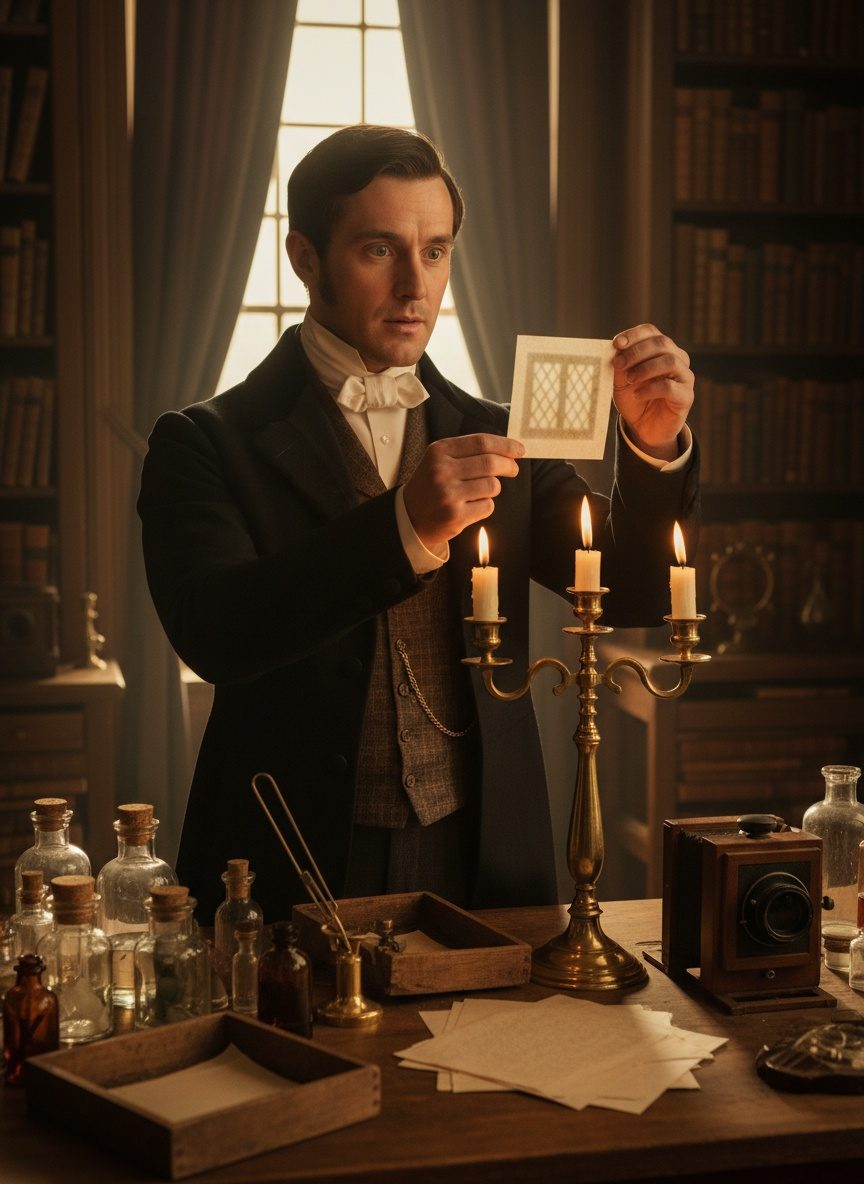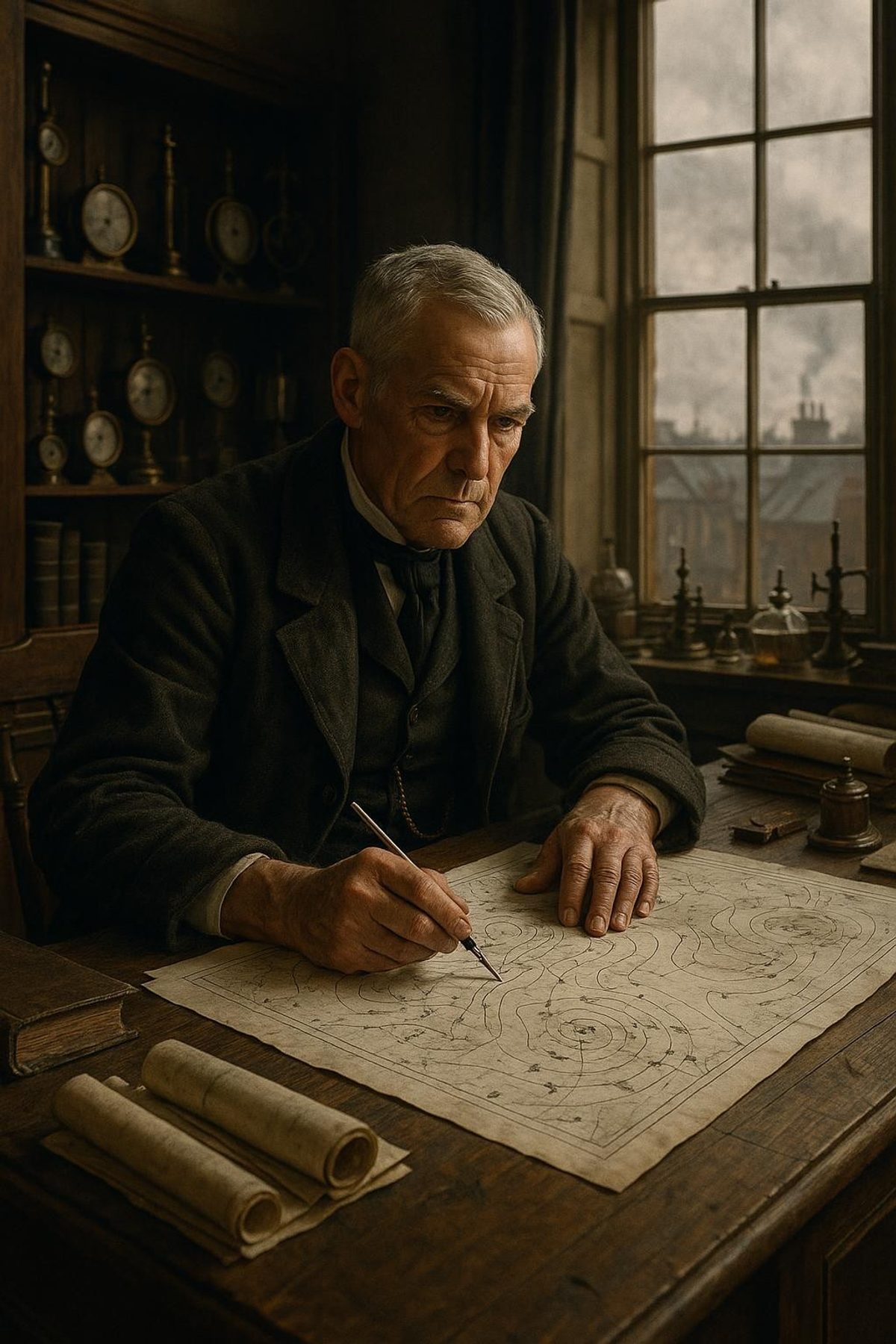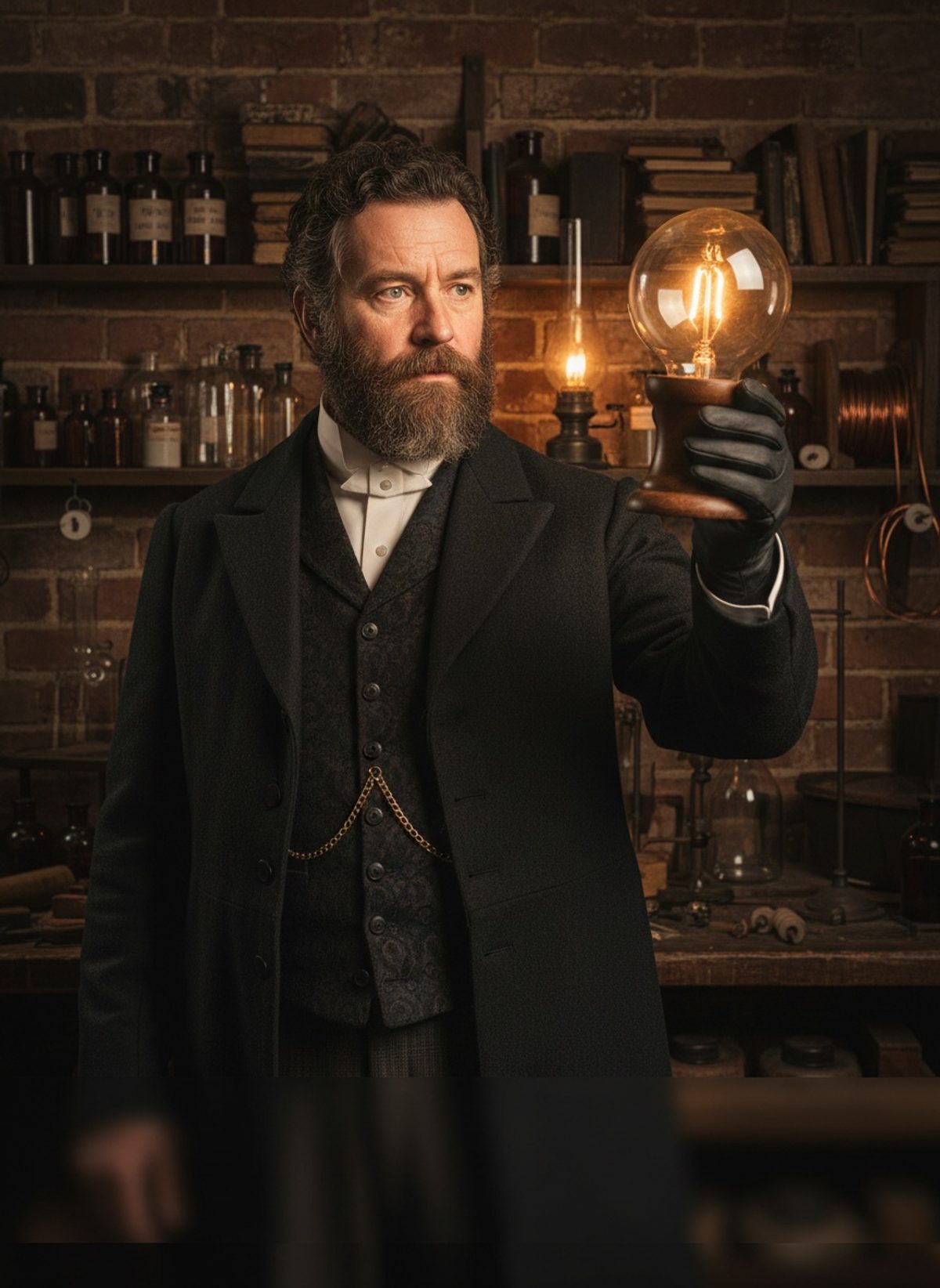
He was the son of a brewer. And he ignited a revolution that forever changed how we see the world.
The Unremarkable Beginnings of Joseph Swan
As the son of a brewer in Sunderland, Joseph Swan hardly seemed destined for greatness. The industrial northeast of England was a place of hard graft, chimney stacks making silhouettes against eternally overcast skies. But within the rows of terraced houses, nestled in gray cobblestone streets, Swan's mind was as alive with possibility as the flickering gas lamps that illuminated the night. Unlike the era’s renowned inventors working for well-funded American enterprises, Swan remained an outsider — a self-taught chemist tinkering in obscurity, driven by an insatiable curiosity.
From a young age, Swan's fascination with chemistry and electricity marked him as an oddity among the children of Sunderland. Where others saw merely the smoke and bustle of factory life, Swan envisioned harnessing the invisible forces of electricity. The groundwork of his peculiar interest had been laid early on as he devoured literature on chemistry and electrical phenomena, most of which were considered esoteric by contemporary standards.
By the 1870s, gas lighting was predominant, grimy and ephemeral. The soot-blackened ceilings and the air's acrid tang spoke of its imperfections. It was an age yearning for the clean, reliable promise of electric light. It was an age that needed Joseph Swan.
Read next: The Day a Glazier's Son Gave the World Its Age
The Spark of Innovation
In 1878, Joseph Swan stood before a modest workbench in the dimly lit room of his Sunderland home. Around him were various instruments, bottles of chemicals, lengths of wiring, and most importantly, an array of glass bulbs of different sizes. His focus: a fragile carbon filament suspended inside one of those bulbs, waiting to prove his theory. With a keen yet nervous confidence, he connected it to a battery.
The filament glowed. It was not the warm, natural hue of a candle, nor the lurid flicker of gaslight that marked the era. Instead, it was a new kind of light, steady and unabating. A light that promised the onset of an age unshrouded by darkness. This was the world's first electric light. Swan’s achievement was remarkable enough to overshadow anything he had done before — an incandescent lamp that could burn longer and more efficiently than ever thought possible.
In securing the filament within a vacuum-sealed globe, he addressed the principal challenge that had dogged other inventors: oxidation. In the absence of air, the filament did not readily burn away, allowing the lamp to sustain its glow. Swan’s childhood curiosity had culminated in a triumph of human ingenuity. He was not just a brewer’s son. He was a harbinger of electric illumination.
Overcoming the Shadow of Edison
Across the Atlantic, another inventor named Thomas Edison was diligently working on his own electric light — and with substantially more resources. Edison’s undeniable genius was complemented by a well-oiled machine of publicity and financial backing. In contrast, Swan continued his work relatively unsupported, with little more than determination and practical sorcery in his corner.
In 1879, a year after Swan’s success, Edison unveiled his version of the incandescent bulb in Menlo Park. The world heralded him a genius, but in Britain, those who knew the truth defended Swan’s honor. Recognizing his groundbreaking work, his countrymen honored him appropriately within scientific circles. While America embraced Edison, Britain saw Swan as its luminary.
However, instead of fostering rivalry, Swan and Edison would later collaborate, blending their expertise to light the world. Such was the nature of forward-thinking minds, able and willing to transcend the walls of national and personal pride for universal progress.
The Illumination of Everyday Life
With Swan’s lamp and its growing popularity, Britain experienced transformations far from just the technological realm. The electric bulb inspired changes in architecture and city planning. Houses abandoned gas fixtures in favor of reliable electrical wiring. Cities began to shimmer with the promise of all-night activity as businesses extended their operating hours.
Swan’s invention did more than shed light on its immediate surroundings. The social implications were profound, as neighborhoods grew safer, nighttime activities gained popularity, and the workforce could extend beyond daylight hours. Visually, the world's landscapes began to transform, as hubs of commerce and civilization took on a new identity under the glow of artificial light.
Yet, what might truly measure Swan’s legacy is his influence on individuals across generations — those kindling their own sparks of inventiveness, fueled by a vision and steered by personal tenacity. Swan’s luminescent achievement marked more than a technological conquest; it was an emblem of human potential realized in the most humble of settings.
In that room in Sunderland, Joseph Swan did more than illuminate a filament. He illuminated a future where darkness would not dictate humanity’s limits. The next time you flick on a light, consider the son of a brewer who sparked the world’s brighter tomorrow.