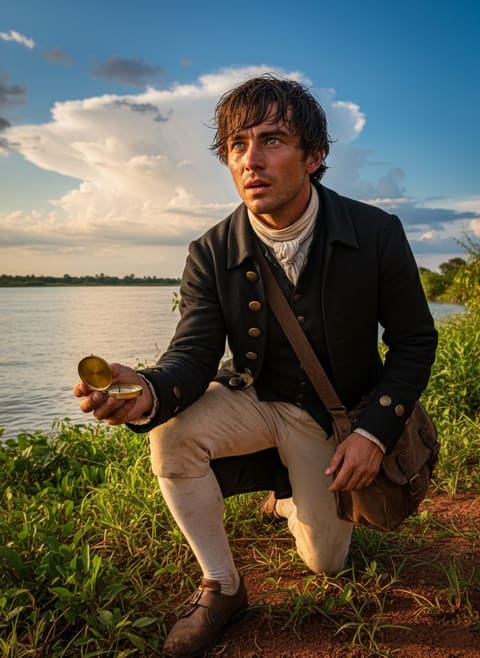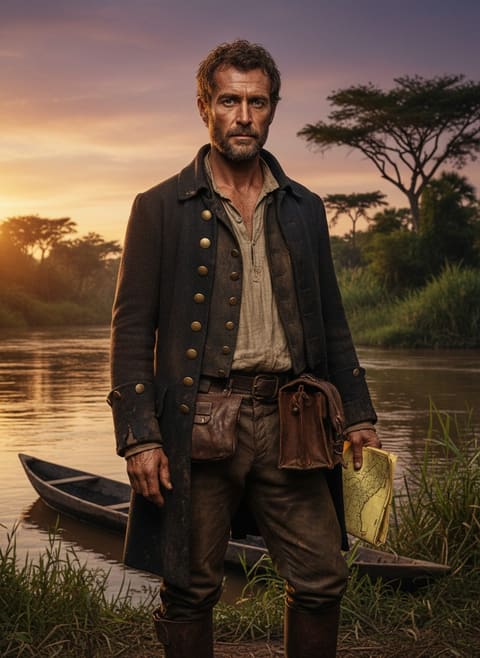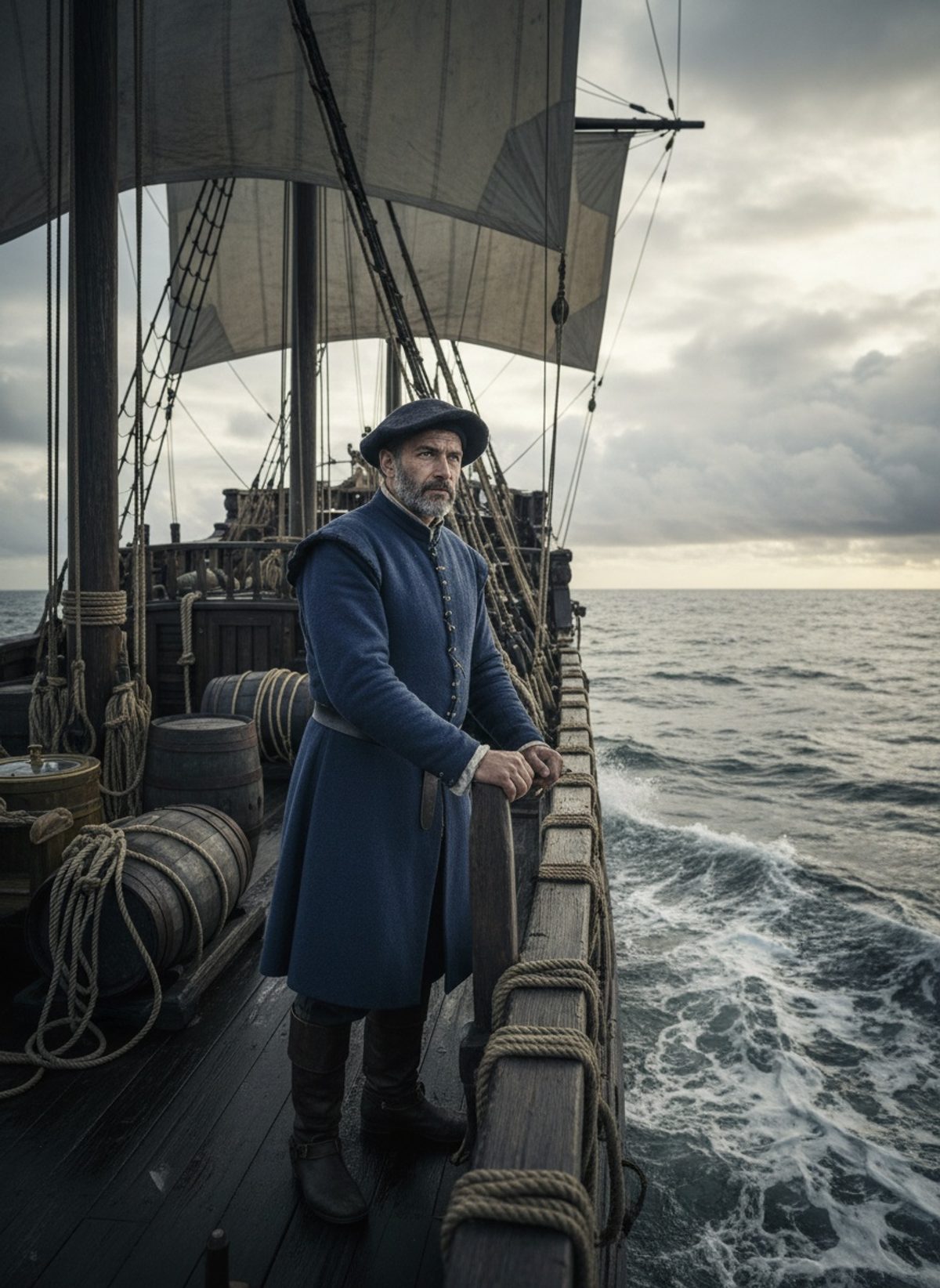
He wasn't English. He couldn't even claim a drop of British blood. Yet, in 1497, John Cabot would sail an English ship into history.
The Boundless Horizon Beckons
The late 15th century was an era steeped in adventurous spirit, with tales of explorers venturing into the vast unknown dominating English ports. From these bustling docks, one could catch whispers of voyages that promised untold riches and fame beyond imagination. In the midst of this maritime fervor stood a Genoese mariner, Giovanni Caboto, known to us as John Cabot. Bristol, a prominent trading city of England, was ripe for a voyage that would carve out a new path in the annals of exploration, and Cabot was the man to do it.
Though he hailed from the serene canals of Venice, Cabot's gaze always extended beyond the horizon. The English King, Henry VII, under whose patronage Cabot sailed, had issued letters patent granting him the means to explore and claim lands for England. Armed with these documents and a fierce determination, Cabot set out to find a new route to Asia, lured by the wealth of its fabled spices and silks. He was no stranger to risk; yet even he could not have imagined where his journey would lead.
The Little Ship That Could
In early May 1497, amid the salty spray and incessant clamor of the Bristol docks, the Matthew prepared to embark on a journey most deemed impossible. She was far from formidable by contemporary maritime standards—a single mast and a modest deck populated by eighteen resolute men. But her build was deceptive; crafted as a Bristol trading vessel, she had weathered countless voyages across treacherous seas.
Read next: The Day a Devon Captain Charted the Pacific and Changed the World
The crew, including a mix of seasoned seafarers and daring novices, knew the Matthew was dwarfed by the mighty Atlantic. Yet, their belief in Cabot—and dreams of Glory—propelled them into the vast ocean. Their voyage was one of both physical and psychological endurance; fifty-two days against the relentless Atlantic, guided only by the stars and the enduring hope of a successful passage.
A New World, Unseen and Uncharted
On the morning of June 24, 1497, the dulcet tones of seagulls punctuated the rolling fog as land emerged on the horizon. This was not the spice-laden Asia they sought. Instead, Cabot found himself at the cusp of an uncharted coast, untouched by European hands. Today, scholars suggest this landfall was somewhere on the coast of modern Canada—an event that has profoundly altered our understanding of world maps.
The shore was a stretch of untamed beauty, an alien landscape teeming with potential hiding in plain sight. The lush greenery offered hints of what lay inland, yet Cabot and his crew, encumbered by both the logistics of their quest and the specter of the unknown, could only marvel before the vastness, realizing they were the vanguard of Western civilization standing where no European had stood before.
Returning Heroes or Forgotten Few?
Having claimed the land for England, Cabot and his crew returned to Bristol as quiet heroes. They bore no cargo of spices or glinting treasures, only tales of the enigmatic new world. Though the material rewards were meager, their return prompted intrigue and ambition. The English court buzzed with speculation, and suddenly, the notion that Europe’s reach was limited to its visible borders began to dissolve like morning mist.
Read next: The Day a Devon Sailor Mapped the Roof of the World Alone
Yet, for all its allure, Cabot’s achievement was curiously understated in the annals of exploration—a testament not only to his non-English origin but to the daunting complexities of claiming an entire continent. His journey did not immediately spark a cascade of voyages like those that followed Columbus, but it planted a seed of curiosity and ambition in the English heart.
A Voyage That Shifted the Global Imagination
John Cabot's journey in 1497 was more than a mere seafaring feat; it was the spark that lit the fires of England's imperial ambitions. As Cabot and his courageous crew sailed back into Bristol docks, they laid the groundwork for what would become an era of global exploration and expansion for England. Such a tiny ship, laden not with the riches of Asia but with the unexplored horizons of a distant land, had irrevocably altered the course of history.
In the grand tapestry of exploration, Cabot's landing is often overshadowed by more dramatic narratives. But it serves as a poignant reminder that the discovery of new worlds does not always come with immediate recognition—or reward. Instead, it underscores an enduring human quest for discovery that transcends borders, nations, and time. As distant waves echo the legacy of the Matthew, the spirit of those daring sailors continues to whisper to us, urging humanity ever forward, beyond the edges of the known and into the vast expanse of possibility.