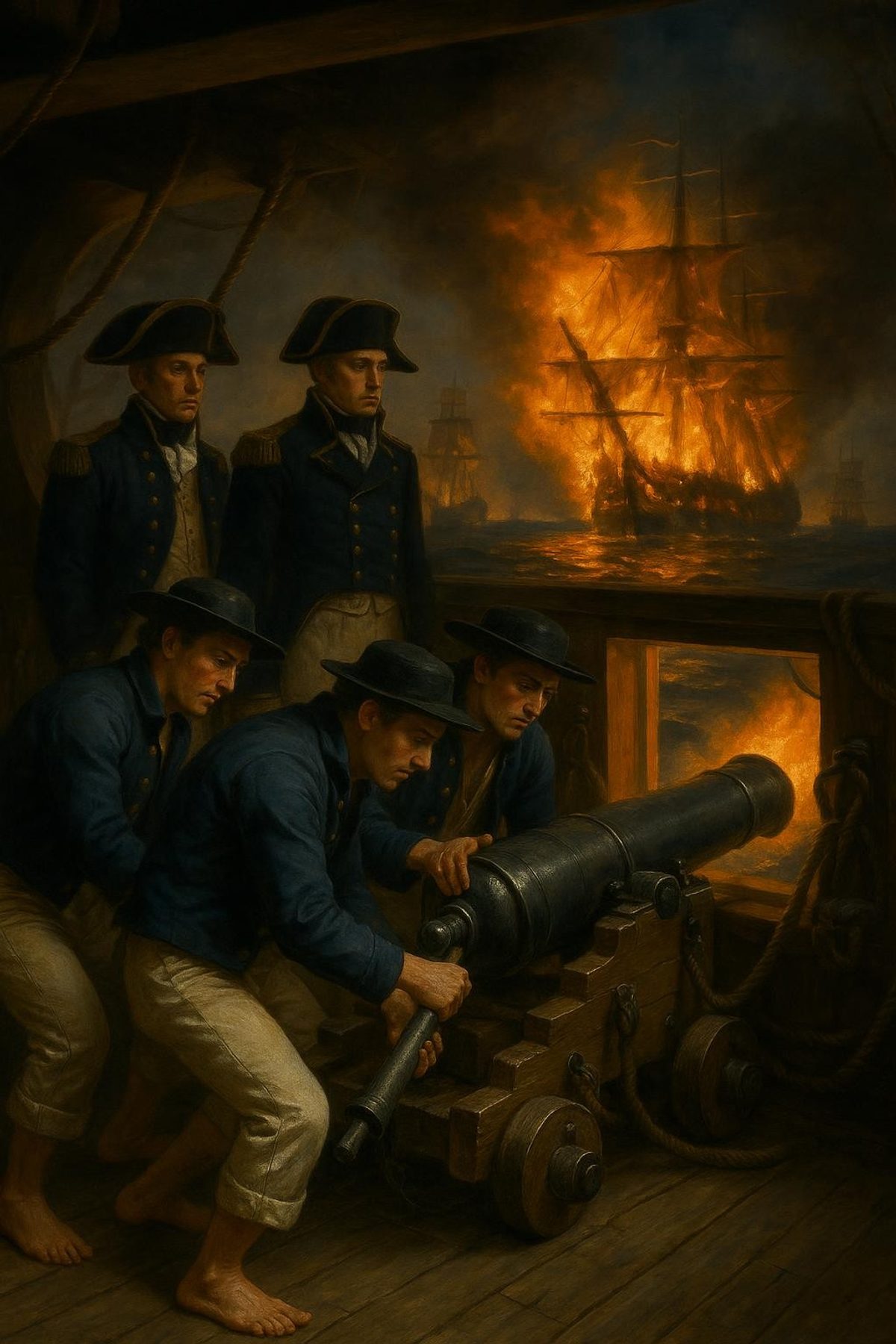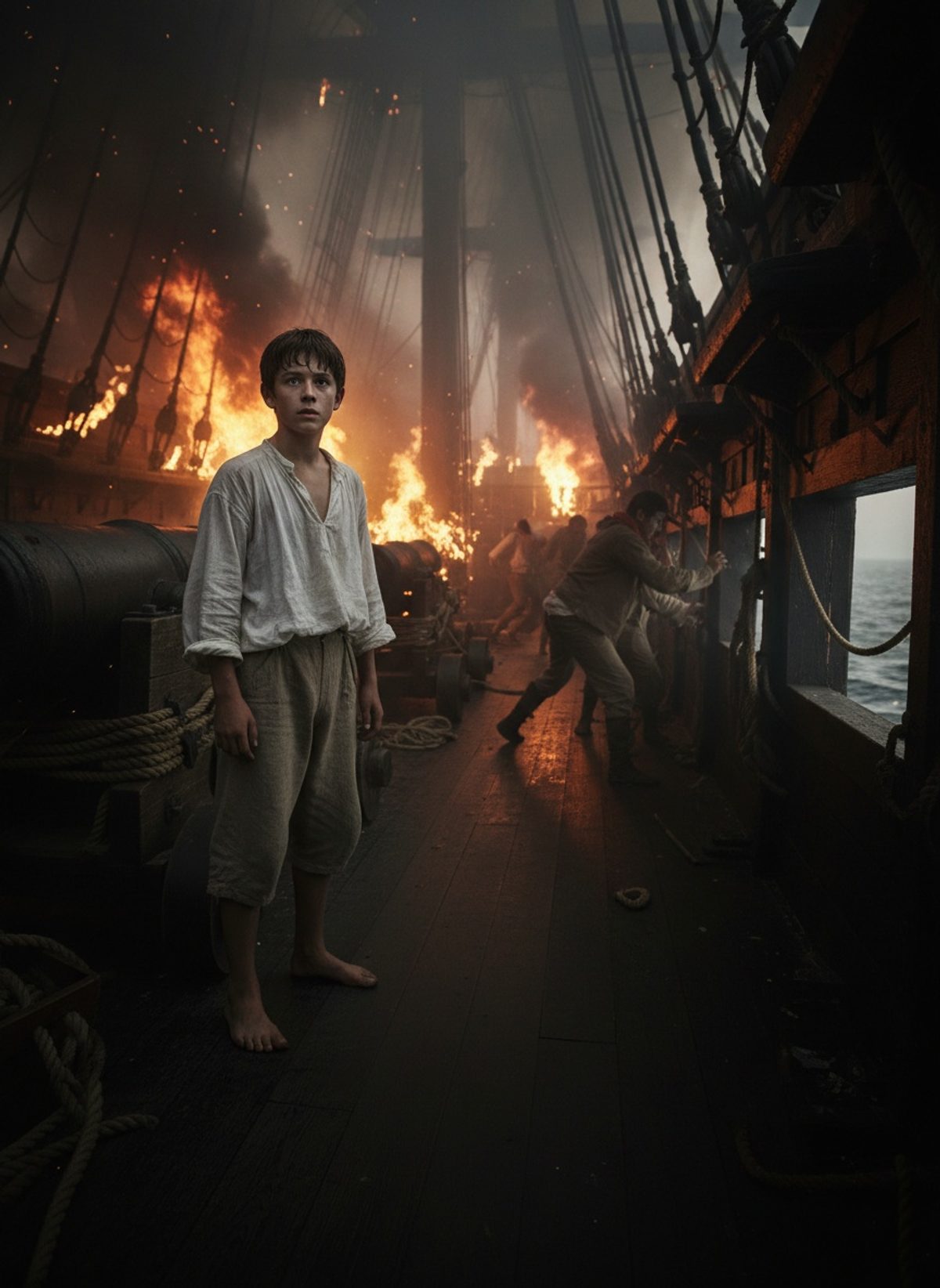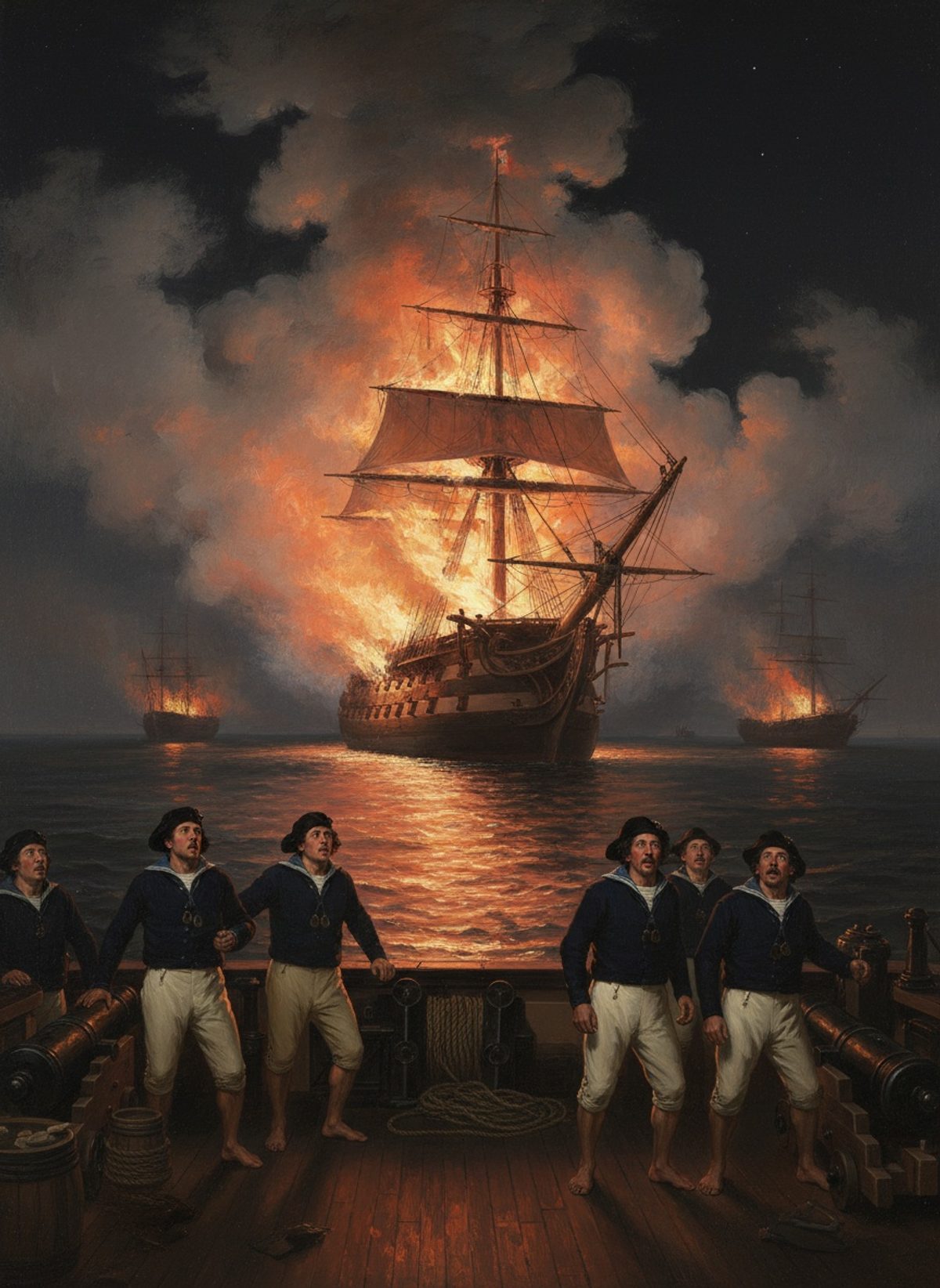
The Atlantic Ocean was in a tumultuous mood that August day in 1801, its vast expanse of turbulent grey mirroring the chaos above. The sky was a tumultuous canvas, clouds scuttling across like hurried spectres, threatening rain but holding it in agitated anticipation. The wind whipped the waves into a frenzy, each cresting and crashing with relentless intensity against the two warships locked in combat. Smoke hung in the air, a ghostly reminder of the battle that had just concluded. It was against this backdrop of nature's fury and man's aggression that a remarkable act of humanity unfolded—a decision that would ripple through the annals of maritime history.
A Battle Concluded
The sea had calmed somewhat, not in its physical manifestation but in the quiet that followed a dozen cannon volleys and the striking of a ship's colors. The HMS Indefatigable, commanded by Captain Edward Pellew, had emerged victorious against its French counterpart, a frigate no less fierce but now fatally wounded. The sun, weak but persistent, attempted to penetrate the smoky veil, casting shafts of pale light upon the wreckage. Debris floated like forgotten toys scattered across a watery playground, testament to the violent clash between the two naval giants. Despite his success, Pellew’s immediate thoughts were not of glory or triumph, but rather of the men of enemy uniform now clinging desperately to the tattered fragments of their lives.
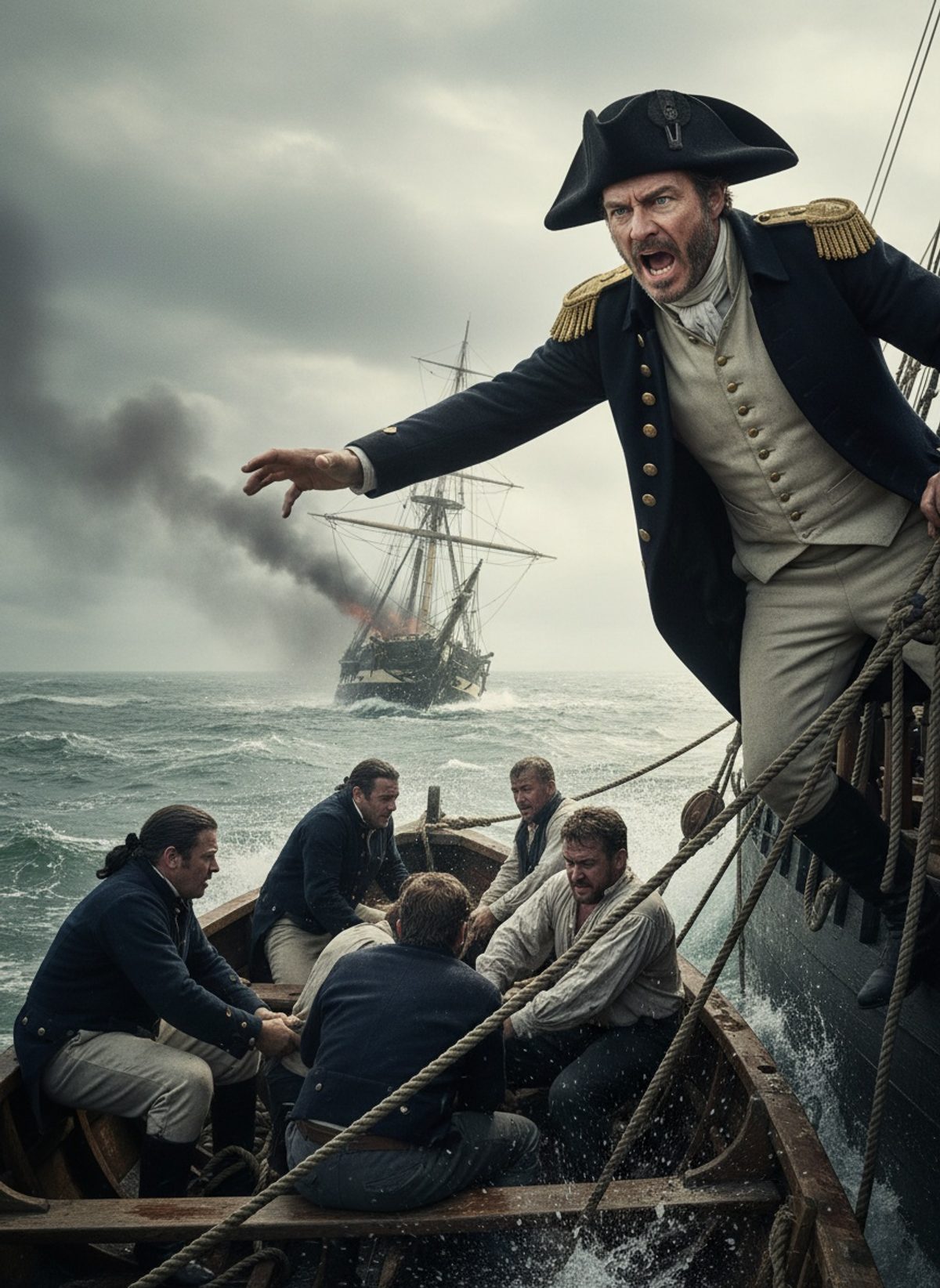
Pellew, a man of both indomitable spirit and curious humility, stood bespectacled against the backdrop of sea and sky. His face, etched with the lines of experience, showed concern as he watched the French sailors struggling against the sea's formidable grip. To him, each man flailing in the water was not an enemy, but a soul worth saving. And so, without hesitation, he ordered his crew to cast their biases aside and launch the lifeboats, a decision that would be etched into the annals of both naval warfare and humanitarian effort alike.
The Rescue
Beneath the white-topped waves, the ocean pulsed with a dangerous energy—a graveyard threatening to claim more souls from the living. But Pellew, with a heart as large as the sea itself, was unyielding. As his men set about their arduous task, launching boats swiftly but carefully, he felt the weight of every life hanging in the balance. The crew of the HMS Indefatigable, seasoned men of war, showed no signs of hesitation despite the risks. Each stroke of the oar was a defiance of the natural order and a testament to a higher code, one not written in the ink of nations but in the blood of humanity.
Read next: The Night Nelson Blew Napoleon's Eastern Empire Apart
For the French sailors, clutching for survival amidst the flotsam, the sight of their foes' boats approaching was a deliverance few had dared hope for. Each man extracted from the ocean's grim embrace was a beacon of life restored from the depths of despair. Captain Pellew's decision that day saved over three hundred lives—an act that many called madness, yet which now transcends as moral courage. In the face of conflict, he chose compassion over condemnation.
An Exception to the Rule
In the context of the Napoleonic Wars, where vendettas ran deep and national pride was often a catalyst for cruelty, Pellew's actions broke the mould of expectation. In the microcosm of naval rivalry, where attacks were often relentless and remorseless, his gesture was something of an anomaly. Warfare, especially on the vast and unforgiving sea, was seen not just as a test of military prowess, but as an existential trial where mercy was a luxury rarely afforded. Yet, Pellew—a man of profound principle—proved that humanity need not be sacrificed at the altar of patriotism.
This decision was not without its risk to Captain Pellew himself. Criticism from his contemporaries could easily have matched the praise, and indeed, the Royal Navy was often an institution anchored firmly in tradition and expectation. However, Pellew's own code of conduct dictated that even in victory, respect for human life should prevail. In a world tearing itself apart at the seams, his crew found solace not in conquest, but in the sanctity of life and the unexpected kinship of their seafaring adversaries.
The Legacy of Compassion
As stories of battles and victories swirl in the wake, few remember the quieter, yet infinitely more profound triumphs. The tale of Captain Edward Pellew stands not merely as a nautical legend but as a narrative of empathy amidst enmity. It serves as a reminder that in the theatre of war, where normal rules are suspended and cruelty often reigns supreme, moments of compassion and courage can illuminate the darkest days.
The rescue effort of that August day is much more than a footnote in the vast volumes of naval history. It is a testament to a principle that transcends the ages: that humanity shines brightest in its moments of mercy. The Atlantic waters, once a stage for destruction, became a canvas of salvation. Captain Pellew's actions remind us that the bravest battles are often fought not with arms, but with the courage to defy hate, bridging the divide between friend and foe. In choosing compassion, he altered the course not just of lives, but of legacy—a narrative foretelling the power of what it means to be truly human.