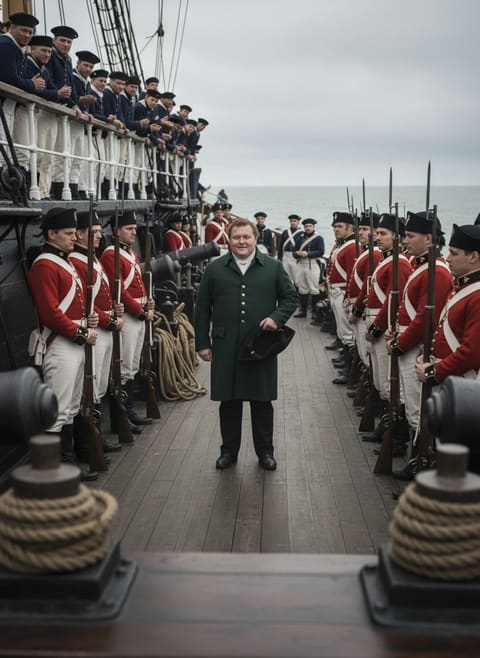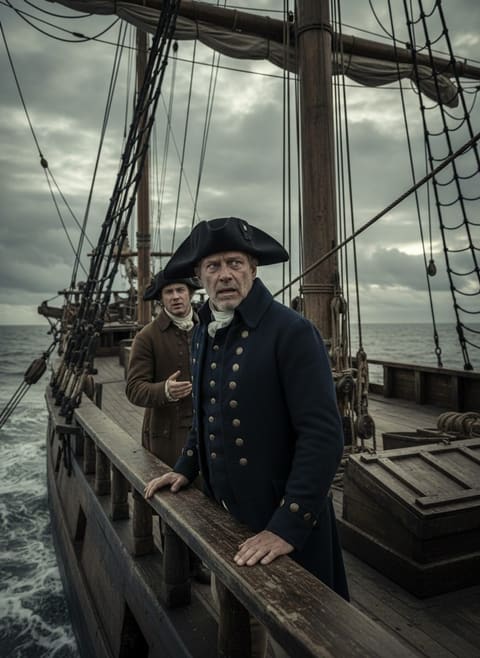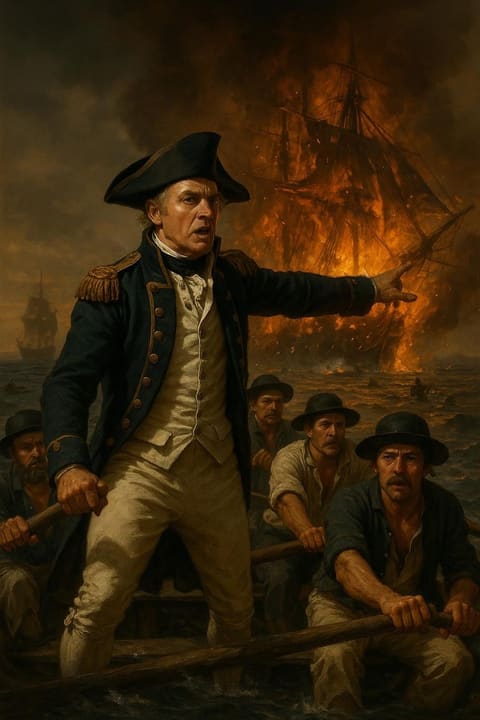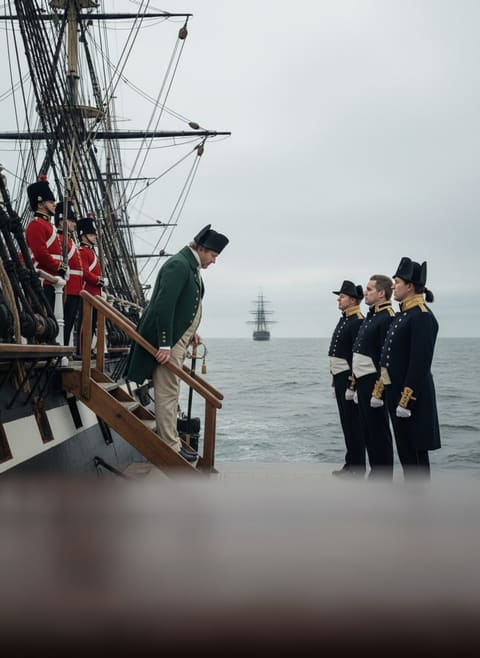
He was forty-four years old. William Bligh was no stranger to command, yet on that fateful April morning in 1789, surrounded by rising tension and restless eyes, he faced a trial for which no naval experience could prepare a man.
The morning was hushed, save for the swell of waves that omitted ghostly whispers against the hull of the HMS Bounty. Mutiny was in the air—a whiff of insubordination that had been building for weeks under the Polynesian sun. It was Flinders's hand that reached for Bligh, dragging him from the comfort of protocol into the sharp edge of rebellion. His cabin, his bastion of solitude and control, was suddenly crowded with snarls and desperation. Weapons gleamed, not with the fairness of law but with the heat of vengeful determination.
To understand the mutiny, one needs to look not just at the locked jaws and flash of steel that morning, but at the ripples that had submerged undercurrents on this deceptively idyllic voyage. Sent by the British Admiralty to collect breadfruit plants from Tahiti, the Bounty had turned from botanical mission to breeding ground for dissatisfaction. The sweet seduction of Tahitian shores and the grueling oceanic routine had tortured the very fabric of order. Had the mutineers not been the ordinary seamen they were, but philosophers, they might have called it a revolt against the abstract oppression of civilization—here was a microcosm of Paradise, and their captain was the sergeant of banishment.
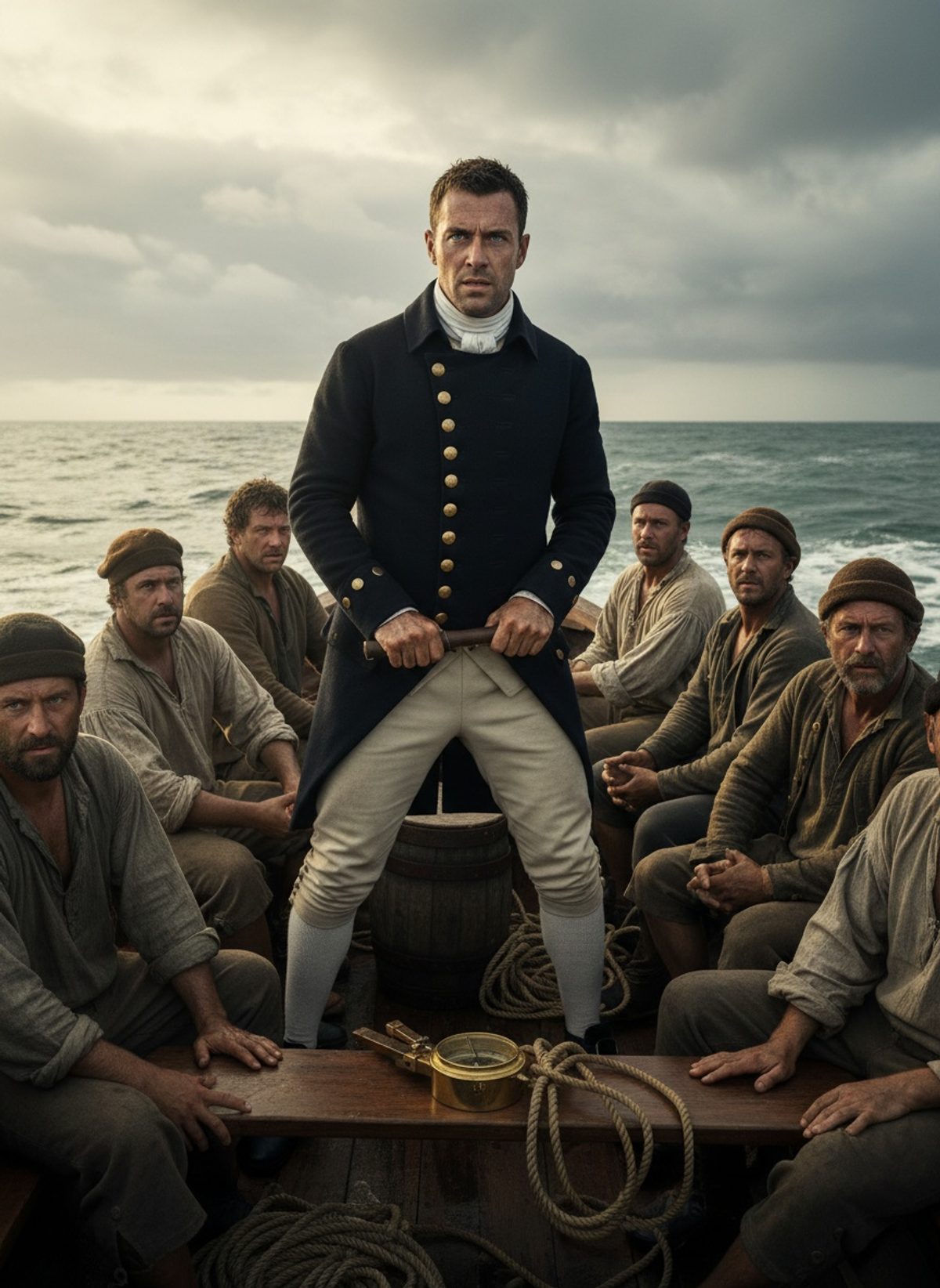
Bligh was handed a knife, symbolic of defeat and forced supplication. He cast it back without hesitation, choosing instead the defiance of dignity. He did not rage at his disgruntled crew nor did he prostrate before them in the hopes of clemency. In that time-suspended air of the Bounty, Bligh retained his composure, and importantly, his resolve. A sextant, a rudimentary map, and four days' supplies were to be his tools not of salvation, but of survival. Eighteen loyalists—an assembly surviving loyalty’s muting cry—joined him in this liminal exodus from certainty into the void of the Pacific Ocean.
Read next: The Night the British Ate the President's Dinner
As the small boat cut the universe of water, the endless expanse challenged the conceptual limits of what could be achieved. It was a moment of sublime smallness against the curvature of the world. Even the laws of survival that the seas had written seemed to bend under the weight of determined navigation. Bligh’s was not an attempt at heroism, but a commitment to life’s endurance. Guided not by stars alone, but by an internal compass of tenacity, determination sculpted sinews into iron and fatigue into fervor.
With no sanctuary other than leadership, the boat’s haggard occupants saw Bligh turn captain, navigator, and sustainer. His knowledge was not just of celestial patterns but of the human spirit, knowing precisely when an extra portion of water could mollify despair or when a stern word could stiffen resolve. At night, when waves threatened to break divides of consciousness, Bligh's prayers to the constellations for guidance were whispered into the wind. It was his faith in himself, and by proxy faith in them, that held stern and bow fast to their course.
The tempest of challenges subsumed more than water—the threat of storms was perennial and gnawing hunger a constant companion. It was a journey through shadows, lit only occasionally by the torches of temporary tranquility. Surprisingly, deadly undercurrents swam alongside this small assembly, coaxed by neither temptation nor error into claiming more than the voyage itself. Bligh chronicled each mile they charted, an ever-growing hymn of survival that was sung in silent strokes. Each wave conquered was a note unto itself, adding both tension and rhythm to their journey.
This maritime odyssey unfolded as an unexpected allegiance bore fruit—a growing respect that slowly enveloped Bligh within their collective heartbeat. They became acolytes of his undying faith in coordinates and fate. Against the indifferent tides, the concept of triumph evolved from ambition to existence. The fiber of this relationship was one not merely of survival, but of collective aspiration—an aspiration to reach that Eastern coastline, the dream made real through blisters and salt-caked eyes.
Read next: The Day a One-Eyed Admiral Sailed Into the Line of Fire
By June of that year, when the shores of Timor greeted them with the musky embrace of earth, Bligh had defied the Atlantic clasp of impossibility. Months of navigating treacherous pathways using celestial bodies as arbiters of direction came to fruition, manifesting the impossible into tangible reality. They had covered over 3,600 nautical miles through the boundless sea—matched only by the labyrinthine corridors of their minds now unlocked through shared suffering and triumph.
What was it about this stoic Royal Navy commander that allowed him and his men to endure such an ordeal? Perhaps it was his keen understanding of balance—a counterpoise of authority and empathy, to see a horizon and not just order it to appear. Bligh's journey was far more than a cartographic challenge; it was an assertion of the human will to prevail against the severe architecture of oceanic trials.
Bligh's vigil on that unfortunate day—his refusal to bend beneath the knife's cold judgement—transformed into a pilgrimage of resilience that meandered through tumultuous waters and history alike. This tale, untold in solemn textbooks, beckons us to wander with questions more profound than miles or years: What defines the leader, if not the storms they weather and the courses they chart through chaos? What truths do we carve from the storms of each journey if not those that teach us to find our way when conventional paths dissolve before our very eyes? In William Bligh, the ocean found its matching spirit—a captain not of destinies lost amidst waves, but of paths discovered through them.