The sea, on a May afternoon in 1217, stretched calm and untroubled between Dover’s white cliffs and the distant shores of France. The air was crystal clear, the sort of day that sailors might pray for, with a gentle breeze carrying the salty tang of the Channel across the water. Yet beneath this placid surface, the fate of the English crown teetered. An armada from France, laden with soldiers and the promise of conquest, was cutting through the water, less than half a day's sail from London. But somewhere in those wide, sunlit waters, a pirate monk and a hodgepodge flotilla of Kentish ships lay in wait, ready to alter history’s course and the fortune of a nation.
The Unlikely Admiral and His Plucky Fleet
At the heart of this tale is Eustace the Monk. A figure stepping out of legend, Eustace was as much infamous outlaw as strategic genius. He had traded the cloistered life of a monk for the cutthroat world of piracy, his motivations as murky as the depths he sailed upon. While few would have pegged such a man to become the savior of an English crown, Eustace's mastery of the sea made him a formidable force. As the French convoy neared, his Kentish allies—forty stout vessels from the Cinque Ports—were all that stood against a military calamity.
The Cinque Ports were a confederation of coastal towns that had pledged ships and men to the crown in exchange for privileges. Their crews, seasoned by the unruly English Channel, knew these waters intimately. Yet these vessels, sturdy though they were, were hardly a match for the might of French power in open combat. Still, under the unexpected leadership of Eustace, they carried with them one simple but effective advantage: a cargo hold brimming with quicklime.
White Clouds of Warfare
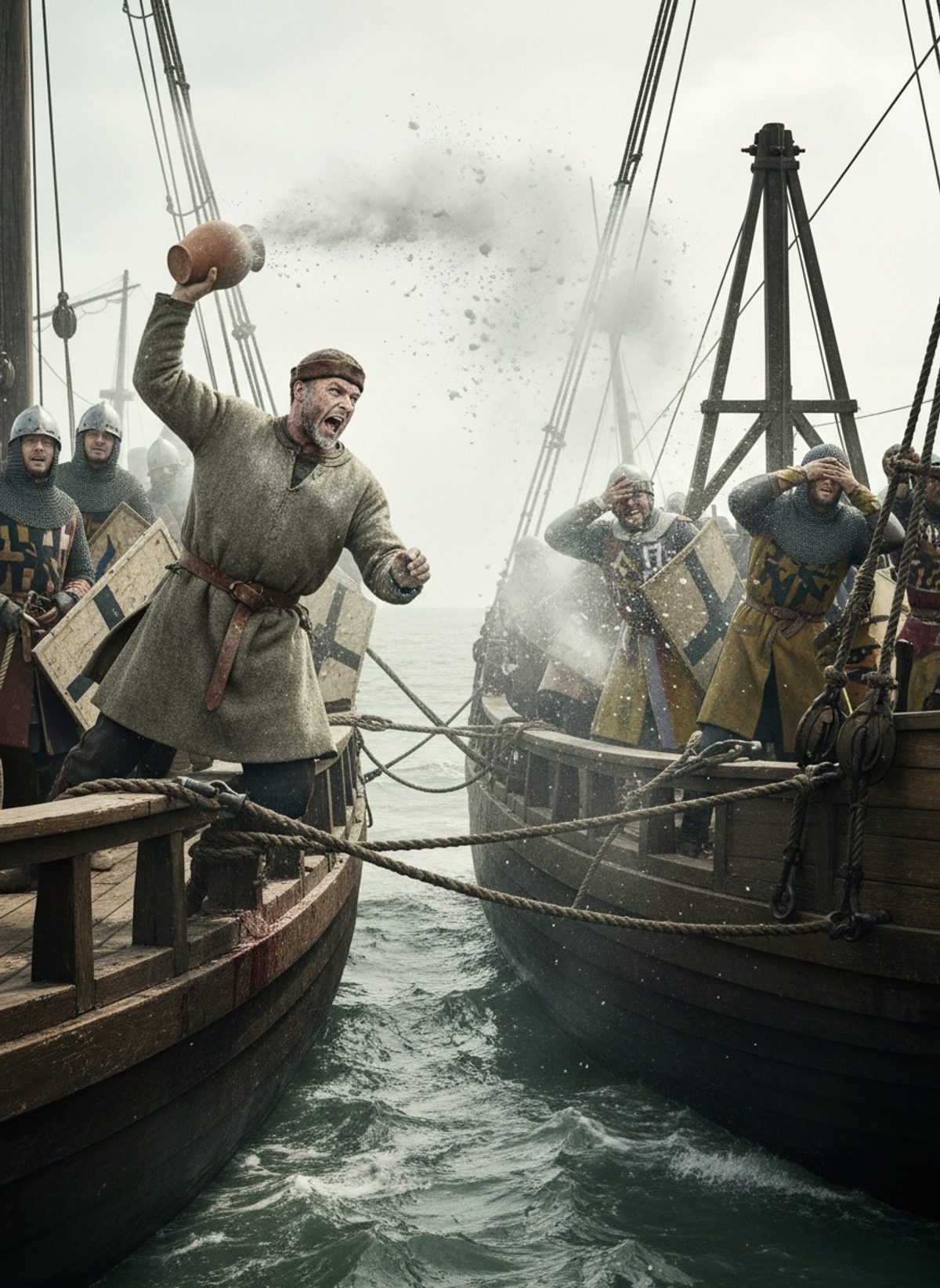
The medieval sailor's kit didn't typically include chemical warfare—quicklime, a caustic powder derived from limestone, wasn't part of standard military fare. But this was a battle to save a realm, and creativity was demanded. As the French ships loomed closer, the English let the winds carry their surprise payload. Spectators watching from the shore might have seen peculiar, white clouds unfurling across the water, like the breath of a dragon awoken from its slumber.
Read next: The Night a Powder Boy Refused to Leave His Post
The effect on the French armada was devastating. Lime-dust rained down upon decks and soldiers, blinding men, and rendering them unable to fight or navigate. Disarray ensued. Shields and armor were scant protection against this invisible adversary. Panic spread among the ranks; their sleek warships, now directionless, collided like lost children in a crowd. The English seized their moment, harrying the chaos with archers and boarding parties, turning the tide of victory with nothing but the sea's breeze and strategic cunning.
A Capital Secured
Back in the heart of London, Prince Louis, who had seized the opportunity to declare his claim over the English throne, waited expectantly for his reinforcements. The city, a labyrinth of narrow lanes and timber-framed houses, was steeped in the anticipation of change. Yet as hours stretched into days, and no triumphant news arrived, the mood soured. Little did the expectant prince know that the waves crashing endlessly against England's southern coast had swallowed his ambitions whole.
As word of the defeat trickled north, doubt spread amongst Louis’s followers. Many, seeing the writing on the wall, began to reevaluate their allegiances. The English court, beleaguered and battered by civil war since King John's notorious reign, found a flicker of hope rekindled. The miracle at sea provided just the rallying cry needed to consolidate the realms and stave off foreign dominance.
Lessons of the Channel's Battle
The events of 1217 at the Dover Strait wrote one of the oldest rules of English survival: never underestimate the power of cunning and local knowledge against seemingly insurmountable odds. It was a battle not just of swords and men, but of wits—a victory carved out by tides and timing, by men who saw far beyond the horizon lines of power.
While the pirate monk Eustace eventually faded back into the pages of obscurity, he left behind a poignant reminder: in the face of adversity, England would find strength not by matching force with force, but by leveraging ingenuity and the unpredictable whimsy of its often treacherous seas. In that salty air of history, the brawl between fickle elements and steadfast resilience crafted a narrative that, even now, resonates with a nation enduring yet another moment of uncertainty—an emblem of survival against uncertain odds.