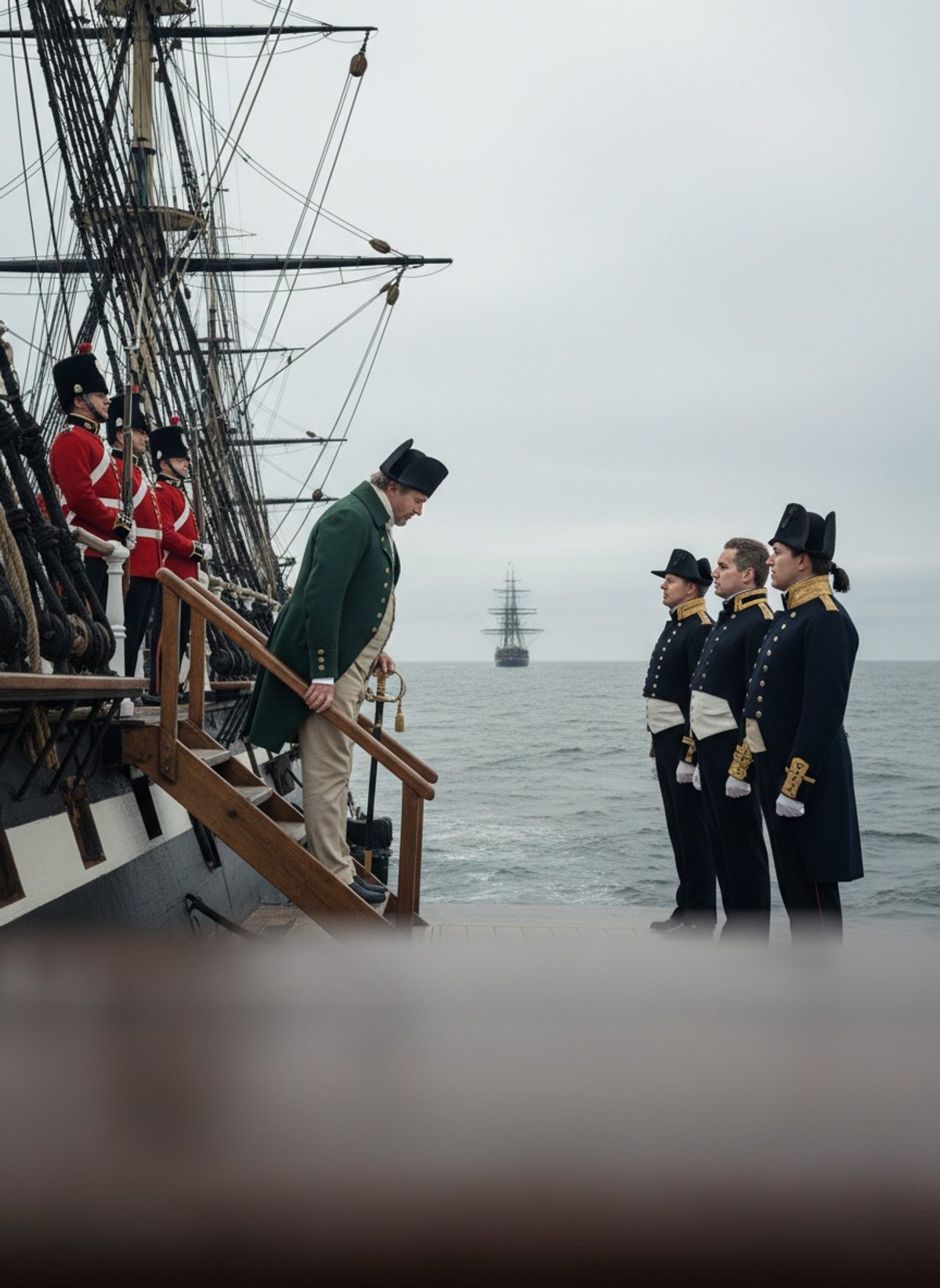
Napoleon Bonaparte was a feared conqueror who bestrode the European continent like a colossus. Yet, in the summer of 1815, he found himself welcomed aboard a British ship, not as a triumphant leader, but as a vanquished exile.
As one of the most formidable military commanders the world had ever seen, Napoleon's list of vanquished enemies read like a who's who of 19th-century European nobility. However, after his defeat at the Battle of Waterloo, he was left with one option: to throw himself upon the mercy of the British, his long-time adversaries. In a curious twist of fate, the very nation that had spent two decades trying to overthrow him at sea was now tasked with determining his future. The vessel in question, a British warship, was an unlikely sanctuary for someone of Napoleon's reputation.
The scene was both surreal and poignant—a testament to the vicissitudes of power. On board this ship, Napoleon dined with British officers who had once seen him as the embodiment of the threat to their nation's security. The sailors who had once manned cannons intent on taking down his fleet now served him meals. For three restless weeks, he lived in a state of limbo, uncertain of his destiny but hopeful for a life of comfortable retirement in England, perhaps envisioning a serene country manor where he could write memoirs and relive past glories.
Yet, the British had other plans. After deliberations that involved statesmen, military leaders, and royal advisors, a stark decision was made. Napoleon would not grace English soil as a free man; instead, he was to be exiled to a remote, wind-swept rock in the South Atlantic known as Saint Helena. It was a location as foreboding as it was isolated—1,200 miles from the nearest landmass off the African coast, a volcanic isle where life would change profoundly for the former Emperor. As news of his fate was delivered, gone were the dreams of English country side elegance; now, only a desolate isolation awaited.
Read next: The Night a French Flagship Blew the World Apart
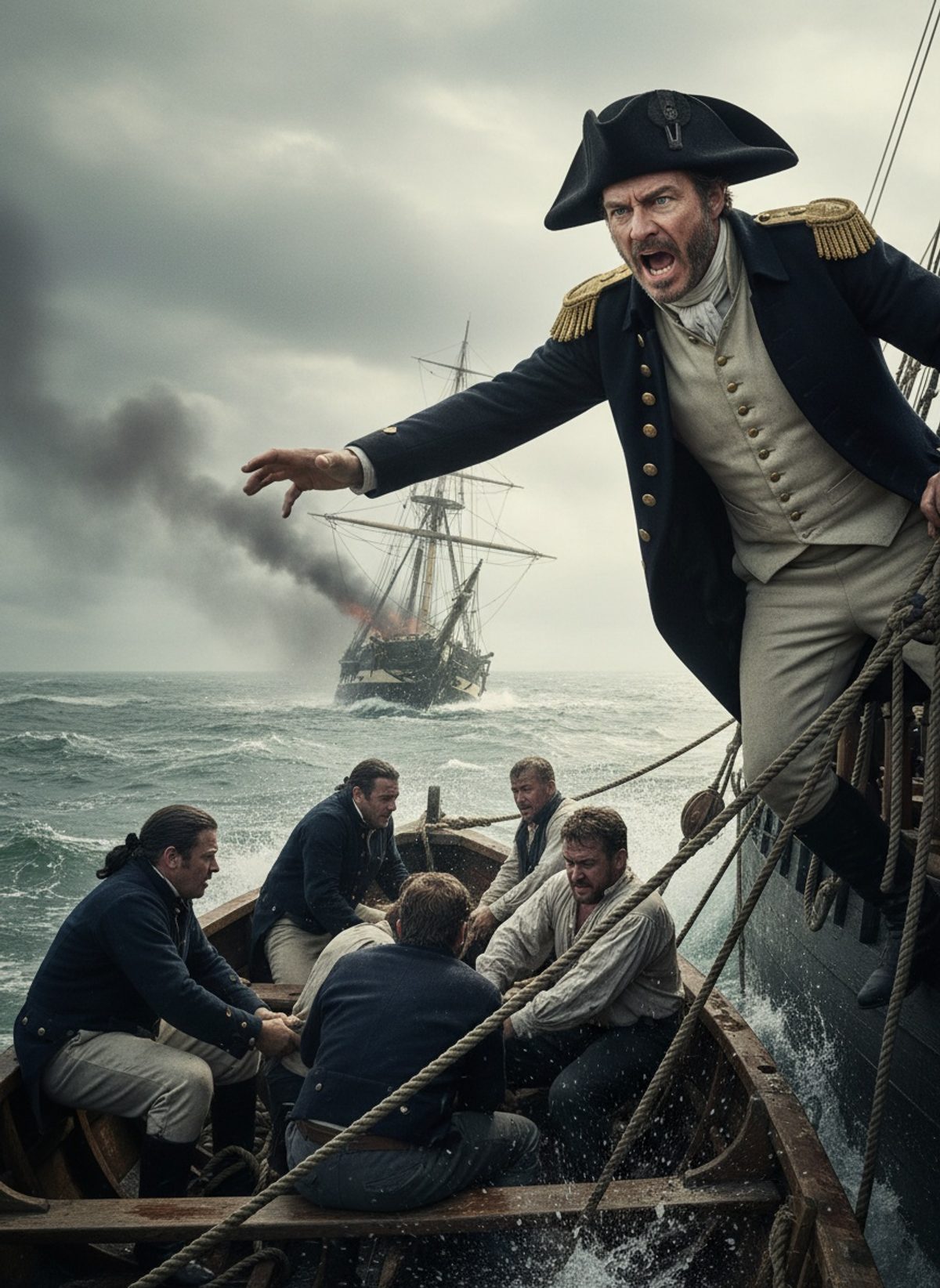
The manner of his departure was perhaps the most emblematic of his fall from grace. From the grandeur of palaces and opulence of imperial courts, the conqueror of nations was ferried to a humble rowing boat. It was a solemn journey, one that starkly contrasted with the tumultuous swath he had cut through history. If irony had a physical form, this was it — Napoleon, who had forced the British to sculpt their naval policies around his expansive ambitions, now entrusted to those very waves he'd challenged, on a simple vessel, heading towards obscurity.
Saint Helena itself was rarely the center of geopolitical machinations. Before Napoleon's arrival, it was but a lonely outpost. But in this isolation, the last chapter of one of history's most enigmatic figures would unspool. The island's rugged topography and inhospitable climate were a far cry from the luxurious surroundings the Emperor was accustomed to, and there was a somber poetry in the reality of his final years. Here, Napoleon was free from the clamor of war, the hustle of political gaming, the adulations and betrayals that had defined so much of his public life. Here, he dwelled on his own, away from the continental chessboard where he'd so frequently moved the pieces.
Yet for all its seeming banality, this moment resonated with profound implications. When the drumbeats of the Royal Navy stilled, and silence fell over the Atlantic, it was the quiet of a new epoch in European history. The narrative of victory and defeat was rewritten; France's imperial dreams were stifled, and Britain cemented its naval dominance. And in an unremarkable passage of time, in the space of a rowboat's quiet gliding, the world transitioned from the Napoleonic era to the balance of power that would dictate the 19th century.
This story of power undone is more than mere maritime theater. It resonates with the stark reality that even the mightiest of men can be brought to submission. It highlights the unpredictable nature of history, where tides can turn as swiftly as the cross-Channel winds. Napoleon's journey to Saint Helena marks not just the end of an era, but the power of circumstance over human ambition. As we marvel at the awe-inspiring rise and fall of giants, we are reminded of the fragility beneath the armor of conquerors and the inevitability of change.