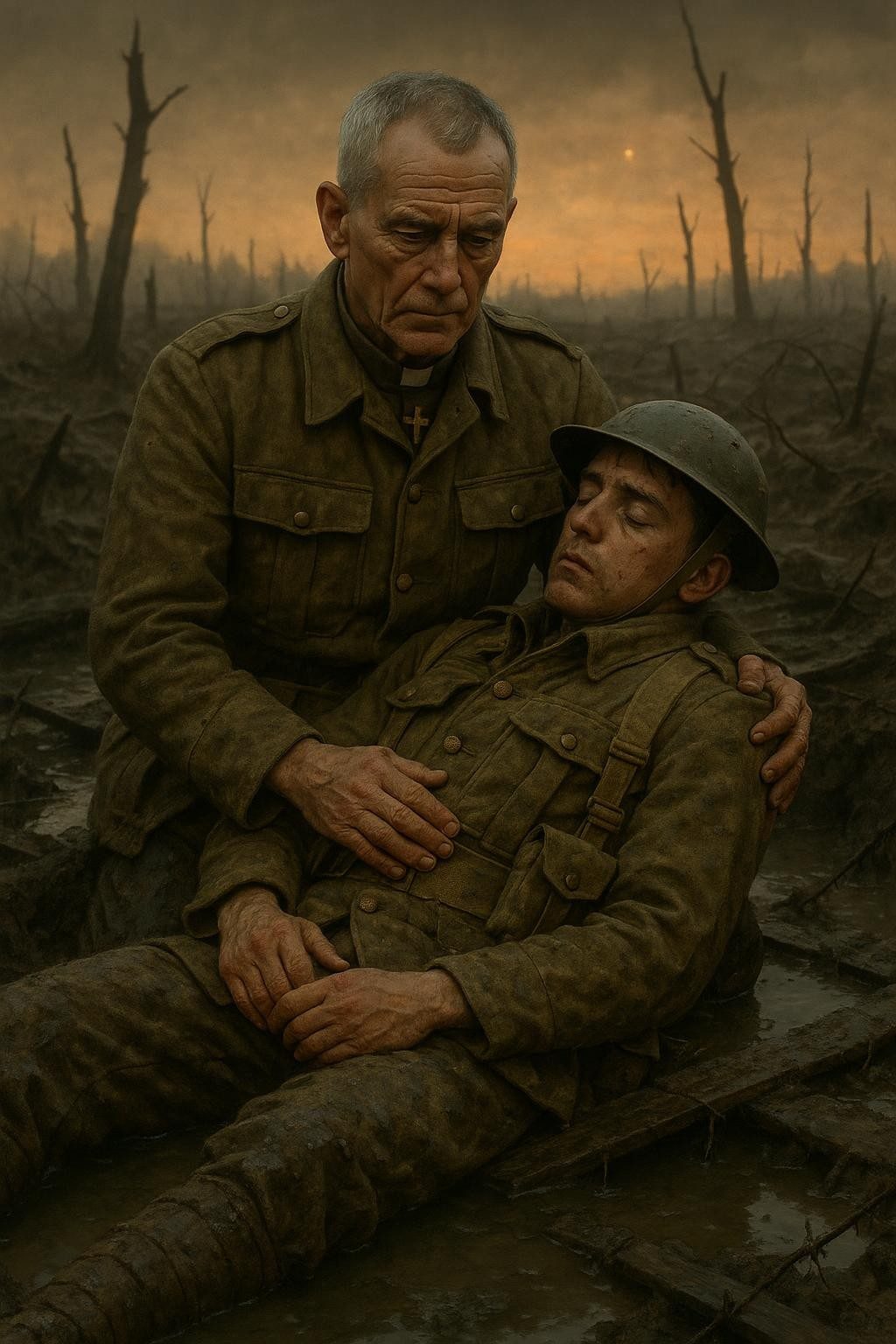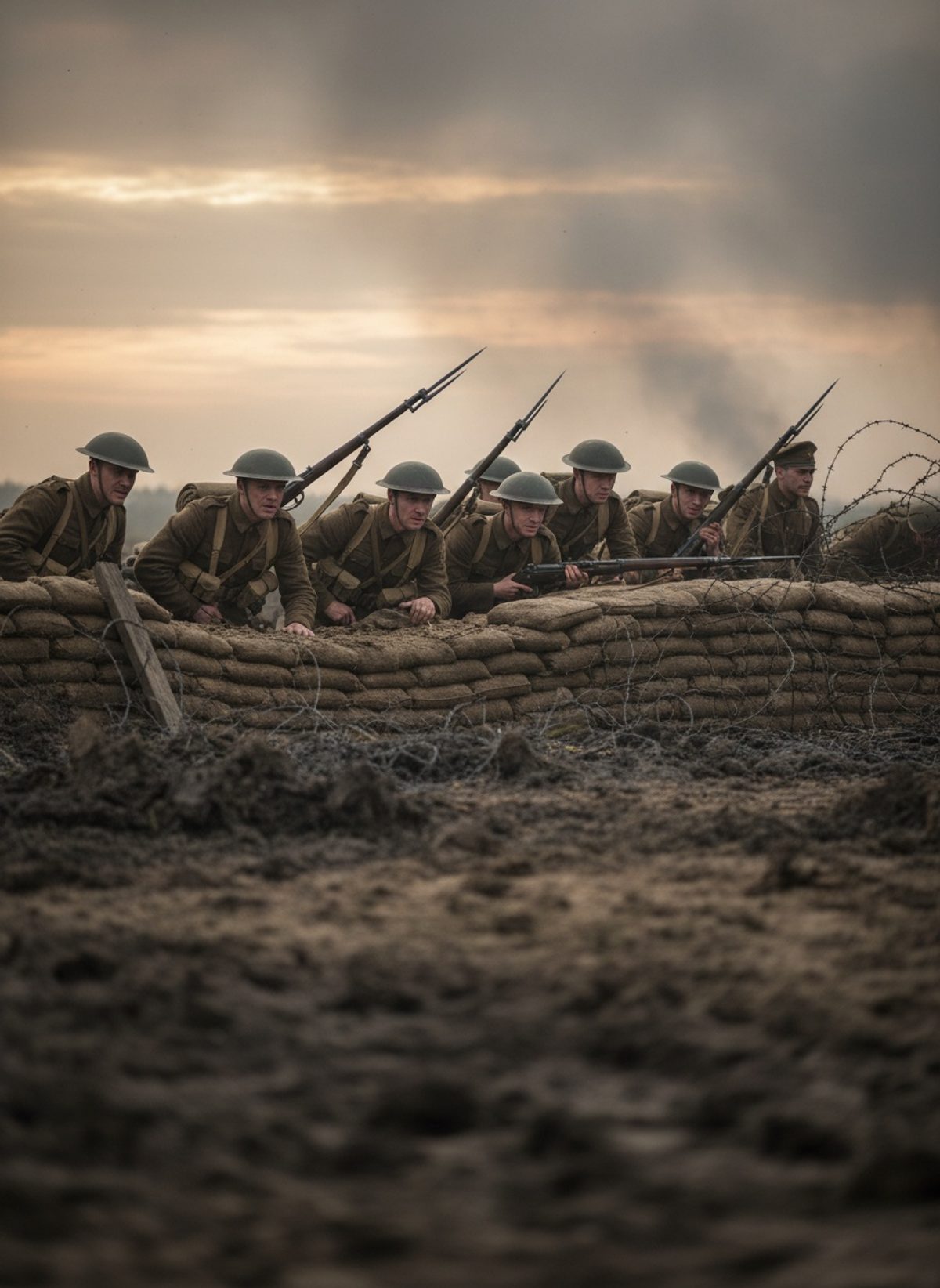

October 12, 1915. The early morning light draped Brussels in a soft glow, as if nature itself offered a quiet pause before the storm.
A Nurse in the Heart of Conflict
The Great War raged relentlessly across Europe, leaving no corner untouched, and yet, one might forget that amidst the unyielding din of artillery and clashing armies, there were quieter battles fought with unwavering courage and compassion. In the heart of occupied Brussels, Edith Cavell, a British nurse, found herself at the center of one such battle. A daughter of a Norfolk vicar, Cavell had always been drawn to care for others, her calling leading her to train as a nurse in the flourishing city of Brussels.
With the outbreak of World War I in 1914, Cavell's profession became her frontline. Her hospital, originally a place for medical advancement and learning, transformed into a haven for the wounded soldiers of an occupied populace. But beyond her prescribed duties, Cavell took on a more perilous role—one that would etch her name in history. She became an integral part of an escape network, assisting over 200 Allied soldiers in evading capture and making their way to safety in neutral Netherlands.
The Stark Realization and Arrest
In a city choked by the occupation's heavy hand, Cavell's actions were fraught with peril. The German authorities, determined to tighten their grip on the occupied territories, were relentless in their pursuit of saboteurs and spies. As her network of volunteers grew bolder, offering passage to escaping soldiers, whispers in the dark found their way to German ears.
Read next: The Night Churchill Sat Alone and Faced the Dark
By August of 1915, the sinister shadow of betrayal loomed over Cavell's noble endeavors. She was apprehended by the German authorities, taken from her post to face an uncertain future. Under harsh interrogation, it might have been possible for Cavell to deny her involvement, to profess ignorance and plead for mercy in the fading light of hope. Instead, she admitted to her actions, standing resolute in her truth. "Patriotism is not enough," she later reflected, conveying a deeper conviction in a letter to her family and friends. "I must have no hatred or bitterness towards anyone."
The Trial That Captivated the World
Edith Cavell's trial commenced in a tense courtroom atmosphere, epitomizing the wartime strife between duty and morality. Charged with espionage, her fate lay in the hands of military justice. Although Britain and American diplomats exerted pressure in an attempt to intervene, hopes of clemency faded swiftly. The German military court delivered its verdict with the cold efficiency of war-bound authority: death by firing squad.
The international community looked on in horror, grappling with the magnitude of the decision. High offices and civil societies from various nations decried the harshness of the sentence meted out to a woman who had dedicated her life to the service of healing. Her trial and impending execution soon dominated newspaper headlines, and public opinion swayed with the tides of moral outrage and sympathy.
The Dawn of Martyrdom
The morning of October 12, 1915, arrived with an unsettling tranquility in Brussels. Edith Cavell faced the rising sun with steadfast composure, a picture of serenity amid the chaotic tumult that had seeped silently across Europe. Her solitary march to the firing squad, accompanied by a German Lutheran minister, was a somber tableau etched indelibly in the annals of bravery.
Her final moments were spent in placid prayer, her dignity an unyielding shield against the storm of the world. Facing the rifle barrels pointed in grim detachment, Cavell spoke not of her deeds but of forgiveness. Her last words implored her executioners to see beyond national hatred and division—a poignant testament to a lifetime's pursuit of a higher moral code.
The Legacy of Edith Cavell's Quiet Courage
News of Edith Cavell's execution reverberated far beyond the trenches of World War I. Her death stirred a wave of international condemnation, casting a stark light on the brutal realities of conflict. For many, she became a symbol of moral fortitude, her story weaponized as propaganda to rally Allied troops and bring focus to the inhumanity of war.
In the years that followed, hospitals, memorials, and movements bore her name, a lasting tribute to a woman whose deeds transcended geographical and ideological boundaries. Yet, Edith Cavell's enduring legacy lies not in the monuments erected in her honor but in the quiet defiance of a truth unwavering: that empathy and compassion are vital in the darkest of times, bridging chasms where conflict seeks to divide.
Cavell's story reminds us that the impact of singular courage, even in the face of overwhelming adversity, has the power to ripple through history with transformative effect. Her life, and the sacrifice she embraced without fear, remains a powerful reminder that in war, as in peace, the highest calling is humanity itself.