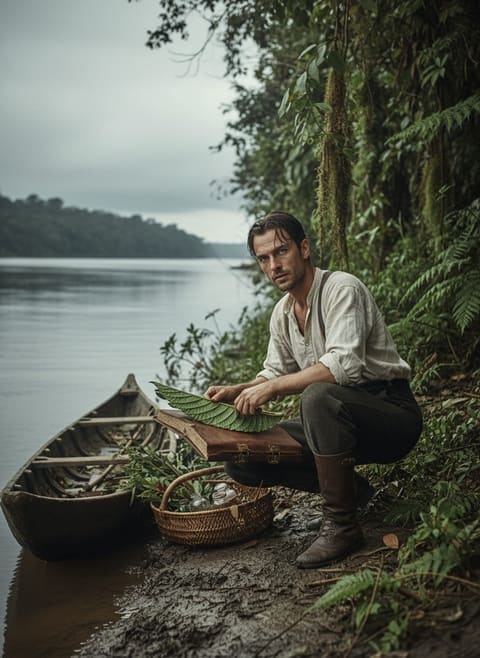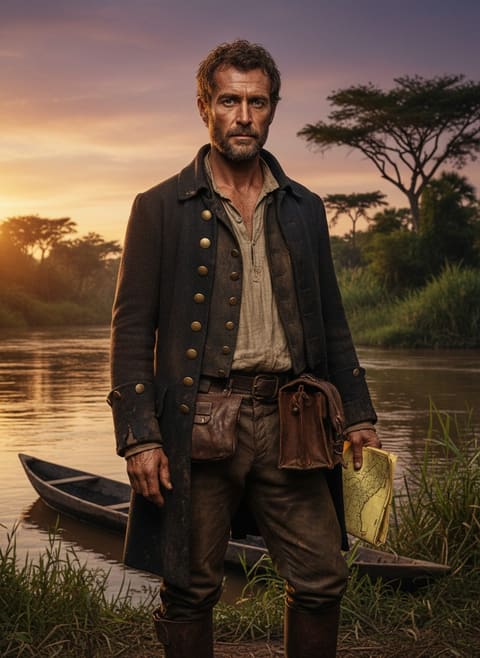
He grew up in the shadow of slag heaps. Yet by the age of twenty-one, he had an ocean-going command and orders to uncover a world that many doubted even existed.
A Child of Coalfields and Possibility
In the late 18th century, Britain was a land marked by massive industrial changes and stark social divisions. In this landscape, a humble lad from a cottage near Middlesbrough began life encumbered by circumstances that rarely allowed for rise beyond the toil his parents knew all too well. Born to a Scottish farm labourer who roamed south in search of work, he was raised amid the harsh grit of Yorkshire's coal-mining traditions. Yet within the sooty confines of coal ships, he discovered a pathway to the stars—or at least, to their guidance. Without formal education or advantageous connections, he taught himself navigation, a skill that would forge an unlikely link between his rudimentary beginnings and the unknown expanses of the sea.
These early years were spent navigating more than just waters; he outlined courses through societal norms, pushing against the rigid confines of class. A fascination with the ocean's vast horizon led him to the decks of coal colliers, those sturdy workhorses of Britain's coastal trade. Here in these holds, he learned the intricacies of ropes and stars, the language of waves and tides. A testament to self-reliance and ambition, his talents began drawing attention—not for what he had but for what he could do.
The Admiralty's Unlikely Choice
On 25 May 1768, an extraordinary decision reverberated through the halls of the British Admiralty. The powers that be handed this self-taught Yorkshireman the helm of a converted Whitby collier—a solid vessel famed for resilience more than speed. The Admiralty saw beyond society's snobbery, entrusting their mission to a man whose steadfast nature and maritime skills spoke louder than lineage. They gave him a lieutenant's commission and a sealed packet of orders, propelling him toward a destination whispered about in maritime lore: a mysterious southern continent, 'Terra Australis Incognita'. The task was monumental; the risks, immense. But here was a man whose life was already proof of overcoming the improbable.
Read next: The Day a Devon Captain Charted the Pacific and Changed the World
The decision was unconventional, yet the Admiralty's bet reflected Britain's ever-forward momentum and boldness. The mandate was clear; the journey would not only expand geographic understanding but also British influence across the seas. The mission was not just about finding new lands but about cementing a nation's prowess within uncharted waters.
Aboard the Ship of Dreams and Skepticism
Boarding the vessel was like stepping into a microcosm of the empire itself—a society brimming with complexity. Men from diverse backgrounds shared the close quarters, unified by a singular goal but aware of the precariousness of their venture. The ship, not built for comfort but for reliability, acted both as refuge and prison, its timbered walls permeated with the smell of salt and destiny.
Every moment on the ship was a lesson in leadership and endurance, honing this captain's innate ability to read the skies, command respect, and make second-nature what others took a lifetime to learn. The Southern Hemisphere's unfamiliar constellations became familiar friends, guiding the vessel across the daunting latitude where seas became wild with the possibility of discovery.
The tension between belief and skepticism echoed through the crew. Many wondered aloud the credibility of tales spoken in taverns back home. Yet, the young captain remained resolute, driven not by whispers of glory but by a sincere devotion to unveiling truth from conjecture.
Read next: The Day a Devon Sailor Mapped the Roof of the World Alone
The Unveiling of Tabula Rasa
As the calendar turned from month to month, beneath the sun's relentless gaze and the moon's serene watch, they sailed further south. Each sunrise painted a canvas that could bring either despair or discovery. The mission became as much about inner revelation as it was about external exploration. The captain's resolve strengthened with every hurdle, defining not only a geographical unknown but also the nascent spirit of a burgeoning age of enlightenment and exploration.
While Europe debated the existence of lands unknown, each observation, each logged point on the map, was evidence pieced together from stardust and seawater. The captain, once a boy navigating metaphorical seas of opportunity beneath coal-stained skies, was now on the brink of completing one of history's most profound riddles.
Why His Voyage of Discovery Still Resonates
The journey set in motion on that fateful day in May not only altered cartographic layouts but expanded the rhetoric of possibility. In an era that defined society by its class divides, this man's ascent from the depths of the coalfields illustrates the relentless power of determination. His life challenges our understanding of potential—proof that the human spirit might fulfill even the most impossible dreams against the harshest odds.
This is more than the story of one man's odyssey; it is an evergreen narrative questioning the dividers between fate and will, heritage and perseverance. The voyage illuminates a principle as eternal as the stars themselves: the world may be vast, but those courageous enough to question its edges shall find even the horizon bends to their pursuit.