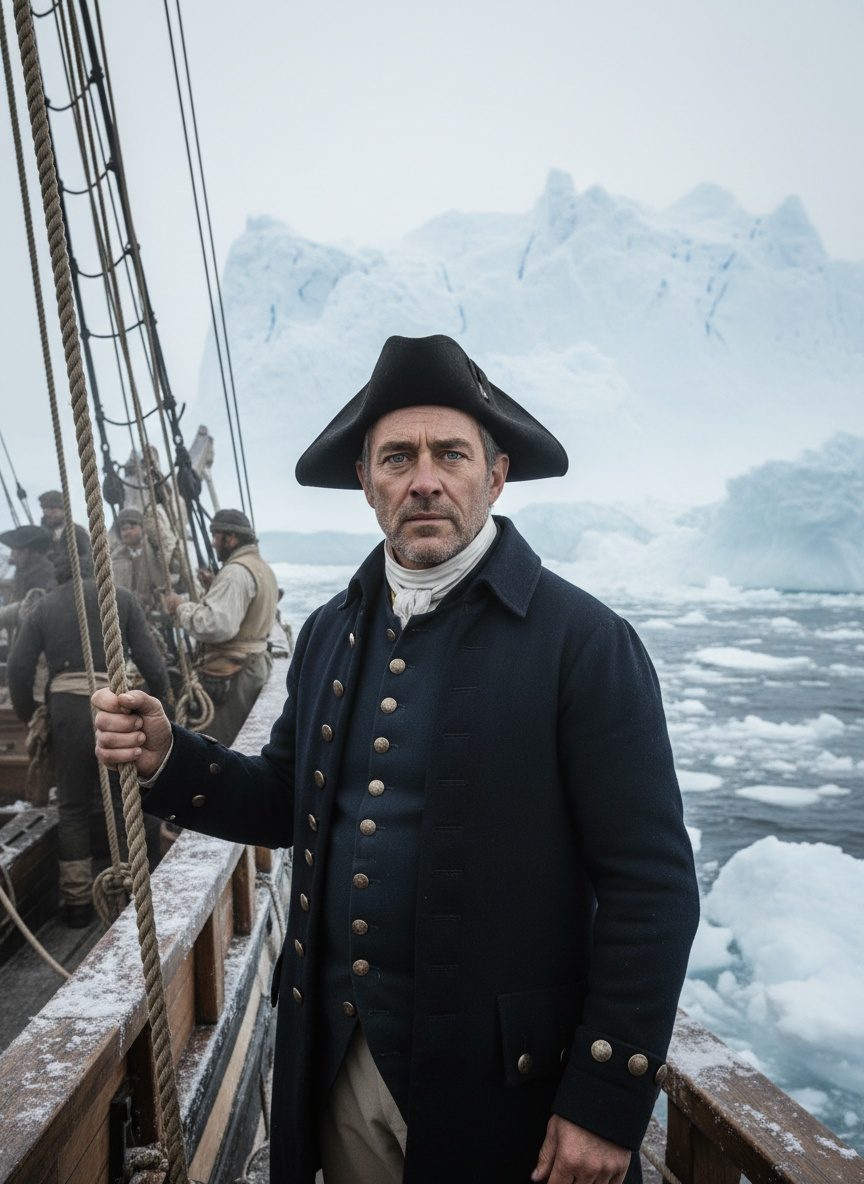
The sea crackled like shattered glass beneath the weight of the Endeavour as Captain James Cook stood starboard, eyes locked on the strange, frozen horizon. Icy winds whipped past, biting through layers of wool and canvas. Cook squinted into the dense gray mist, the wooden ship groaning under the pressing cold. He could feel the tremor of cautious anticipation ripple through his crew. No other vessel had dared to travel so far south. Before him lay the Antarctic Circle, an unbroken frontier of infamy and myth. Cook chose the unknown over the safe return.
The Edge of the World
It was January 1773 when Cook, determined to explore the farthest corners of the Earth, ventured boldly into waters that no man had dared navigate. At the helm of the Resolution, the ship was a testament to British engineering but nothing matched the scale of what lay ahead—a chilling stretch of ice fields that could splinter hulls and spirits. Cook was no stranger to exploration. He charted unmapped territories and pressed onward with the curiosity and precision of a master navigator.
The crew, though seasoned sailors, found themselves out of their element. The Antarctic winds howled like tormentors, swirling sheets of snow across the deck. The sun glanced pale and distant over the icy expanse. Some whispered of dangers lurking in the white—phantom ships and monstrous sea creatures from sailors' tales. But for Cook, the whispers only fueled the fire of discovery. His mission was more than just a journey; it was driven by a desire to expand the boundaries of the known world.
A Sea of Ice
As the Resolution pushed further south, the sight was unlike anything the men had known. The ocean transformed into a solid mass, a crystalline landscape where icebergs loomed like ancient gods. Navigation became treacherous, each crack of ice deplorably loud against the ship's hull. Yet, Cook’s gaze never wavered from this frozen tableau, utterly alien and magnificently desolate.
Read next: The Day a Devon Captain Charted the Pacific and Changed the World
To the crew, everything about these days felt inverted. The compass seemed an unreliable guide in this ethereal domain. Water froze even as it splashed onto the deck, leaving a glaze that turned the ship into a treacherous skating rink. Miraculously, their resolve held fast as the weather and their endurance were tested by Nature's relentless hand.
But Cook’s greatest achievement wasn't just the exploration of lands untouched. It was—orchestrated through relentless leadership—the preservation of his crew's morale and their safe return. Tea, a staple on any expedition but a rarity for those voyaging south, became a symbol of warmth against the encroaching cold. His judicious regulation of food and supplies staved off the specter of scurvy, ensuring their health through the bitter Southern Ocean.
Turning Back the Ice
By degrees, Cook understood he had reached the edge. There was no frantic pace, only a study of the profound quiet blanketing the world. Practically imprisoned by Nature's icy grip, the choice was clear—turn back or face the maddening embrace of the endless void.
At the break of dawn on a day much like any other, the decision came down like the crack of a whip. The ship would steer northward, carrying its crew and its discoveries to safer tides. The moment of retreat was bittersweet; they had brushed against the remotest fringes of human exploration but succumbed to her boundaries. Still, failure did not define their voyage. It won them a place in history.
Read next: The Day a Devon Sailor Mapped the Roof of the World Alone
As the Resolution emerged from the tightening siege of frost, the men felt the weight lift from their shoulders. Their return journey unfolded no less dramatically, yet each passing swell testified to Cook’s true mastery—not just of sailing, but of leadership amid the sublimity and inequity of nature itself.
The Road Not Taken (Yet)
When the Resolution at last touched British shores, the account of its journey spread like wildfire. The voyage lit imagination aflame. Dreams of undisturbed riches and the limits of the map's margin receded for another time. Cook’s adventurous spirit opened the floodgates for discovery but played a long game of patience with human ambition.
The icy realm of the Antarctic Circle, once as unreachable as the moon, waited only fifty years longer to see another sailing vessel on its cobalt horizon. When the intrepid explorers resumed this icy dance, they did so with the ghostly presence of Cook’s expedition guiding them forward.
Cook’s Antarctic venture reminds us of the inexhaustible quest for understanding that drives humanity. It is a silent call to action—not one urging recklessness, but rather a shared curiosity and courage to look beyond the maelstrom of fear and myth. The legacy of that single, piercing expedition holds firm as an example of how far we can reach and what we may encounter when courageously facing the unknown.