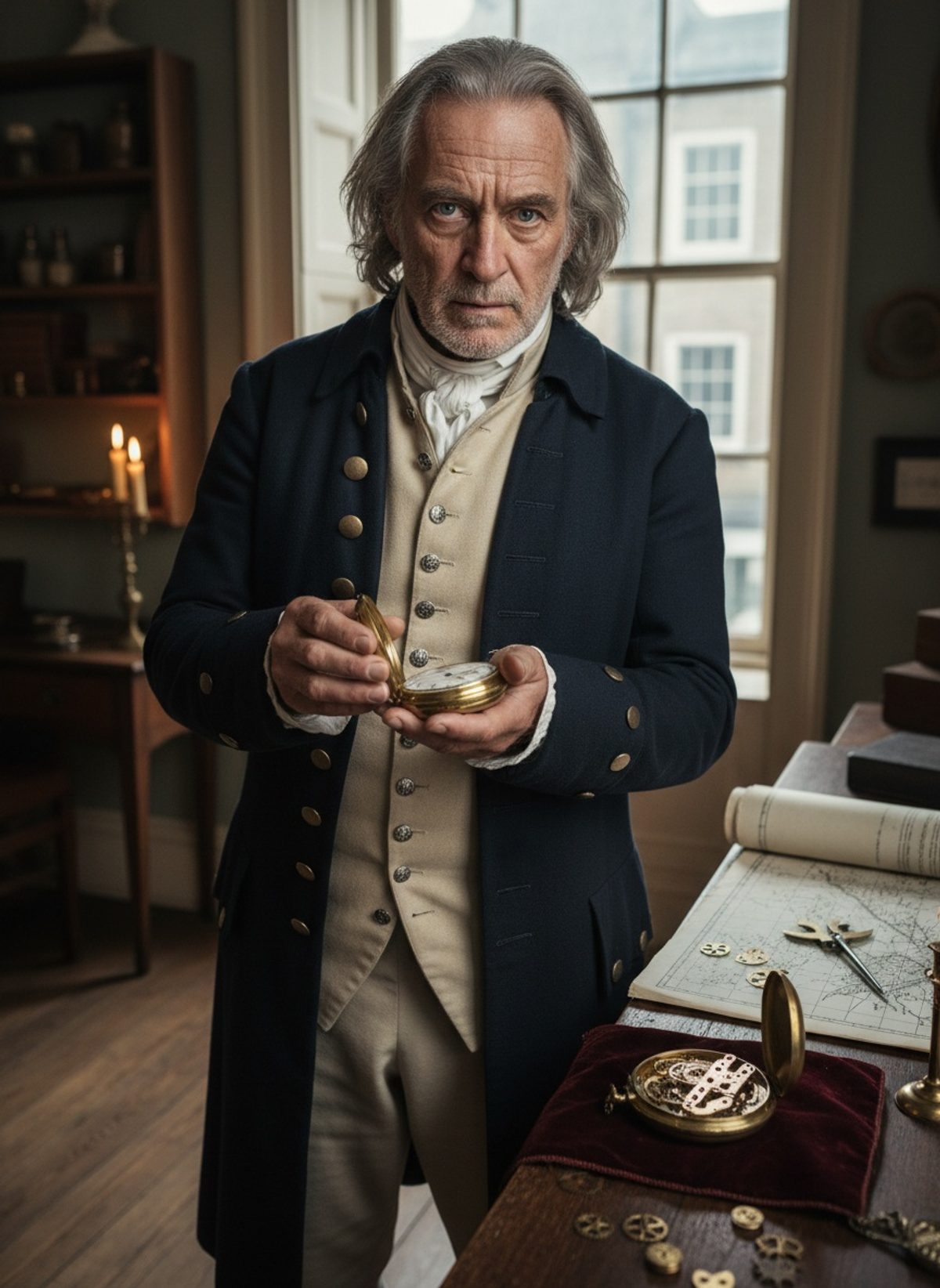
The murmur of disbelieving voices filled the room, their skepticism nearly as palpable as the damp London air hanging heavily outside. Yet, amidst this sea of doubt, a retired navy officer stood resolute. He cleared his throat, his eyes scanning the gathered journalists with a mix of determination and defiance, as if he already knew that many had come not to hear, but to heckle. "Gentlemen," he began, his voice steady, "I can predict tomorrow's weather." A ripple of laughter met his declaration. Unperturbed, he continued, "And I assure you, should you listen, it may save more lives than you can imagine."
The Captain and the Clouds
Enter Admiral Robert FitzRoy, a name that would soon become synonymous with meteorological forecasting. He was no stranger to charting unknown courses. As a captain, FitzRoy had once commanded the HMS Beagle on a voyage that would cement Charles Darwin's place in scientific history. However, the turbulent seas of the Atlantic had seared their mark deeper than intellectual pursuit into FitzRoy’s bones. The constant wrestling with capricious squalls and sudden tempests left him acutely aware of the sea's deadly unpredictability.
FitzRoy had spent years studying the weather patterns he encountered, meticulously recording his observations like a conductor deciphering the score of a symphony written by the heavens. But it was his retirement from the Royal Navy in 1854 that granted him the time and resources to truly delve into meteorological studies with the establishment of the UK’s first Met Office. Intriguingly, it was funded by the government not for the agriculture or cityfolk, but specifically to safeguard the country's navy and merchant ships.
In May 1861, FitzRoy made his way to the London press equipped with barometric readings, wind charts, and tides, determined to share what he had discerned: the notion of predicting weather could no longer be dismissed as folly or divine providence to harness. When the next day's weather turned as he had predicted, the murmurings of doubt were quelled momentarily, though hardly obliterated. After all, who could trust the word of mere numbers against nature's vast caprices?
Read next: The Day a Deaf Man Gave the World Its First Electric Motor
The Instruments of Forecast
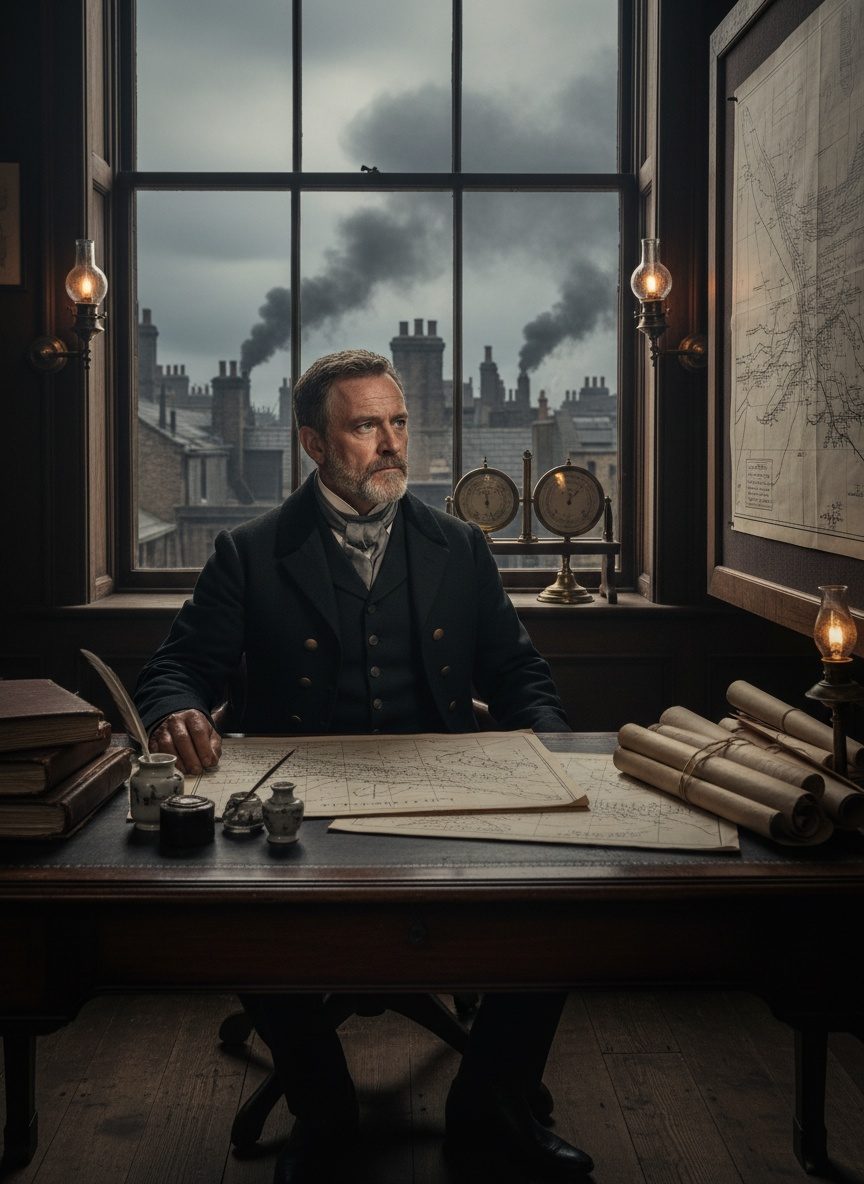
No crystal balls adorned FitzRoy's office, nor did smoke rise from a fortune-teller’s incense. Instead, a humble array of instruments — barometers, thermometers, anemometers, and hygrometers — punctuated this small chamber in London. FitzRoy's genius was not merely in observation, but in synthesis. With a barometer's sensitivity to shifting atmospheric pressure, he would divine the weight of air masses swirling over the Atlantic, each millibar hinting at potential pitfalls.
Hastily scribbled notes transformed into maps, arrows slicing through them like trails of invisible forces. FitzRoy translated this data into plain English for his forecasts, discerning not only the likelihood of squalls but the delicate dance between wind, water, and earth itself. An unexpected herald of technology, his symphonies of data were communicated to coastal areas by newly-minted telegraph systems, offering fishers and sailors precious hours of preparation.
Many failed to appreciate the elegance of FitzRoy’s synthesis — partially because the ability to hear the ether’s murmurings eluded him, being deaf to the literal winds to which he had dedicated so much study. Despite this limitation, FitzRoy’s voice carried across great distances through his forecasts, a testament to the power of human ingenuity over personal physical barriers.
Tempestuous Response
Initial responses were as bleak as a squall on the horizon. The Nautical Magazine openly ridiculed FitzRoy, dismissing his attempts at forecasting as the delusions of a frenzied mind. Through publications imbuing both awed respect and derision, Robert FitzRoy's meteorological assertions faced an uphill discourse. Many maintained that the chaotic nature of weather was solely the domain of the divine — beyond mere human understanding and prediction.
But the seeds of doubt sown among skeptics slowly germinated into an acceptance of weather forecasting as a discipline, largely due to the scandalous success of FitzRoy’s predictions. Each issued forecast found printed form in The Times, becoming a staple for sailors lusting after better odds against the tempests. The press that had gathered eagerly for his proposals were soon printing his findings with equal zest and with noticeable regularity.
Despite the challenges, FitzRoy pressed on, tireless in his quest to save lives. To him, each accurate forecast was more than vindication — it was a testament to the lives preserved and ships spared the ocean's relentless fury. Perhaps in the deeper recesses of his mind, FritzRoy believed that changing hearts and minds was as formidable a voyage as any undertaken with the Beagle.
A Legacy Sealed by Time
In the storm-tossed world of 19th-century Britain, Robert FitzRoy navigated uncharted scientific waters, a trailblazer driven by duty rather than fortune or renown. His vision of a connected world where information about the skies, seas, and fronts could be shared and, ultimately, deciphered, granted a measure of foresight against nature's fierce will. It was a dream shackled neither by skepticism nor by disbelief. FitzRoy's relentless pursuit of meteorological knowledge laid the cornerstone for modern weather forecasting, an endeavor that continues to save countless lives.
Today, each meteorologist who stands before a screen of swirling weather patterns owes a nod of recognition to FitzRoy’s legacy. From warnings that now span continents to storm alerts that save towns, the world he envisioned leapt from esoteric possibility to common expectation. But for the man who first dared to listen to the winds, it's a reminder of innovation’s power, of how the courage to see and act beyond one’s limitations shapes not just forecasts, but the future itself. In unraveling the mysteries of the skies, FitzRoy taught us a lasting lesson — that even in the face of derision, truth finds its course, much like the ships his forecasts protected.