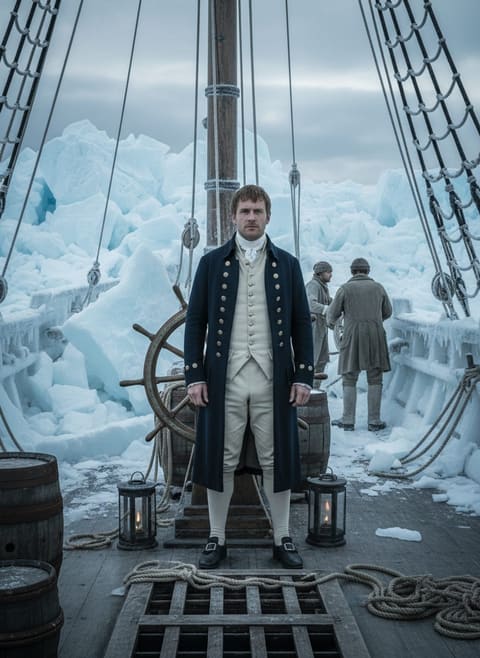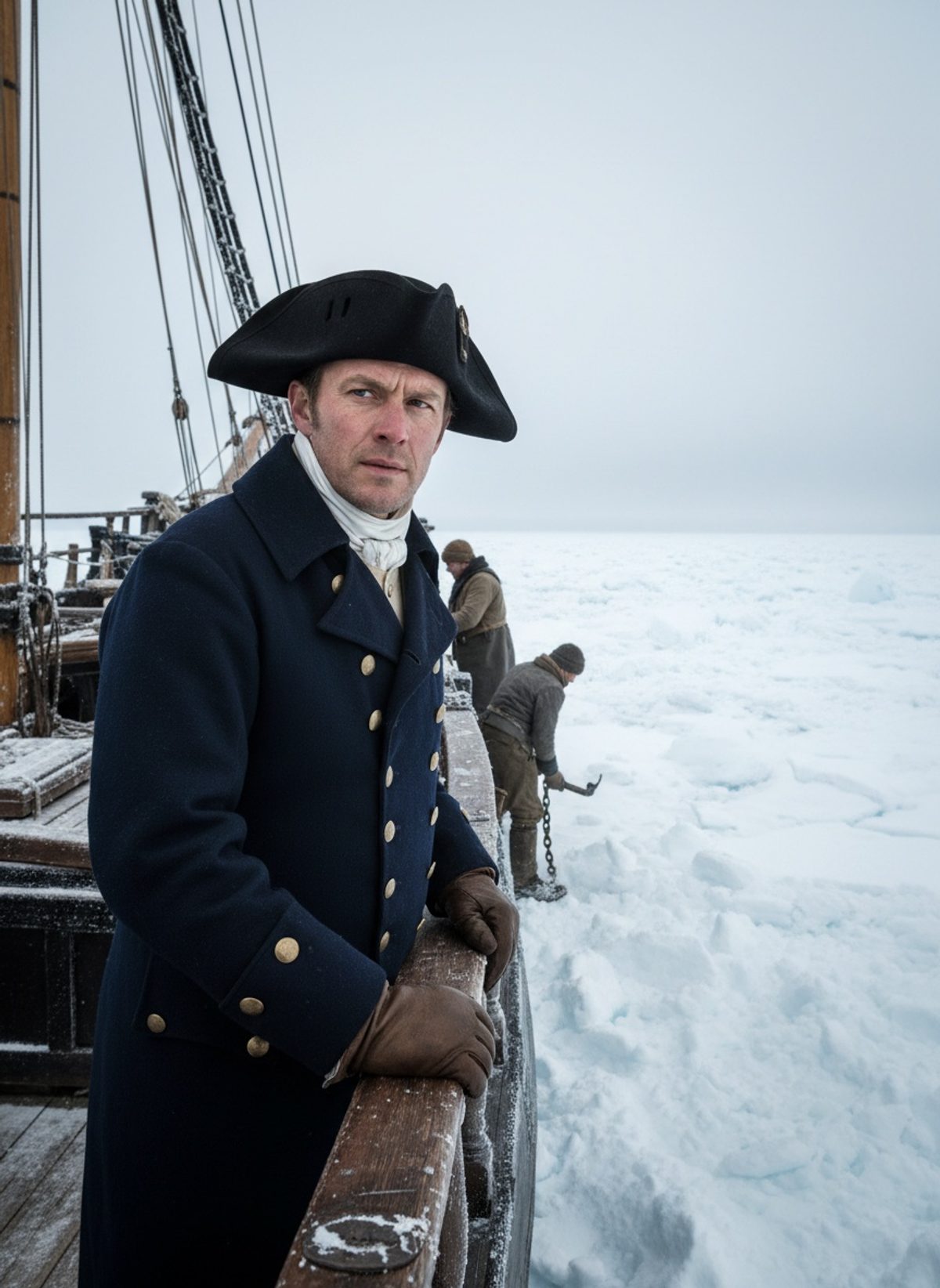
The mist hung like a cold whisper around the ship, its tendrils weaving through the crew’s frostbitten fingers as they hauled ropes and tightened the sails. Above the deck of the HMS Racehorse, carved from the sturdy timbers of Devon's oak forests, Captain Constantine Phipps squinted through the lens of his spyglass. The horizon was a creamy void, devoid of compass points, a relentless expanse of ice that threatened to swallow them whole. Here, in the heart of the Arctic, the sun had long surrendered to an eternity of white. Their mission: to scout the mythical passage across the North Pole, an ambition as colossal and foreboding as the icebergs that loomed alongside.
The Quest for the North: Charting the Unknown
At a time when the British Empire’s reach was ever expanding, Parliament sought not merely new lands but new passages, hidden routes that would grant unlimited access to the riches of the East. The notion of a navigable path over the top of the world tantalized the admiralty, its promise whispered in the shadowed halls of London’s Navy Office. This mission fell to Captain Constantine Phipps, a Devon-born officer whose naval prowess was bolstered by a relentless curiosity synonymous with the Age of Enlightenment. In June 1773, with the Racehorse and its companion the HMS Carcass under his command, Phipps set sail from the grey shores of Plymouth.
The challenges they faced were immense and unprecedented. Navigation was a murky science, dictated by the stars which here, near the polar cap, rotated in confusing, lengthy arcs. The ship pushed further north than any British vessel had dared, its hull slicing through waters tinged with the chill of undiscovered territory. Every advancement demanded a mapping—a naming—of the visible world: from Cape Worsley to Walden Island, each title scribbled by Phipps on creased charts as if anchoring the vessel's progress in reality.
The silent northern expanse was far from a blank slate though; it possessed a wild, untamed majesty that both daunted and decorated their voyage. Icebergs glinted like alabaster fortresses, and seams in the white panorama revealed waters black as ink. Yet, as majestic as it was, this icy wilderness had traps of its own. Ice barricaded their path, threatening to fix the Racehorse in a frozen tomb. Days passed into an eerie monotony, each marked by monotones of grey, until the crew half believed they'd chase dawn indefinitely without respite.
Read next: The Day a Devon Sailor Charted a Continent From the Sea
Surviving the White Abyss: Man Against Nature
Phipps knew their survival would hinge on both seamanship and the fortitude of his men. His journals noted the intolerable cold that devoured their rations and nipped at their resolve. Daily routines became rituals of endurance: "Turner," he noted, "met his fate in a slip of the ice, swallowed briskly by the cold bay—an eternal memorial amidst our temporary footprint." The captain’s personal motivations were as much about national pride as they were about advancing scientific understanding. The men knew they were not merely explorers, but participants in a vaster story of human persistence.
Beyond maritime charts and nautical miles, Phipps found himself inadvertently forging a path for future explorers. A young midshipman, Horatio Nelson, was among the crew—his fervor for risk kindled amid such harsh trials. The frozen canvas of the Arctic influenced the men in unexpected ways, affecting their speech, their camaraderie, as though each shared breath in puffed clouds kept them united against the lifeless land.
As ice pressed upon the hull with groaning, echoing warnings, Phipps had little choice but to pivot from the original plans. This inhospitable land painted a scene of survival, rather than victory. It was not a concession of defeat but an adaptation to nature’s immense power. Such realizations carved a new purpose, altered but not diminished. Retracing their track, utilizing every force of wind and manpower, the expedition sought a dignified retreat.
Read next: The Day a Devon Captain Sailed Into the Ends of the Earth
A Return Home: Mapping the Future
The southward journey was one filled with introspection and lessons. Those who returned carried with them not only tales but crucial data. The voyage collected essential knowledge on the Arctic's flora and fauna, details of geography and climate that would inform subsequent expeditions. Though they did not find the northern passage, Phipps’ maps enriched Britain's geographical understanding, becoming essential references for future colonial exploits and polar exploration initiatives.
In more ways than they could have planned, the expedition rewrote perceptions of what was possible. It was marked not by tangible conquest but by extraordinary commitment. Captain Phipps had sailed into a realm that few human eyes had beheld, and his accounts offered a glimpse into a world at the precipice of human understanding. It prompted a recalibration of desire, juxtaposing man’s apparent dominance with the vast supremacy of nature’s elements.
Today, the story matters because it reminds us of the boundless potential locked in the pursuit of knowledge and the respect due to the natural world’s profound mysteries. Phipps’ tale, often overshadowed, whispers courage over ignorance, suggesting that the edges of our maps are not just borders of discovery but markers for our endurance. It calls us to remember those who pressed against the world’s ceilings, testing the limits of exploration, until horizons of ice and snow bound only the imagination.