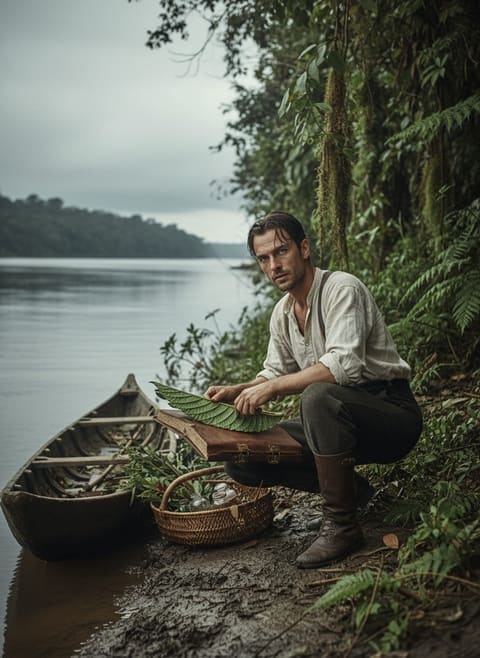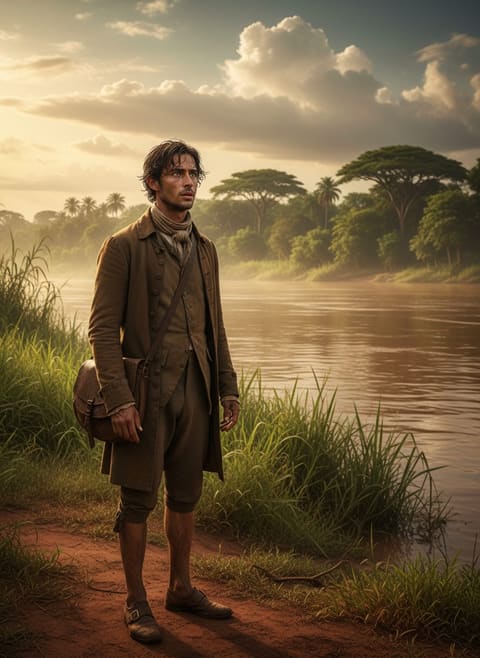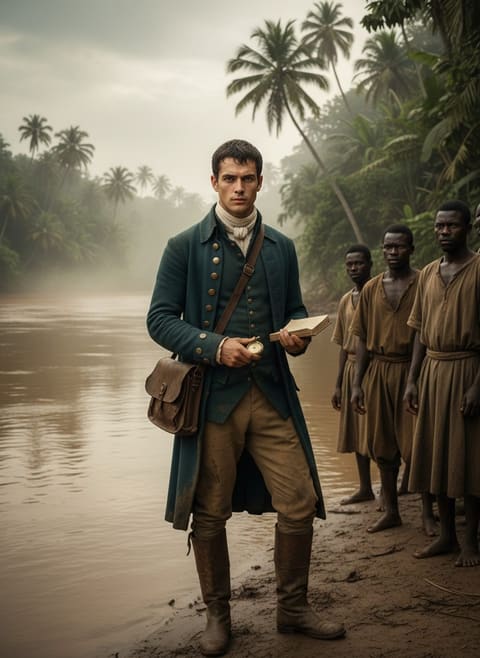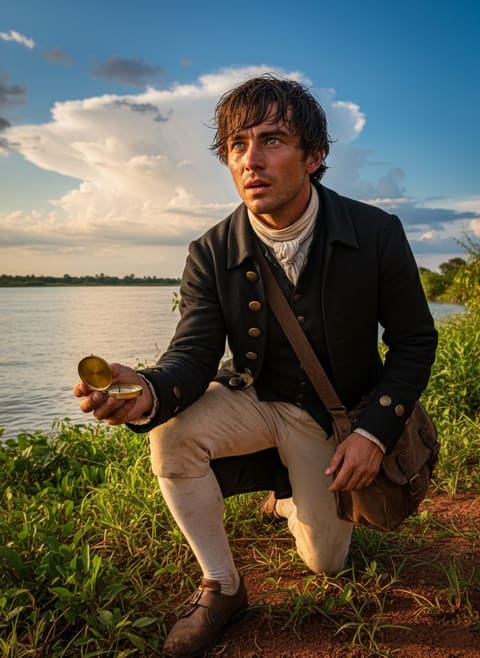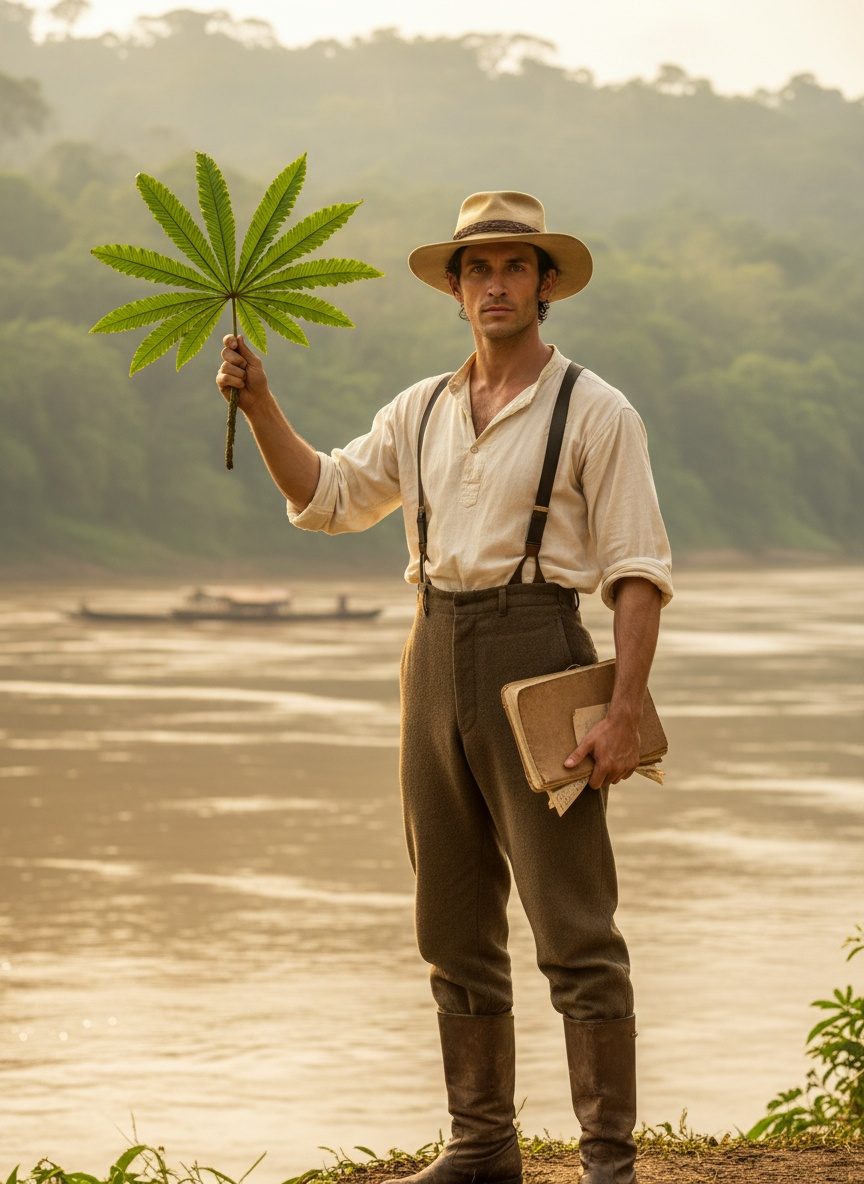
The suffocating humidity of Belém in 1848 wrapped around Richard Spruce like a hot, sticky shroud. The city bustled with the chaotic rhythm of a bustling port town, where merchants shouted over the clamor of laboring dock hands unloading ships. Above, the canopy of tropical clouds cast a diffuse light upon the settlement, foretelling the imminent rainforest deluge. Into this landscape stepped a lone figure — a schoolmaster’s son from Yorkshire, armed with little more than a single bag and a mind seething with curiosity. His task, audacious and immense, lay ahead: to unravel the botanical mysteries of the Amazon, a world where European eyes had barely skimmed the surface.
Into the Heart of Green
The Amazon, a cornucopia of verdant complexity, was a land fraught with peril and promise. For centuries, tales had drifted back to Europe of a river so immense it defied imagination and forests teeming with life both abundant and fierce. But no other European had fully comprehended the ecological treasure trove it held, wealth waiting to unfurl its secrets to those daring enough to seek them.
Richard Spruce, uncelebrated in his homeland, possessed a tenacity matched only by his appetite for knowledge. Undeterred by his lack of fortune or societal prestige, he ventured forth into the rainforest, where the air was thick with the scent of wet earth and the ceaseless chorus of insects. Each step further removed him from the world he knew, yet each step brought him closer to his purpose. He was a botanist by inclination, and the jungle, with its symphony of greens, was a siren call he could not resist.
The Botanic Expedition
As Spruce pressed southward into the depths of the forest, the Amazon unfolded its secrets. For twelve years, he charted rivers, cataloged forests, and documented an astounding array of plants unseen by European eyes. Among his discoveries was an unprecedented diversity of flora, with thousands of species penned meticulously into his journals. Each entry was a breakthrough, a testament to his relentless pursuit of knowledge amid adversities that often appeared insurmountable.
Read next: The Day a Devon Captain Charted the Pacific and Changed the World
The names of places like the Rio Negro and the Andes became etched into his records, and his observations extended beyond the botanical to encompass meteorological phenomena and indigenous cultures. His journey was a tapestry of scientific undertaking and survival, as diseases, unyielding weather, and logistical hurdles threatened his progress at every turn. Still, Spruce trudged on, his heart as unyielding as the rainforest canopy that kept its watchful eye over him.
Legacy in Leaves
Richard Spruce's findings eventually journeyed back over the oceans to Victorian England, where they revolutionized the scientific community's understanding of the Amazon's biodiversity. The plant specimens he discovered were not mere curiosities but vital pieces of information that challenged the existing paradigms of natural science. Despite this monumental contribution, recognition was scarce. The annals of science have seldom celebrated Spruce with the fervor he deserves, despite his work significantly enriching the botanical academia of the time.
Read next: The Day a Devon Sailor Mapped the Roof of the World Alone
His collections and observations continued to inform and inspire, their implications stretching beyond the Victorian era and laying groundwork challenging modern scholars to ponder the intricate relationships within ecosystems. Yet his name has remained obscured, overshadowed by the grander narratives of his more famous contemporaries. His story, woven with the fibers of exploration, discovery, and a relentless quest for understanding, is one waiting for revival.
The Map Unfolds
In tracing Richard Spruce's footsteps, one discovers more than the journey of a lone man in the depths of the Amazon; it is a narrative that resonates with the courage to pursue knowledge for its own sake. His story serves as a reminder of those who explored not for fame or fortune but for the pure, unyielding pursuit of discovery. That an unassuming schoolmaster's son from Yorkshire could stand among the great explorers of his time reveals a truth about the untold stories lying at the fringes of history. In an era that prized intellectual conquest as much as territorial occupation, Spruce was a pioneer who ventured into the unknown, not to conquer but to understand — a true botanist of the Victorian Age.