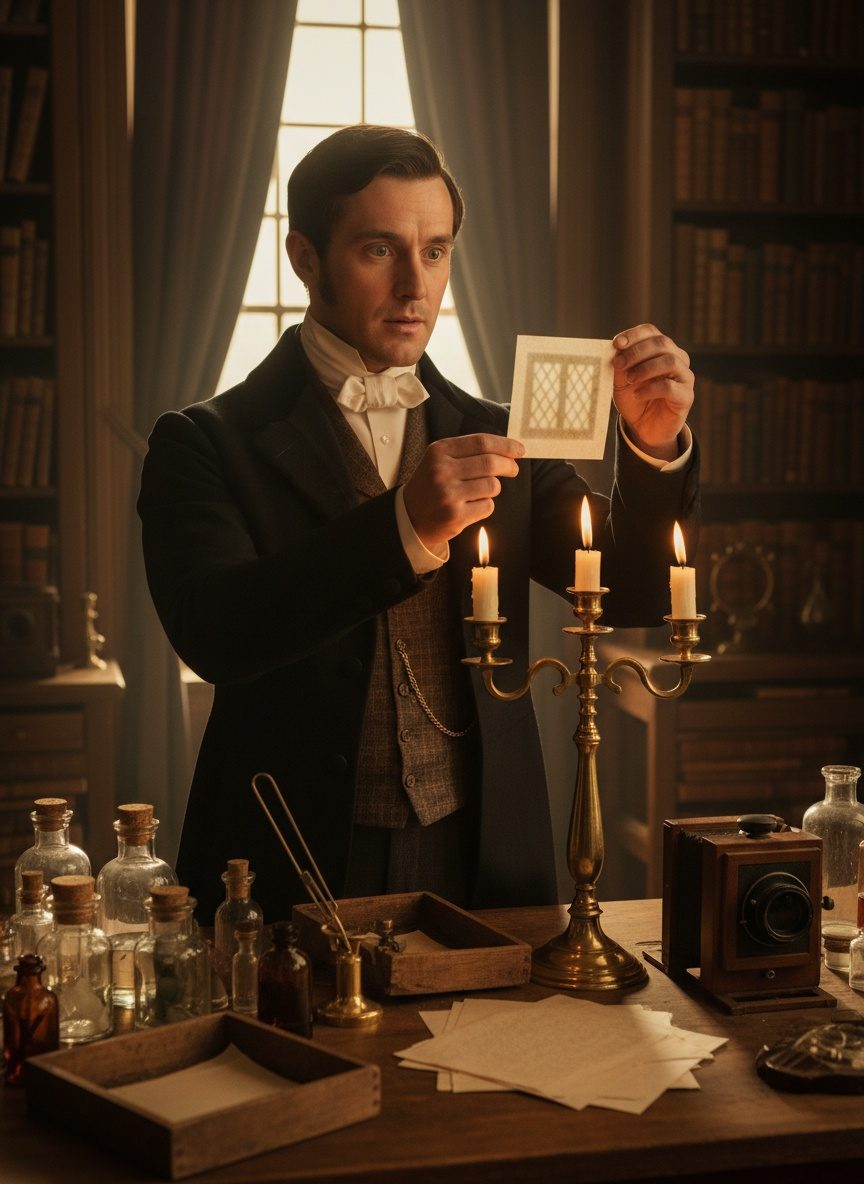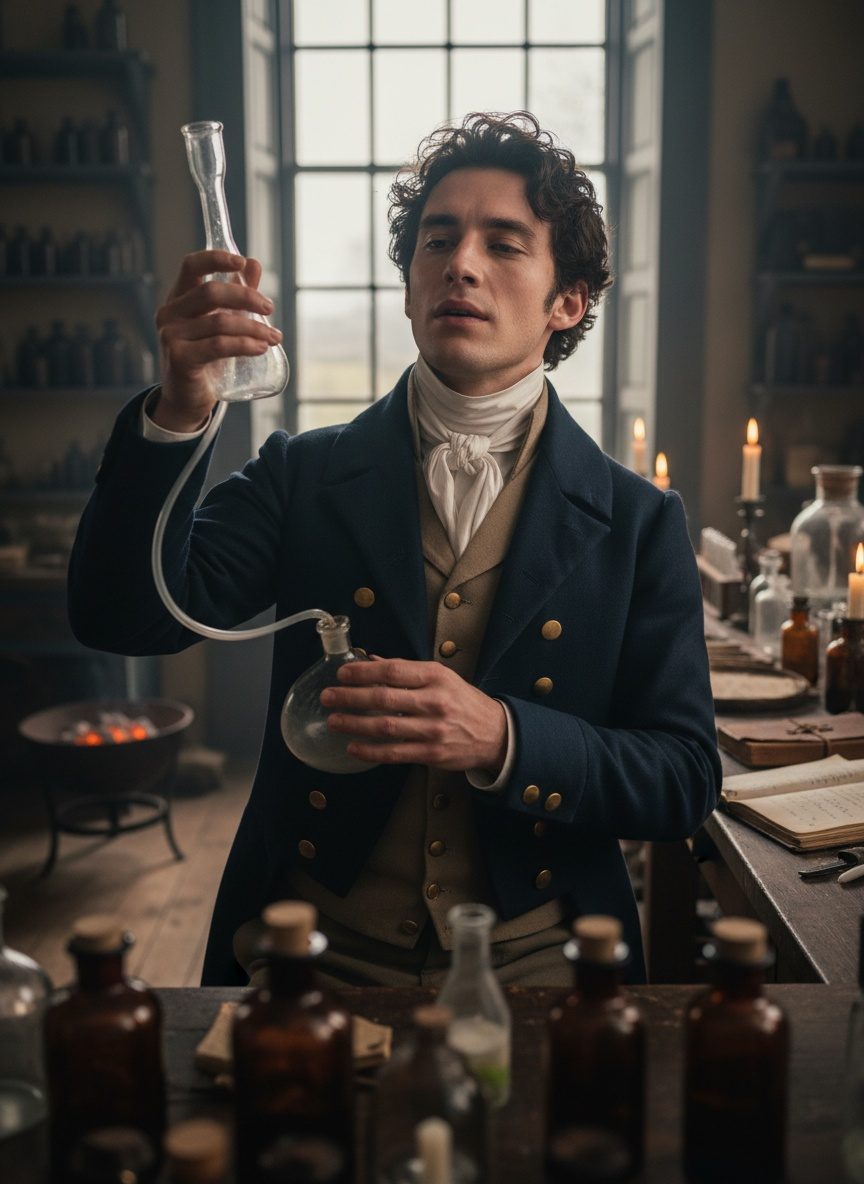
May 1796. Sunlight flickered through the leaves as a gentle breeze swept across the Gloucestershire countryside, carrying with it the scent of spring blooms and a hint of revolution.
The Shadow of Smallpox
For generations, smallpox had cast its malevolent shadow over humanity. It was a scourge that left nothing but devastation in its wake, with victims covered in pustules that left life-long scars or resulted in death. Entire communities lived under the constant threat of this affliction. No household was untouched, and the Georgian era considered it a merciless inevitability.
In the village of Berkeley, nestled amid Gloucester’s rolling green hills, there lived a man shaped by his encounters with this pervasive disease. A country physician who epitomized humility and diligence, Edward Jenner was relentless in his quest for knowledge. He had spent decades studying medicine and nature, and it was here, far from the bustling epicenters of scientific acclaim, that he began to piece together the threads of a profound hypothesis.
The countryside offered more than verdant landscapes. Jenner noticed the recurrent whispers among dairymaids who frequently spoke of their immunity to the feared disease. They believed they would not contract smallpox because they had suffered cowpox, a much milder affliction contracted from bovine sores. To Jenner, this was more than folklore—it was a potential revelation.
Read next: The Day a Deaf Man Gave the World Its First Electric Motor
Bold Actions and Theories
Jenner’s contemporaries regarded his ideas with skepticism, as smallpox had baffled the greatest minds for centuries. Yet, he theorized that exposure to cowpox could protect against smallpox, a radical idea that demanded courage and conviction to test. Jenner faced immense opposition; it was unthinkable to inject a human with a disease, even if it was one as benign as cowpox.
However, on that pivotal day in May 1796, Jenner resolved to challenge the fears and objections of his colleagues. A young boy, eight-year-old James Phipps, became the pivotal subject of Jenner's bold experiment. With the trust of the boy’s parents, il wielded his scalpel and made a small incision in James’s arm, introducing matter taken from dairymaid Sarah Nelmes, who had contracted cowpox.
The atmosphere in Jenner’s simple country office was filled with both tension and anticipation. Each day following the procedure, Jenner observed James with a vigilant eye. When it seemed the boy had developed no adverse effects except for mild cowpox symptoms, Jenner took the final, daring step over six weeks later by exposing James to smallpox matter. Victory was silent but monumental—James did not contract smallpox.
The Ripples of Change
Jenner’s discovery reverberated far beyond the boundaries of Berkeley. At first, the medical world was hesitant, dismissive even. However, Jenner’s meticulous notes and tireless correspondence with leading physicians gradually eroded skepticism. Some took to repeating his experiment themselves, confirming what Jenner had so boldly claimed: cowpox did indeed protect against smallpox. The success rate soon turned disbelief into triumph.
By the late 1790s, the scientific community had witnessed enough to begin embracing his vaccine method. Jenner shared his insights freely, not seeking patent or profit, but rather the eradication of the ravages he had witnessed. His innovation was not merely about altering medicine but about altering the human condition. It marked the dawn of immunology as a science and set in motion a process that would eventually lead to the global eradication of smallpox nearly two centuries later.
In a time when communication was not instantaneous, Jenner’s work spread across continents, bringing hope to countless lives. Nations, irrespective of their standing, clamored for access to this life-saving innovation. From the serenity of rural England, a quiet revolution was underway, transforming health practices globally.
Why This Story Matters
Edward Jenner’s pioneering work serves as a testament to the power of observation, perseverance, and ethical commitment to public health. His story is a reminder that revolutionary change often stems from humble origins and that courage can indeed alter the course of history. Jenner’s legacy is more than historical; it’s instructive for future generations grappling with their own pandemics and epidemics. The lessons lie not only in the science he advanced but in the spirit of collaboration and altruism he embodied.
In the battle against what was once deemed an invincible disease, Jenner’s solitary courage lit the path toward betterment for all, unraveling the mysteries of nature through wisdom born of attentiveness and empathy. In that single cut, delivered with an unwavering hand in 1796, the world had shifted profoundly, and its shadow still casts light on today’s continual battle for a healthier world.