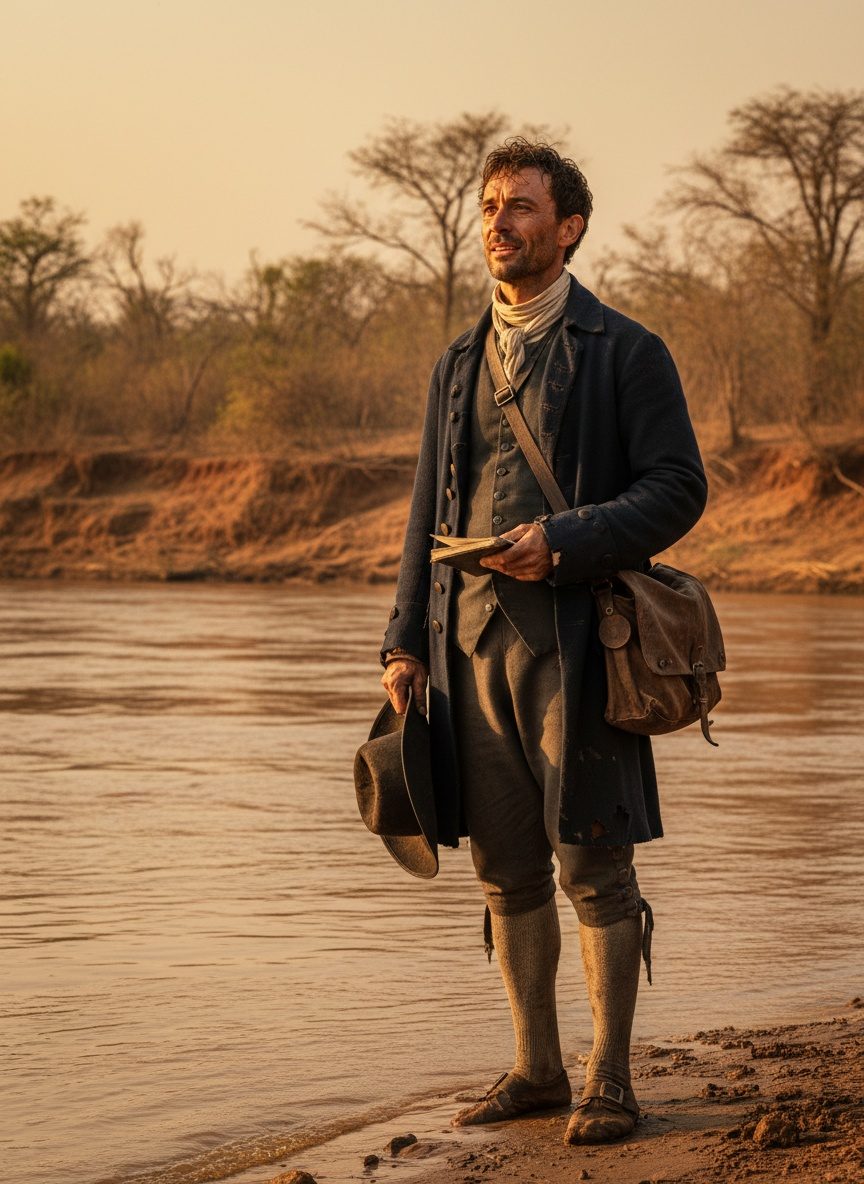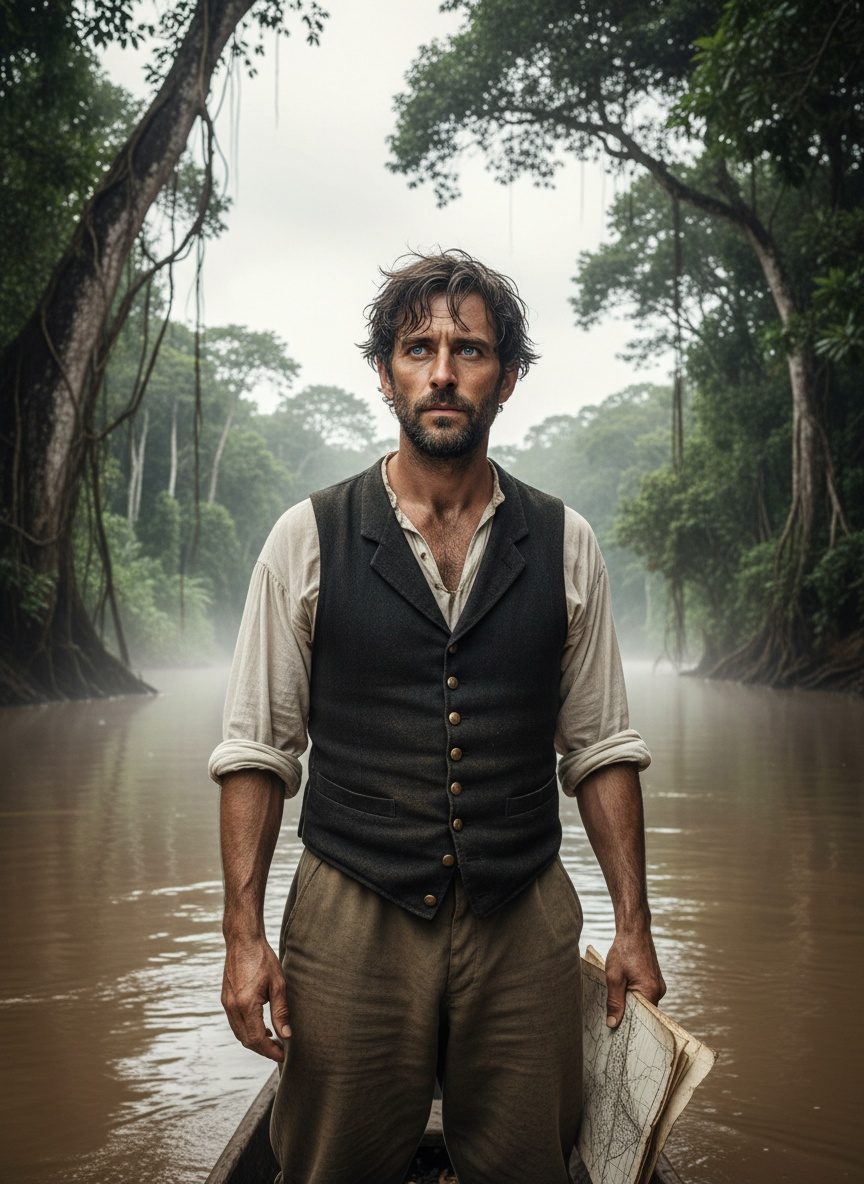
The air was stiflingly humid, even as the first tendrils of dawn painted the sky over the Niger River with hues of pink and orange. The water was a languid mirror, reflecting the swirling mists that clung to the surface and the dense canopy of trees beyond. It was along this serene yet treacherous artery that one bold spirit sought to etch out his mark on history. The Georgian era was one of exploration, where mystery captured the imagination of adventurers and scientists alike. But few dared venture as far as Mungo Park, the one-eyed Scots surgeon whose fate and maps were to shape our understanding of Africa's geography forever.
The Surgeon's Son and His Obsession
Born in the rugged landscape of Selkirk, Scotland, in 1771, Mungo Park was destined for a life beyond the boundaries of his native land. He studied medicine and became a product of the age's burgeoning thirst for knowledge. Yet, it was not the familiar Scottish landscape that called to Park, but the uncharted territories of Africa. An opportunity arising in the service of the African Association granted him his passage there, a world most Europeans could only dream of knowing.
Park's first expedition revealed a world both fascinating and perilous. Deserts unfurled like impassable seas of sand, while rivers coursed with the lifeblood of unexplored ecosystems. In 1796, after extensive hardships including capture by a desert chieftain and confronting near-starvation, Park managed to return to his homeland with tales and sketches that ignited imaginations across Europe. But the Niger River remained unconquered, its source and mouth a mystery that beckoned him to return.
The Return to the Heart of Darkness
In 1805, driven by an insatiable curiosity and a desire to complete his unfinished quest, Park embarked on a second voyage. This time, he departed with a different mission and a more formidable plan. He brought a crew of forty, a testament to his determination and the backing he had secured. Hopes were high; they aimed to trace the Niger River from its source to its mouth—a feat that would undoubtedly enshrine Park's name in the annals of history.
Read next: The Day a Devon Captain Mapped the World's Last Shore
The voyage into the heart of the African continent was both a physical and mental ordeal. The crew faced blistering heat by day and chilling cold by night, with the persistent threat of disease and the often-hostile encounters with local inhabitants. It was an expedition marked by relentless challenges, each bend in the river a new trial. Yet, the promise of mapping the unknown was a siren call Park could not resist.
Into the Mystic Unknown
Park's journey down the Niger was a harrowing blend of natural majesty and lurking menace. The riverbanks were a verdant corridor teeming with life—each rustle in the underbrush a potential danger, each new vista an architectural wonder. For the surgeon-turned-explorer, every mile traveled was a step deeper into the unknown, a world both alien and enchanting.
Reports from African guides spoke of endless stretches of river, of myriad tributaries that weaved intricate patterns through dense jungles. This was the domain of crocodiles and fever-breeding swamps, where survival was as intricate a dance as the one Park mapped. His drive to chart this tumultuous landscape was a testament to his resolve against insurmountable odds, as the sheer distance from European protection became apparent with every passing day.
Last Recorded Journey
The final chapter of Mungo Park’s second expedition remains enshrouded in mystery. As the expedition pushed further into the continent, the Niger River unfurled before them an expanse that was as infinite as Park's ambition. Somewhere along these ancient watercourses, in the very bosom of the continent, the expedition met its end. Documents and reports would later suggest various fates: drowned by the river he sought to dominate, or ambushed by the very tribes whose lands they traversed.
Despite this tragic finale, Park’s maps provided insights that would greatly influence the world’s understanding of Africa. His efforts laid groundwork upon which later explorers would build, each fact and riverbend painstakingly recorded from his keen observation and tenacity. The Niger, once a river of whispers and guesses, had in part been revealed by a man who could not resist its call.
The Legacy of an Unyielding Spirit
Though Park vanished into obscurity, his courage and inquisitiveness left an indelible mark on history. The quest to understand and explore—the very motivations that propelled Park forward—continue to define our human story. His maps, scribbled under the African sky, were not merely lines on parchment; they represented the unquenchable human spirit that seeks to illuminate the shadowy edges of our world.
In remembering Mungo Park’s ventures, we are reminded of the sacrifices made during the age of discovery, the drive to transcend known boundaries, and the high cost of curiosity. This one-eyed Scots surgeon’s journey down the Niger not only shaped geographical knowledge but serves as a poignant reflection of the eternal quest to chart the mysteries that lie beyond the horizon.