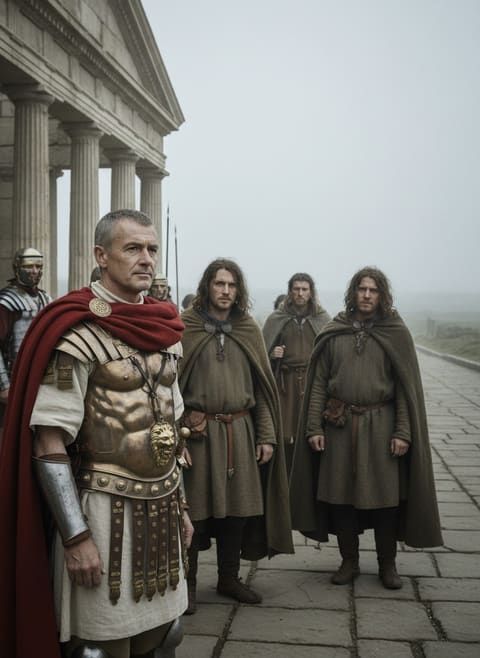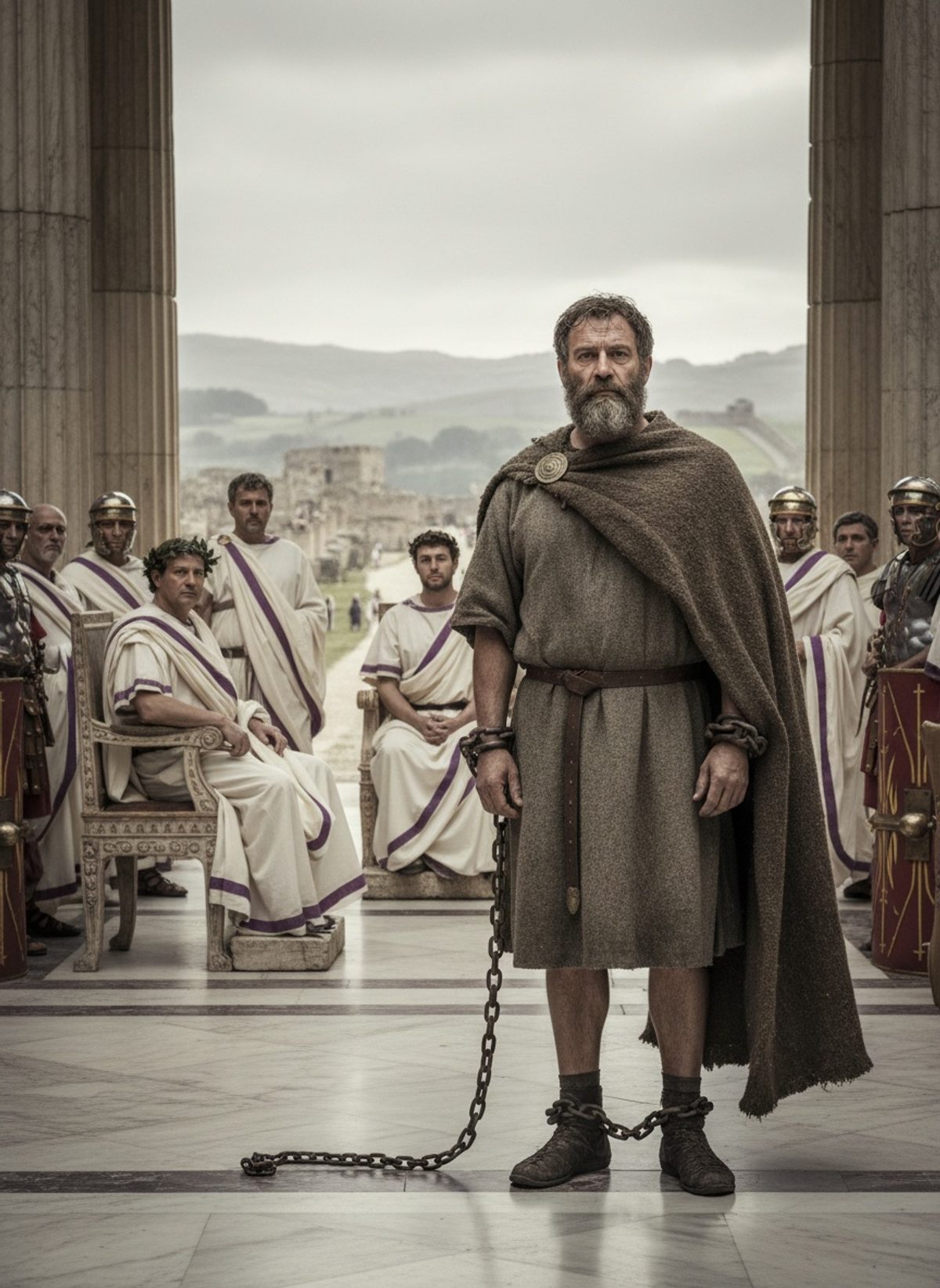
The late afternoon sun hung low over the Roman Forum, casting long shadows across the cobbled stones. A cool breeze swept through the colonnades, carrying with it the distant hum of the bustling city beyond. Romans of all classes gathered, murmuring in anticipation as they awaited a spectacle not of the usual gladiatorial kind, but of political consequence. Today, a war leader, a barbarian by Roman standards, stood to face the might of the Empire not with sword, but with words. This was no ordinary day; it was the day Caratacus, the rebellious British chieftain, would stand before Emperor Claudius himself.
The Chained Lion of Britain
Caratacus, leader of the Catuvellauni, had become a legend in his own time. For eight arduous years, he defied the Roman war machine, rallying various Celtic tribes to resist the relentless advance of the Roman legions into the green and untamed lands of Britain. His name evoked both awe and fear as the man who dared to challenge Rome’s supremacy. When at last he was captured, expectations were set for a grand display of Roman power—punishment for such defiance was usually swift and spectacular.
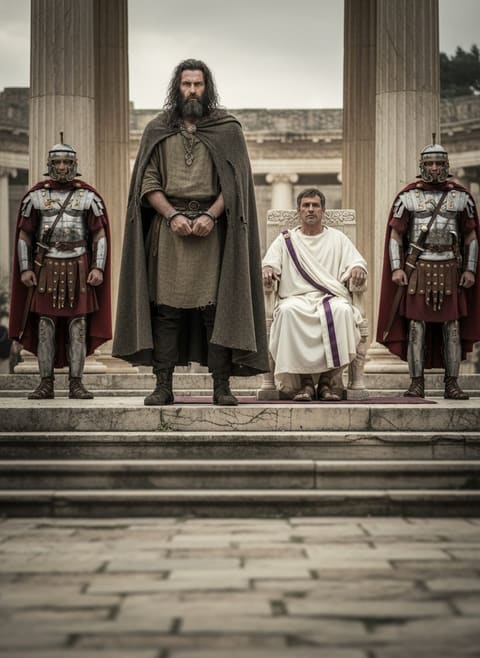
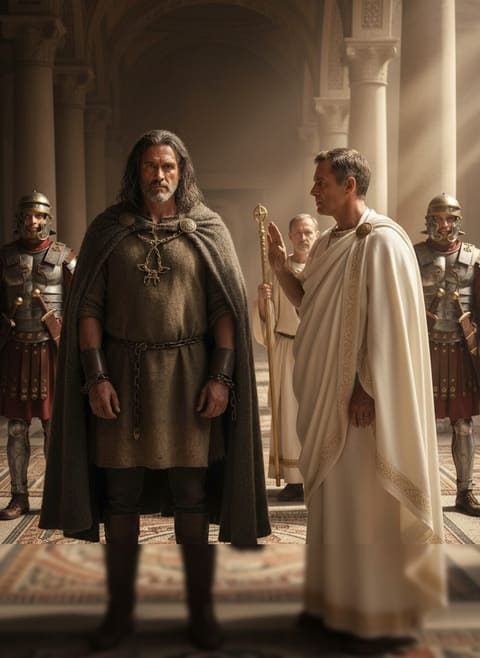
Yet, as this fierce leader was paraded through the streets of Rome in chains, it wasn't his ignominious shackling that captivated the crowds, but the unyielding way he held his head high, even in defeat. The triumphal procession, so much a part of Rome’s propaganda, did not diminish his spirit. His presence demanded attention and respect, even as he approached the intimidating steps of imperial authority.
The Speech That Echoed Through Time
As Caratacus faced Emperor Claudius, the expectation was that he would grovel or plead for mercy. Instead, he seized the opportunity to deliver a captivating oration that would reverberate throughout history. The air was thick with tension; the only sound was the gentle clinking of chains and the whispered anticipation from the gathered senators and spectators.
Read next: The Day a Roman Soldier Carved His Freedom Into Stone
With piercing eyes squared on Claudius, Caratacus questioned the very ethos of Roman expansion with plain yet powerful rhetoric. He spoke of his noble ancestry, invoking a sense of shared dignity and courage, not typical for a prisoner speaking to his captor. He articulated a fervent defense of his homeland, painting vivid pictures of the hills and valleys of Britain, casting them as precious and worthy of defense. This was no plea; it was a statement of identity and heritage that demanded recognition.
The emperor, initially stunned by the audacity, soon found himself moved. Claudius, known for his analytical mind and strategic thinking, recognized not only the bravery and leadership exhibited by Caratacus but also the potential political gain in displaying clemency instead of brutality.
A Decision Beyond Politics
The silence that followed Caratacus's speech was deafening. It was the kind of stillness that comes when a collective breath has been held too long. Claudius, who had presided over many similar proceedings, faced a choice that transcended mere politics. To execute Caratacus would solidify his position as an unyielding emperor, one who allowed no challenge to go unpunished. However, to spare him would speak volumes about Rome’s confidence and benevolence.
Claudius’s choice echoed beyond the walls of the imperial court. By pardoning Caratacus, he sent a powerful message throughout the Empire: Rome was so mighty that it could afford clemency. This marked a rare moment where mercy became synonymous with strength. It was a calculated decision that not only preserved Caratacus’s life but also allowed the emperor to exhibit measured judgment.
Read next: The Day a Roman Soldier Wrote Home and Called Britain Home
The Twilight of an Era
Caratacus's pardon marked not just the end of a rebellion but the beginning of an enduring legacy—his name became synonymous with resistance and the enduring spirit of the British tribes. It is said that Caratacus spent his remaining years in Rome, witnessed by the very society his defiance had once challenged. There, among the grandeur and discipline of Roman life, he was a living testament to the unwavering spirit that once stood against an empire.
His story would ripple through history, finding echoes in later British leaders who fought against foreign domination. Caratacus taught the world that valor and dignity retained power even in defeat, and sometimes those wielded more influence than the blade ever could.
Reflections on Courage
Today, the story of the Roman consul who metaphorically knelt before a British slave in chains serves as a powerful reminder of the complexities of empire, conquest, and identity. Caratacus’s tale is one of defiance and ultimate resilience, transcending boundaries of time to speak to the heart of human courage. His unyielding spirit invites us to wonder: is true strength not found in domination, but in the recognition of humanity across divides? In the end, Caratacus returned to Britain not as a captive, but as a conqueror of the human spirit.