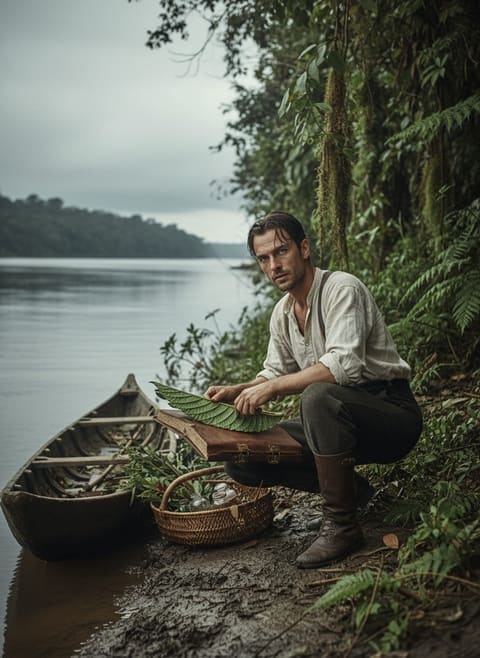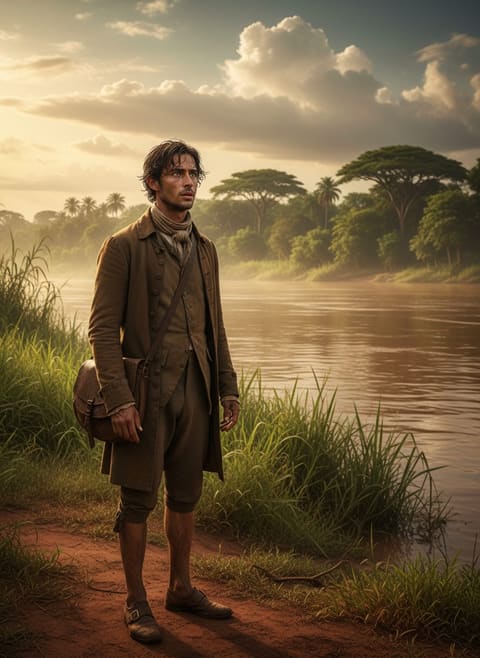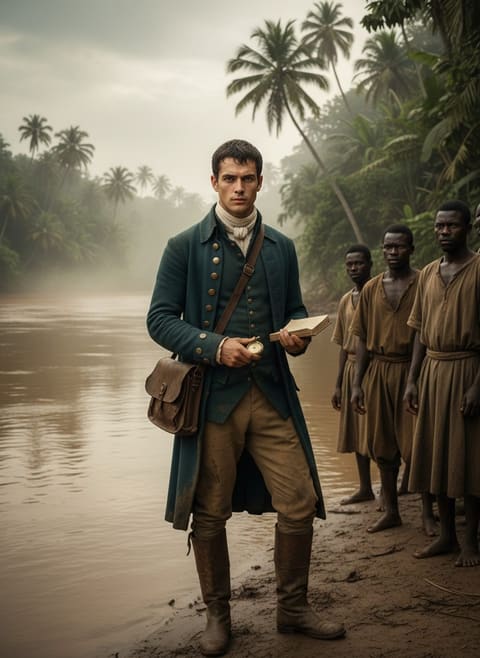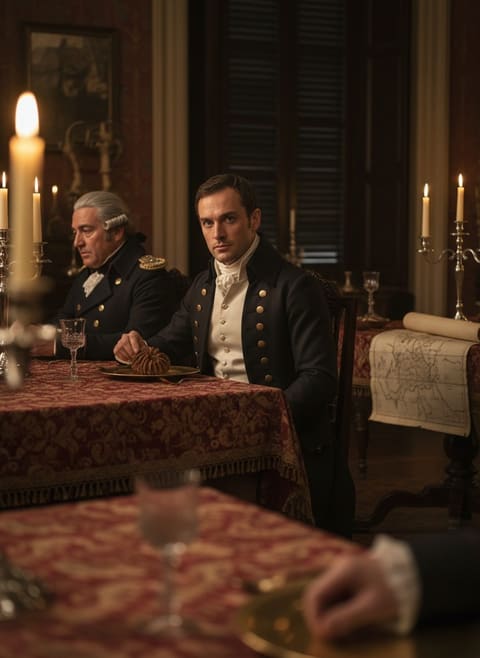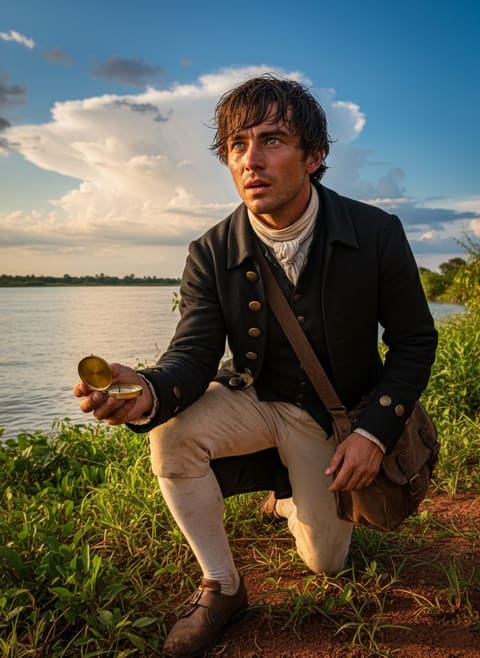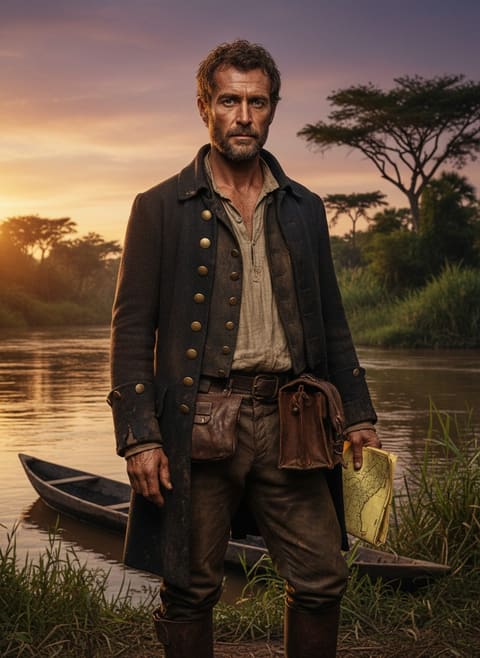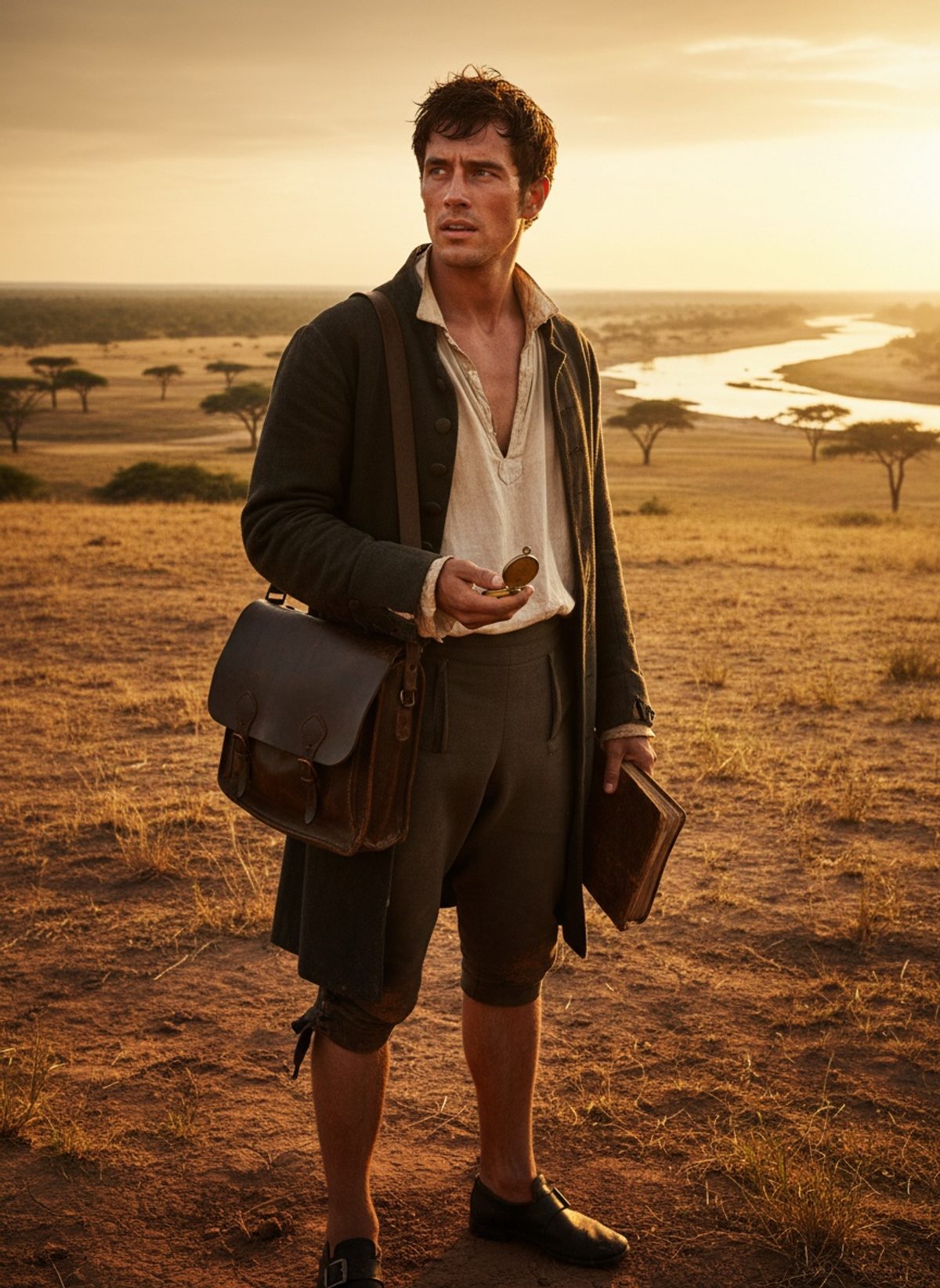
He was twenty-three years old. He had never journeyed beyond the shores of Europe, yet he ventured into the heart of Africa alone.
The Call of the Unknown
In the late 18th century, Mungo Park, a young surgeon with a thirst for adventure and discovery, found himself at the forefront of a mystery that had stymied European explorers for centuries: the course of the Niger River. The geography of Africa was a tantalizing enigma to Europe, packed with riches and dangers in equal measure. Tales of vast deserts, forbidding jungles, and the mythical Timbuktu filled the imaginations of those in comfortable drawing rooms back in Britain. Yet, true maps of such lands did not exist beyond sketchy lines. For a Scotsman with medical training, why venture into these perils? In an era marked by heroic quests and Enlightenment curiosity, Park was driven by something deeper—a fervent desire to fill the blanks on the map.
Before his legendary journey, Park worked aboard the East India Company's vessel, the Worcester, and spent time studying the flora and fauna of Sumatra. This experience honed his observational skills and prepared him for the trials ahead. However, nothing could truly prepare him for what he would face in the vast Sahara. Leaving everything familiar behind, Park embarked on this daunting mission under the auspices of the African Association. His only guides were his compass, persistence, and a few scant references from previous explorers who never returned.
His journey began in the Gambia region, where Park confronted the punishing heat of the Sahara and the fickle nature of human and natural allies. Soon after setting off, armed only with his indomitable spirit, the young Scotsman found himself amid harsh landscapes, battling sandstorms and subsisting on scant provisions. He charted a path through lands teeming with a mix of fascinated and wary locals. Often seen as an intruder or a curiosity, Park had to navigate not only the treacherous terrain but also the complex web of human politics and tribal expectations.
Read next: The Day a Devon Captain Charted the Pacific and Changed the World
The Heart of Darkness
Park’s expedition was a gamble with fate. His path led him deeper into lands where few Europeans had dared to tread. An uncanny ability to forge connections with the locals often became his saving grace. On his trek, Park encountered the merchant caravans that crisscrossed these parched lands, their camel trains articulated against the vast emptiness. Despite the inhospitable conditions, Park's determination saw him finding camaraderie, albeit cautiously, with those he met.
The Sahara was unforgiving, and so were some of its inhabitants. Misplaced trust led to his capture by a band of Moorish marauders. Stripped of his belongings and dignity, Park was reduced to a figure of ridicule and desperation. Yet, he never relinquished his resolve to map the Niger. His captivity was marked by torment and a crippling dependence on the caprices of his captors. But the same resourcefulness that had brought him to these shores also plotted his eventual escape.
Starving, debilitated, and alone, upon his release, Park was left with little more than his indomitable will. Yet the impetus of discovery hadn't dimmed; it barely flickered beneath the oppressive sun. As he staggered through the desert again, Park scribbled obsessively in his notebooks—which would later lend Europe a new understanding of Africa and its geography. His sketches described not only the topographies but also the rhythm of African life, capturing a previously unwritten history of its strong cultures and dynamic communities.
Discovering the Lifeblood of the Land
Then, after enduring months of hardship that seemed destined to end in oblivion, Park made a monumental breakthrough. He reached the banks of the enigmatic Niger River. This sighting was more than a geographical triumph; it was a moment of existential significance. To behold the river’s dark waters was to touch the pulse of a region bound by it—a revelation of where the physical and the mythical converged.
Read next: The Day a Devon Sailor Mapped the Roof of the World Alone
Europe had finally received credible proof of the river's westward flow through Park’s accounts. His narrative would challenge the prevailing European ideas, refuting misconceptions that the Niger flowed into the Nile. Park's findings would ignite a series of further explorational efforts following in his footsteps. Though the man who stood by the river was ravenous and ragged, he had unwittingly illuminated a path that would inspire an era, one borne of risk and a relentless inquiry.
Having achieved the impossible, Park eventually returned to Scotland with a hero's welcome. Tales of his journey, now immortalized in narratives read throughout the continent, stirred the imaginations of would-be explorers and armchair adventurers alike. His return raised as many questions as it answered, and despite the welcome he received, the tale he told was one of humility, a testament to the quiet power of perseverance under unthinkable odds.
Why does this story matter today? Mungo Park’s solo crossing into the Sahara and his fight with the forces of nature and human avarice shed a rare light on the endurance of the human spirit. It is not just a story of discovery but a complex interplay of the known diving headlong into the depths of the uncertain—where the rewards were both tangible and intangible. It evokes a legacy of curiosity and courage, urging us not only to marvel at the world’s mysteries but to explore deeper—to map our own unknowns. The Niger River may have mapped a piece of Africa, but Park’s journey maps the very essence of the human quest for knowledge.