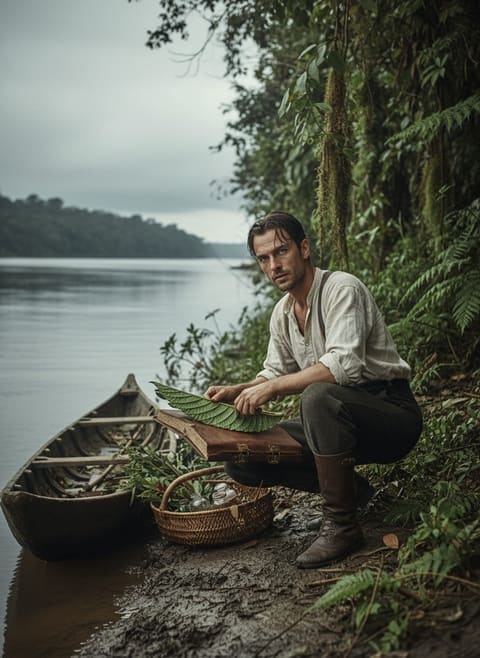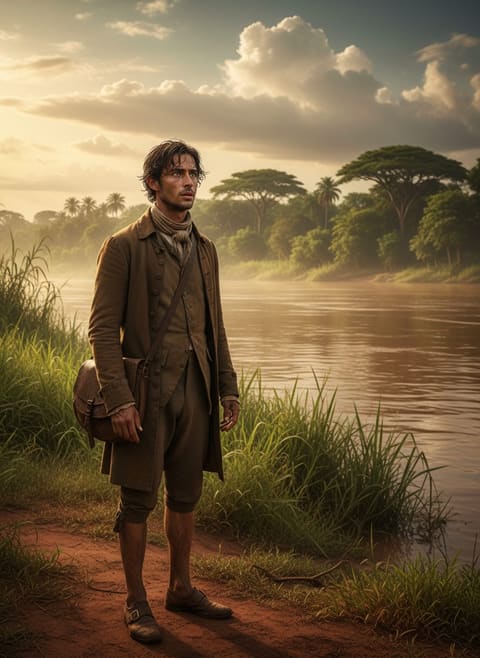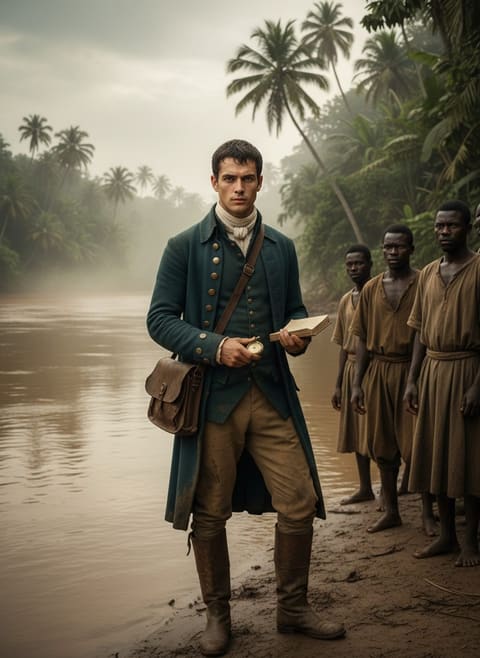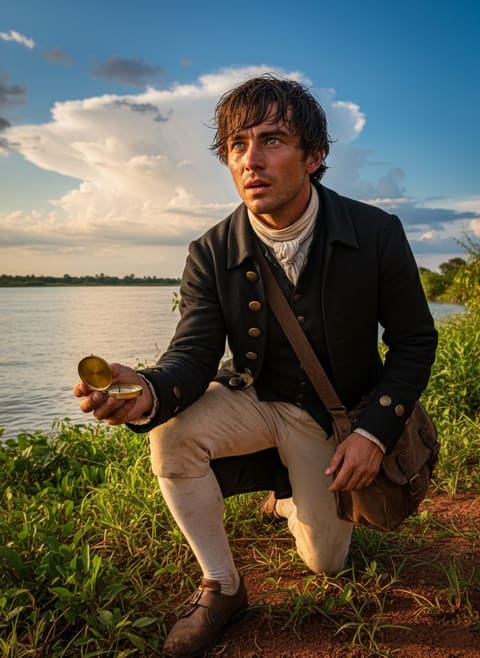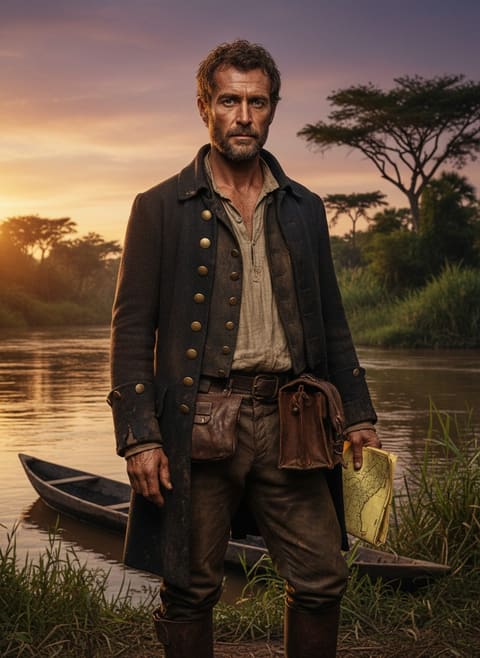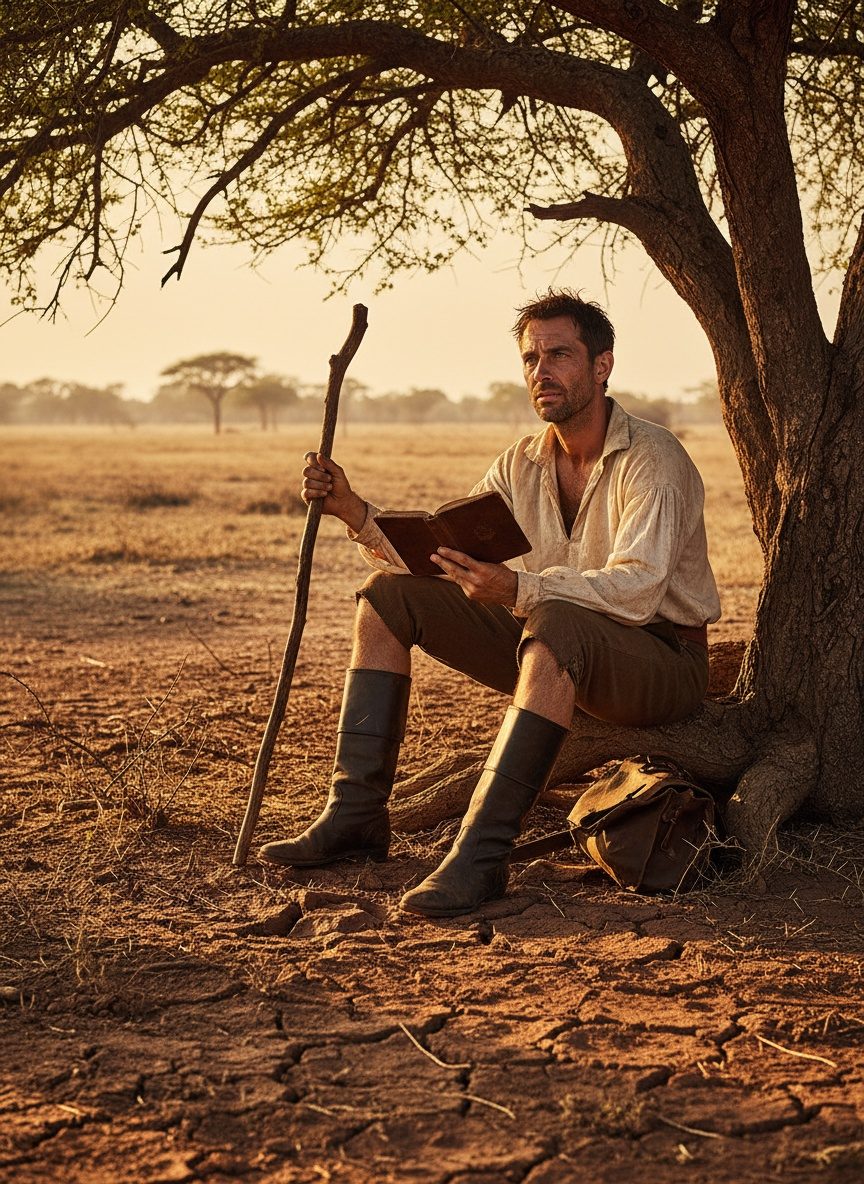
The air was thick, heavy, and oppressive, filled with the hum of unseen insects that flitted through the dense, lush foliage around him. In the searing heat of the West African midday sun, every breath felt like pulling warm syrup into his lungs. The parched ground beneath his worn boots was cracked and unforgiving, yet the landscape stretched out with an inviting lullaby of untouched mystery. Mungo Park, feverish, broken, and alone—miles and lifetimes away from his Scottish birthplace—found himself at the heart of an unforgiving world. He paused beneath a towering baobab, its gnarled branches standing in stark defiance of the harsh climate, and for a moment, allowed the tears to come.
In 1799, Park was more than just a name; he was the embodiment of human curiosity driven to its limits, a young man with a zeal for discovery that far outpaced the solid restraints of his time. His mission was almost impossibly grand—trace the commands of the Niger River, a waterway shrouded in both mythology and mystery. Yet, standing in the heart of West Africa, stripped of his companions and resources, Park faced a much more personal battle with the unknown.
Born in Selkirkshire, Scotland, the son of a farmer, Mungo Park was not the most likely candidate for such an unprecedented journey. Yet, his early inclination toward the natural sciences and an education at the University of Edinburgh forged the resolve he would need. The African Association, an adventurous and ambitious society committed to unraveling the geographical mysteries of Africa, saw in Park the ideal vessel for their quest—a man both disciplined and daring, educated but with the fortitude forged only in hardship.
The group's expectations were straightforward: map the Niger and uncover the secrets it held. It was a grasp for the exotic, a hunger for the unknown that characterized the era of Victorian exploration. Park's journey began with some promise, his small party cutting through dense jungles and forging friendships, uneasy and fleeting, with local tribes wary of his intentions. However, the continent was vast, and the burdens presented by climate, lack of supplies, and disease quickly wore his party down to ghosts of their former selves.
Read next: The Day a Devon Captain Charted the Pacific and Changed the World
By the time Park sat beneath that giant baobab, his prospects were bleak. In the swells of fever, he had lost weight, hope, and all but the thinnest sliver of strength. He had no companions now, save for the desperate thoughts that plagued his solitary journey. But within this breaking, an ember of defiant will kindled anew in his chest. Park was not finished; the river's tale was only half-told, and he, its narrator, was not yet ready to lay down his quill.
So he rose once more, plagued by visions yet driven by a clarity that was almost alarming in its intentionality. Park understood that his was not just a physical journey but a monumental stride into the very heart of the human spirit—an exploration into how far one can go when everything seems lost.
As Park moved forward, the land around him shifted from tangled forests to the sprawling grandeur of the riverine world. The Niger's water, finally revealed, was as enigmatic as whispered legends had promised—a ribbon of life cutting through the continent's heart. It was breadbasket and barrier, hopeful lifeline and haunting specter, all contained within the same watery expanse. Economic truth, survival necessity, and explorer's nemesis—this river was more than a geographical feature; it was a character in its own right.
Read next: The Day a Devon Sailor Mapped the Roof of the World Alone
Armed with little but his will and a hunger to know the unfathomable, Mungo Park charted where no European had dared, etching lines on maps and sculpting stories within the folds of his mind. Yet danger lingered, an ever-present specter that stalked each cautious step with the whisper of mortality. Eventually, Park's notes remind us, in fragmented yet bravely inked pages, how his journey edged close to madness and triumph in turns.
His was a unique calling, not just compelled by the scientific curiosities of an unreachable world but by something deeper—a need to touch the edges of creation, where human resolve meets the untamed universe. Although his journey's end remains shrouded and shadowed by myth as much as memory, Park's exploration forged a new path for those left in his wake. His defiance against the inevitable became a crucial chapter in a broader story of discovery and cultural intersections, filled with unpredictable turns and a raw, unyielding spirit.
In the swirling mists of history, Mungo Park's tale resonates beyond the geographical or scientific narratives. It speaks to an allegory of the untamed parts of humanity itself: that in our darkest times, under the fever trees of hardship and sufferance, we find something profoundly resilient. Park walked into the unknown, guided by an explorer's heart without companions or comforts, and so doing, reflected the inexplicable human need to keep moving forward, one faltering yet fearless step at a time. What he accomplished wasn't simply a geographical crossing but an intricate journey into the arcane recesses of courage and perseverance.