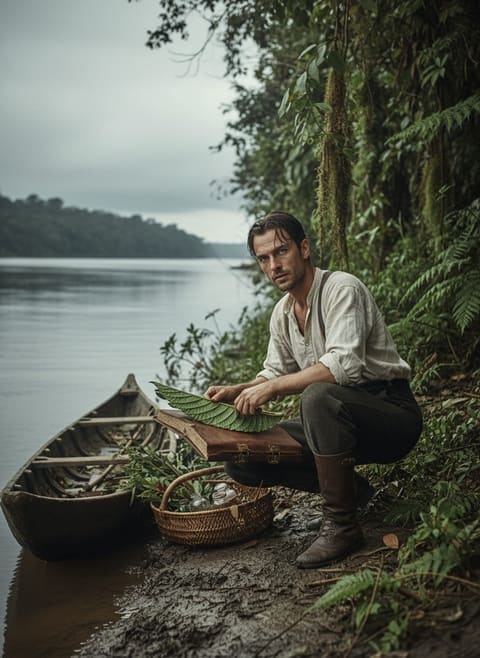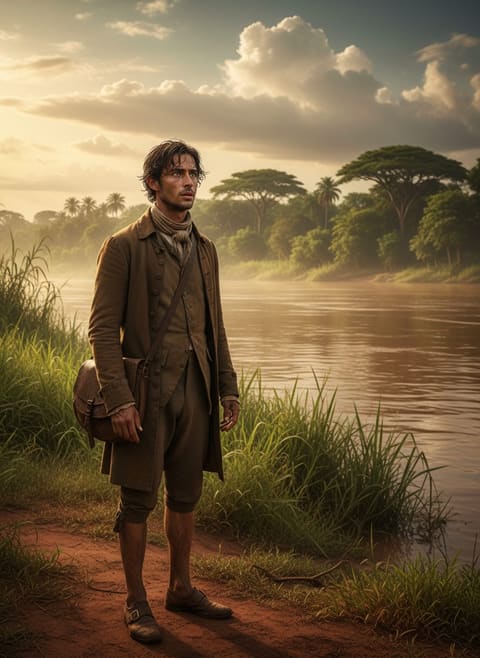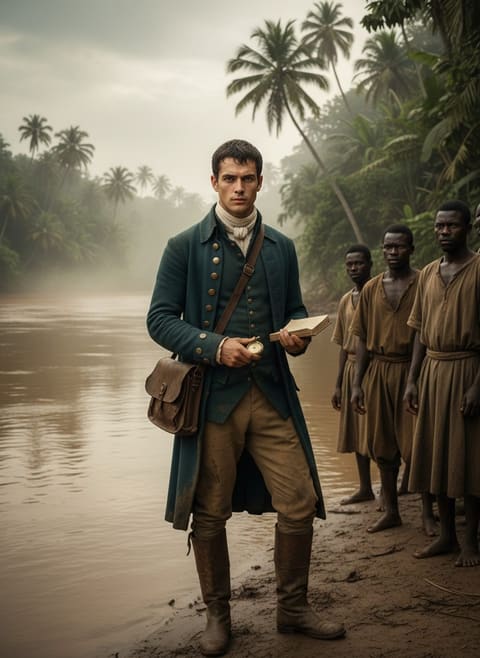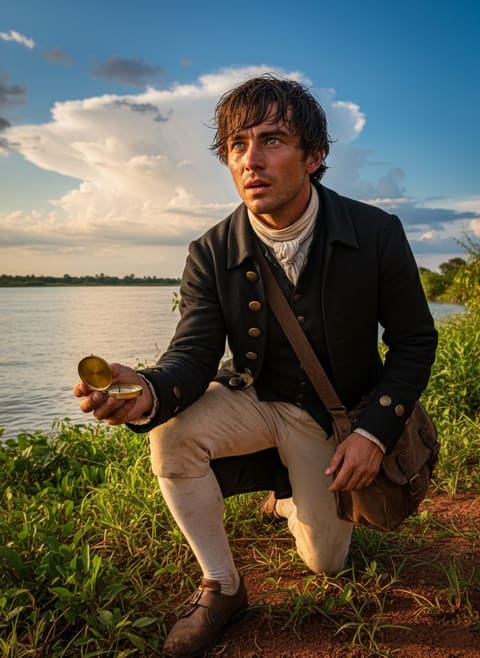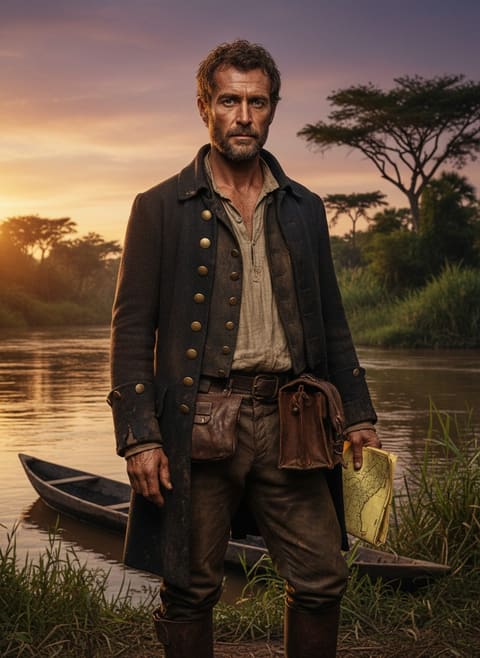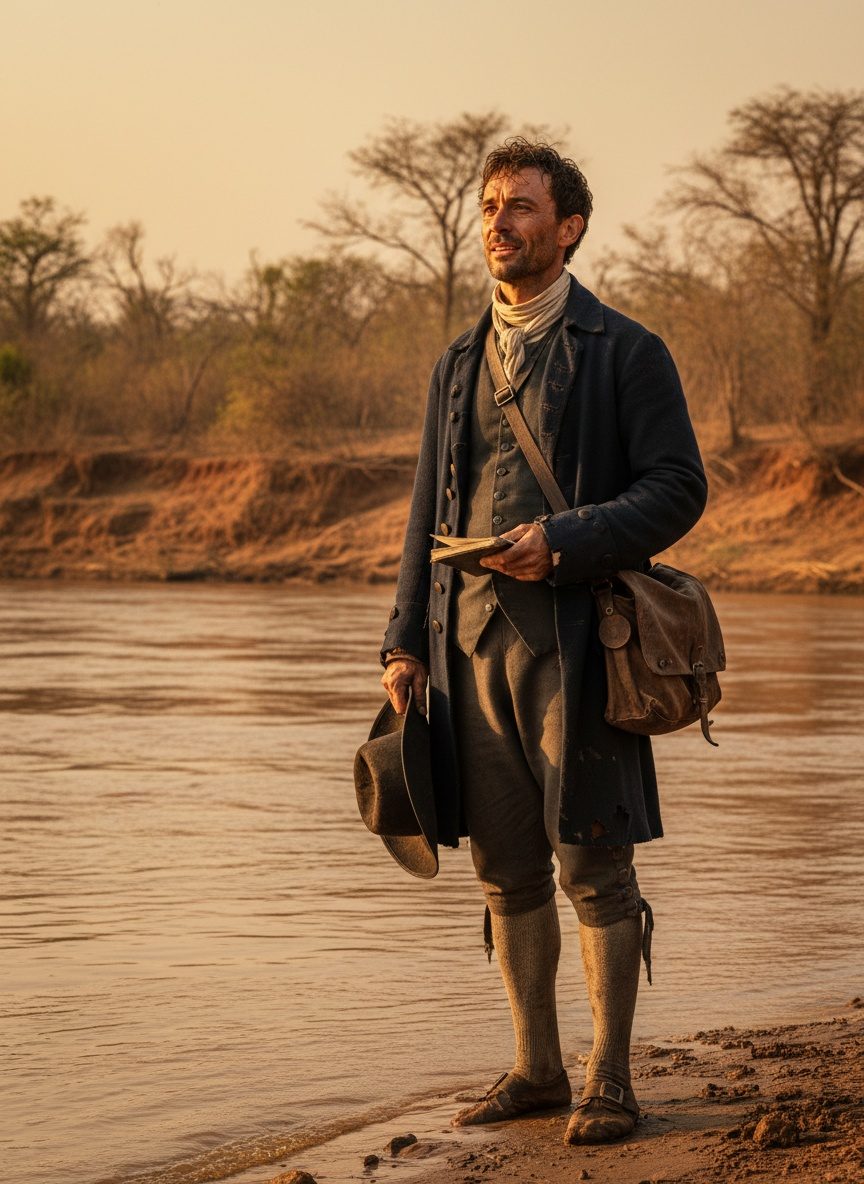
He had never seen the Niger River. He had only read about it in musty tomes and travelers' tales from the comforts of Scotland. Mungo Park was no hardened soldier, nor a seasoned explorer, but rather a young Scottish surgeon whose adventurous spirit propelled him into the heart of Africa, a region as mysterious as it was vast.
Into the Heart of Darkness
Imagine a landscape of infinite possibilities, where maps bear only whispered rumors of untold riches and rivers beyond the imagination of European cartographers. It is 1795, and Mungo Park, barely 24 years old, steps off British soil like an astronaut launched into the void. Equipped with little more than his medical knowledge, a few scientific instruments, and a relentless quest for discovery, Park becomes a peculiar figure—a lone European walking into the African interior with the audacity of someone who believes he could stride across the pages of a novel.
Without the might of an army or the assurance of a guide, Park's journey was undertaken with the spirit of singular determination. He was driven by the Royal African Society's tantalizing prize: a definitive mapping of the Niger River’s course. His journey unfolds in West Africa, a region where ancient histories interlace with cultures as diverse as the landscapes. It is here, often under a canopy of blistering sun and the cacophony of the dense jungle, that Park hopes to etch his name into the annals of exploration.
Stripped of modern conveniences—no functional compass, no protective escort—Park's pilgrimage reads like Dante's descent. Local tribes, both curious and wary of this lone traveler, became his only source of navigation, and their languages, often cryptic, echoed a world so untouched by his sahing society. Captured and robbed by marauders, and at the brink of despair, Park's resolve was not only tested by hostile environments and cultural barriers but by solitude.
The Course of a River
In the deep recesses of his mind, Park held on to the dream of the river. The Niger became his beacon, a watery myth that had filled the journals and imaginations of many before him. Though he had set out in the promise of educational enrichment, the reality presented itself in harsh, unforgiving terms. Subsisting on meager rations and often little more than the goodwill of locals, Park's determination was put to the ultimate test as he journeyed further into the unknown.
But remarkable as it was, the discovery of the river was bittersweet. Barely clinging to life, he finally beheld the silvery essence of the Niger. It was not a wild river of European lore but a ribbon of potential commerce and understanding that he hoped would one day unite disparate worlds. His pen was both weapon and balm, documenting intricate observations of this new world from plant life to the intricate tattoos of its people, leaving behind a narrative richer than any single discovery.'
Read next: The Day a Devon Captain Charted the Pacific and Changed the World
The river flowed, wide and unyielding, a silent witness to the challenges that had nearly claimed his life. It was this watercourse that had fueled centuries of European dreams and conflicts, but standing on its banks, Park knew he had only chipped away at the periphery of its mystery. Yet it was the motion of his own life, each step dragging him closer to death, that painted the most vivid image of adventure—a tapestry of highs and lows that enriched every moment in the human tapestry.
A Map Rewritten
Returning to civilization, Mungo Park brought back more than just sketches and rudimentary maps. He returned as a ghost of himself, hollow-cheeked and feverish, but a survivor with tales far richer than the treasures of gold and ivory some had imagined. His narrative remonetized the legend of Africa within European consciousness. The Niger, which many erroneously believed merged with the Egyptian Nile, was now placed on the map with more certainty.
Read next: The Day a Devon Sailor Mapped the Roof of the World Alone
It's this audacious spirit of exploration, manifest in Park's journey, that underscores the harrowing sacrifices made in the pursuit of knowledge. His endeavors, often against insurmountable odds, were not merely a single man's obsession but a drive that tapped into humanity's innate desire to connect the dots on a sprawling world canvas. He left behind journals, forever altering the cartographic landscape of his continent and inspiring future explorers.
As we reflect on Park's solitary march into the heart of Africa, we are reminded not just of the courage inherent in exploration but of the incredible intersections of human curiosity and resilience. Mungo Park's story is a testament to the power of the individual against the horizon of the unknown, a reminder that often, the greatest discoveries are found in the glow of perseverance, illuminating paths through even the darkest of terrains.