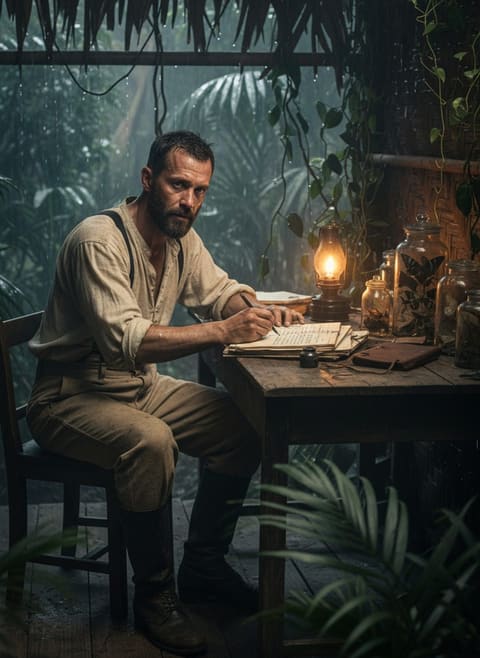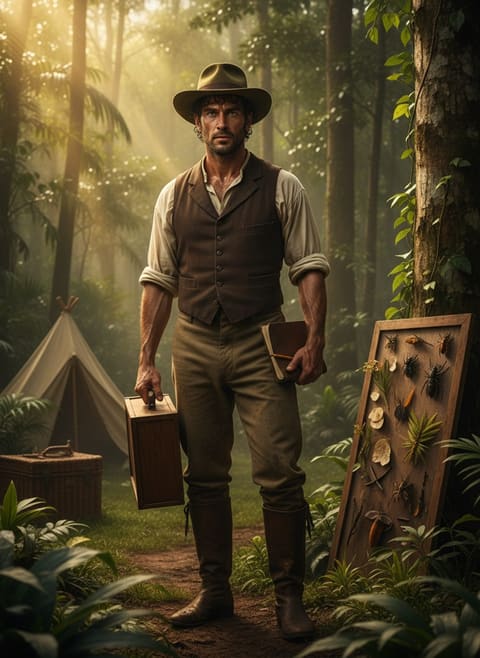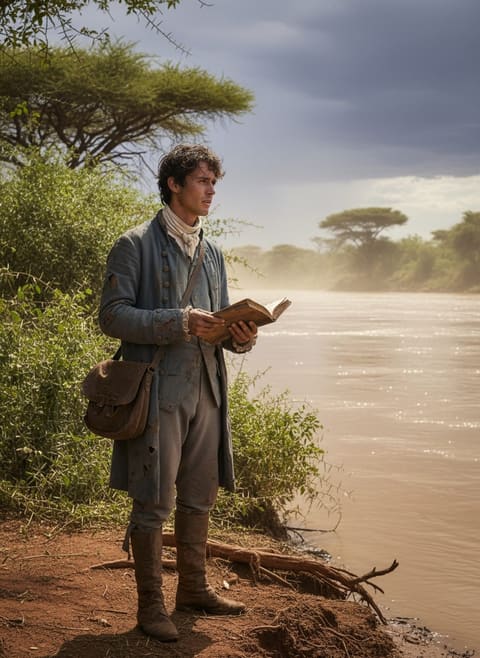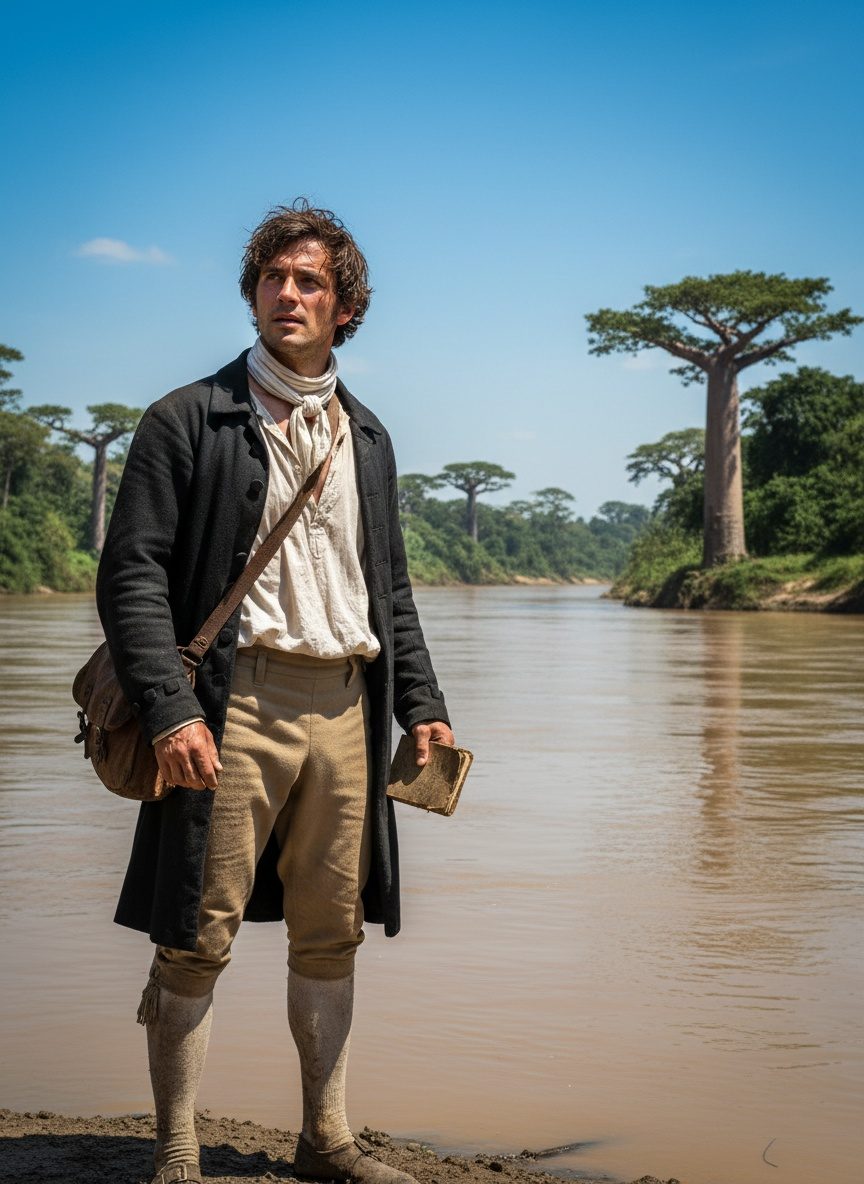
He was twenty-four years old. He had no experience venturing beyond the borders of his Scottish homeland. Yet, in 1795, Mungo Park chose to step into the heart of uncharted Africa with little more than his medical kit, a journal, and an insatiable curiosity that bordered on defiance. Neatly turned out in the heavy garb deemed appropriate for a European gentleman explorer, Park’s beginnings were as modest as his preparation seemed reckless by modern standards. At a time when the African continent was a tangled mystery on European maps, the Niger River's source and course had been the subject of speculation for centuries. No European had seen it with certainty, let alone traced its eastward flow.
With neither map nor guide to aid him, Park commenced an expedition that seemed as much an act of faith as one of science. Entrusting little but his fate to the unknown, he embarked on a journey that would take him through the merciless terrain and tense politics of West Africa. The African Association in London, founded with the express purpose of uncovering these geographical secrets, pinned its hopes and funds on Park, an untried man, but one driven by an unbreakable spirit.
Landing at the Gambia River, Park was immediately thrust into a landscape that could not have contrasted more starkly with the soft hills and damp greenery of his homeland. Each day saw him battling sweltering heat, dense foliage, and swarms of insects. His Scottish endurance was tested not just by the elements but by human challenges; he faced hostile tribes and unfamiliar tongues. Captured by a Moorish chief in Ludamar, Park was stripped of his possessions, reduced to little more than a prisoner in a land where his fair skin was an anomaly. Yet even in this bleakest moment, Park seized the opportunity to make observations, record traditions, and study the very people who held him captive.
Released but weakened, Park continued his journey with nothing more than the clothes on his back. He traversed hundreds of miles on foot, surviving on local generosity and the odd trade of medical services. This mix of curiosity and goodwill saw him interact with villagers, chieftains, and slaves, all forming threads in the rich tapestry of his narrative. His observations were not just scientific but empathetic; he wrote with admiration and a sense of understanding for the cultures into which he integrated himself, detailing their rituals, social structures, and, strikingly, their landscapes teeming with life and color.
Read next: The Day a Devon Sailor Charted a Continent From the Sea
After enduring months of isolation, starvation, and illness, Park found what he was looking for—confirmation of the Niger River’s elusive path. Standing on its banks, the sight of its mighty waters stretching endlessly eastward was a triumph that transcended personal accomplishment; it was a revelation, a connecting link in human knowledge and geography. Out there, in the shimmering heat, far from the comforts of Edinburgh or London, Park's perseverance, and resilience paid off. The Niger was real, and its course was now etched onto the mental maps of those who dared to imagine beyond the horizon.
The journey back tested him even more severely. Malaria and the relentless demands of travel left Park gaunt and barely recognizable. Yet his spirit was unbroken. Arriving back at the banks of the Gambia to take passage home, he carried with him a worn-out journal and invaluable insights into a continent still mysterious to many. It was his vivid descriptions and unguarded fascination for African peoples and places that captivated European audiences, stirring a sense of wonder and respect for lands too long dismissed as uncivilized.
Read next: The Day a Devon Captain Sailed Into the Ends of the Earth
On his return to Britain, Park's riveting tales of courage and discovery established him as a reluctant celebrity. But it was his humble outlook, not grandiose tales, that struck a chord with a public hungry for knowledge of what lay outside their known world. Mungo Park brought to life a corner of Earth that seemed closer to myth than reality, making it accessible, relatable, and human. His relentless pursuit to chart the Niger reshaped the way Europeans understood both the river and the African continent as a whole.
Park's journey demonstrates the transcendent power of human curiosity. Beyond maps and borders, beyond fear and prejudice, it reminds us of the exploratory spirit that resides within all of us. It questions our limits, dares us to walk unchartered paths, and above all, it shows us how a single thread of human determination can weave a new understanding of our world. Months of struggle and deprivation did not result in riches or fame but in a deeper comprehension of how interconnected our globe truly is. Park’s solitary pilgrimage into the heart of Africa, without the trappings of empire or conquest, was a personal odyssey. It left behind a legacy of exploration driven not by conquest but by inquiry and respect.