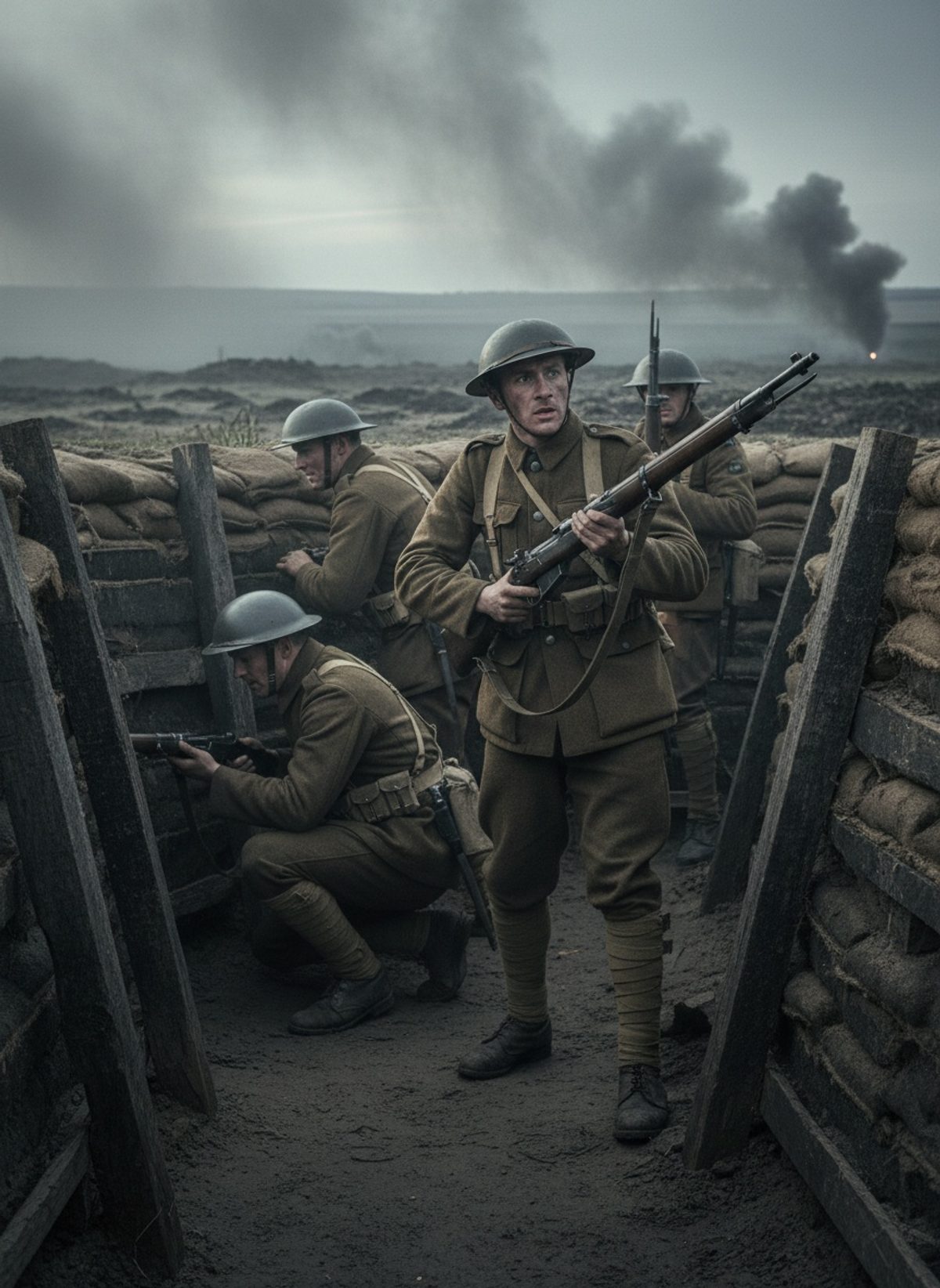
He was armed with a single 13-pounder gun. It was the only British weapon left amidst the German onslaught that September morning.
A Breakfast Interrupted
The dawn of September 1, 1914, broke gently over the small French village of Néry. L Battery, Royal Horse Artillery, had settled for breakfast in a serene location, the quiet before an unforgiving storm. The men were unprepared for the abrupt and violent barrage that would soon follow; just as they began their morning routine, twelve German guns erupted from the ridge above them. Shells tore through the air, an ear-splitting symphony of destruction that shattered the stillness. This was not merely an attack; it was an ambush of ferocious intent.
In moments, every officer within the battery fell, leaving behind a chaotic scene of smoke and debris. Columns of flame devoured the surroundings as the ground seemed to heave under the relentless bombardment. The men scrambled amid the chaos—many injured, some already gone, each one aware of the peril but driven by instinct and duty.
The Defense of the Lone Gun
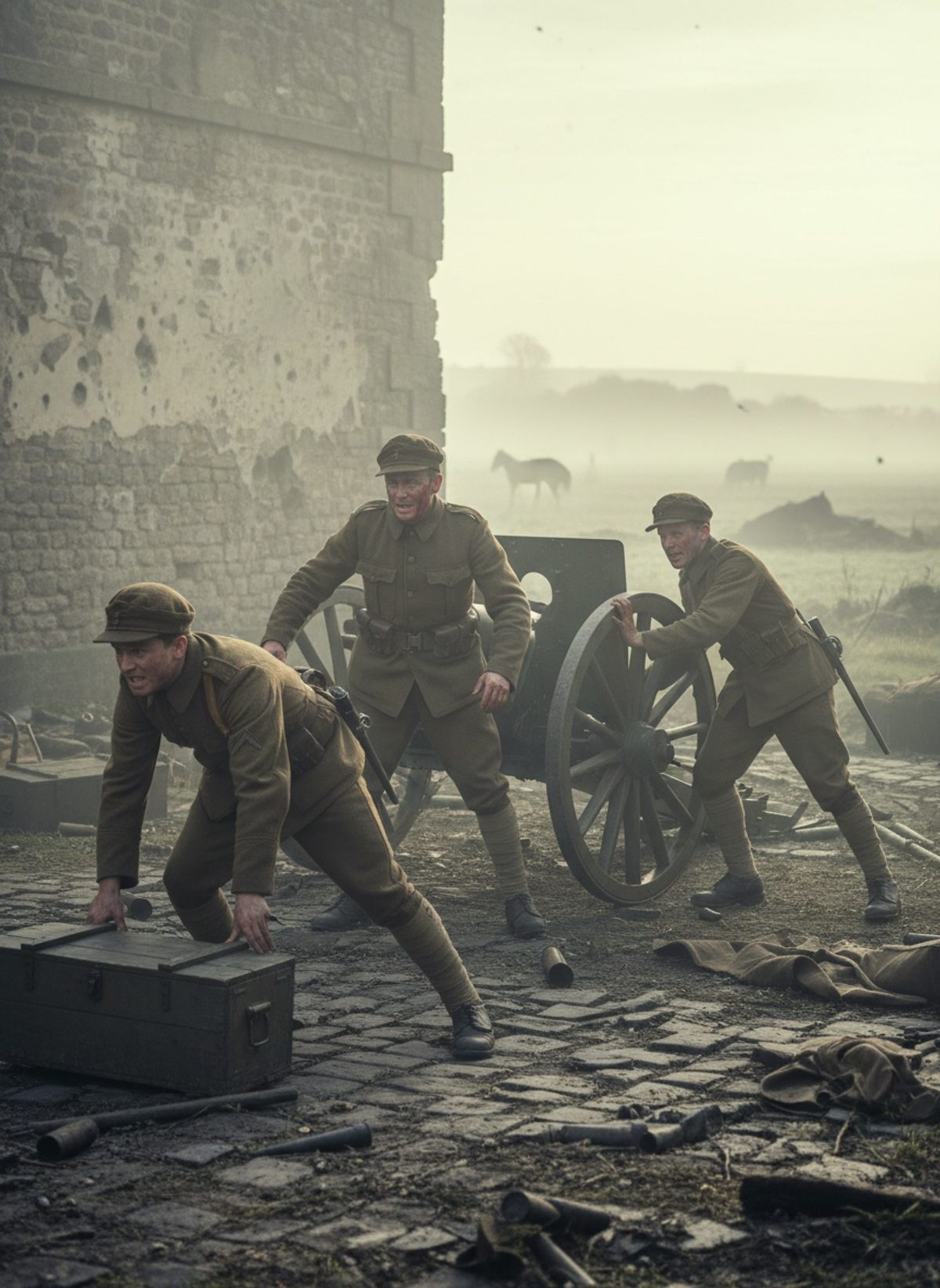
Amidst the wreckage, one gun remained, as if defying the might of the enemy with its presence alone. This solitary 13-pounder stood as the last bastion of hope for L Battery. Undeterred by the rising tide of desperation, three men took to their positions. Without command structure or apparent chance of victory, they served the gun with unyielding determination.
Read next: The 800 Irishmen Left Behind So an Army Could Escape
These men—whom history would remember for their unparalleled courage—loaded and fired repeatedly. The labor was excruciating and perilous, their world reduced to the few square meters around the gun. Smoke stung their eyes, while the ground reverberated with each shot like a living beast beneath them. The relentless cycle of loading and firing continued for two and a half hours.
Yet, as impressive as their grit was, equally astounding was the precision with which they operated. Each shot was a testament to their skill and resolve. Against all odds, they managed to disrupt the German assault, creating an opening for reinforcements to arrive and stabilize the front—a crucial contribution that would be as legendary as it was inspiring.
The Legacy of Valor
For their extraordinary bravery and skill under fire, the three men were awarded the Victoria Cross, the highest and most prestigious award of the British honors system. These medals were not mere trinkets but symbols of valor, representing actions that seemed almost mythical. Each ribbon and cross told a story—of camaraderie, sacrifice, and the indomitable spirit of those who serve under the harshest conditions.
The battle at Néry faded into the larger narrative of World War I, a monumental conflict that reshaped nations and destinies. Yet, within this vast tapestry of history, the story of L Battery and their stand against insurmountable odds serves as a poignant reminder of individual valor within mass warfare. Their actions on that fateful day carved a niche of heroism amidst the chaos of war, ensuring their deed would not be eclipsed by the broader sweep of time.
The Gun That Echoes Through Time
Today, that famous 13-pounder gun resides in London, a silent guardian of memories long past. It exudes a quiet dignity, its metal frame bearing witness to the chaos of war and the resolve of heroes. Most who pass by it remain unaware of the audacity and courage it once facilitated. Yet for those who know, it is more than an artifact; it is a story, an echo of a time when a handful of men stood alone against overwhelming odds and refused to yield.
The Battle of Néry and the valiant stand by L Battery offer much more than a footnote in the history of World War I; they are a powerful expression of human endurance and courage. In a world often plagued by division and adversity, such stories offer reassurance that valor and resilience can shine brilliantly even in humanity's darkest chapters. So, as we consider the past and its lessons, let us not forget the lone gun's defiant roar or the relentless spirit of the men who served it.