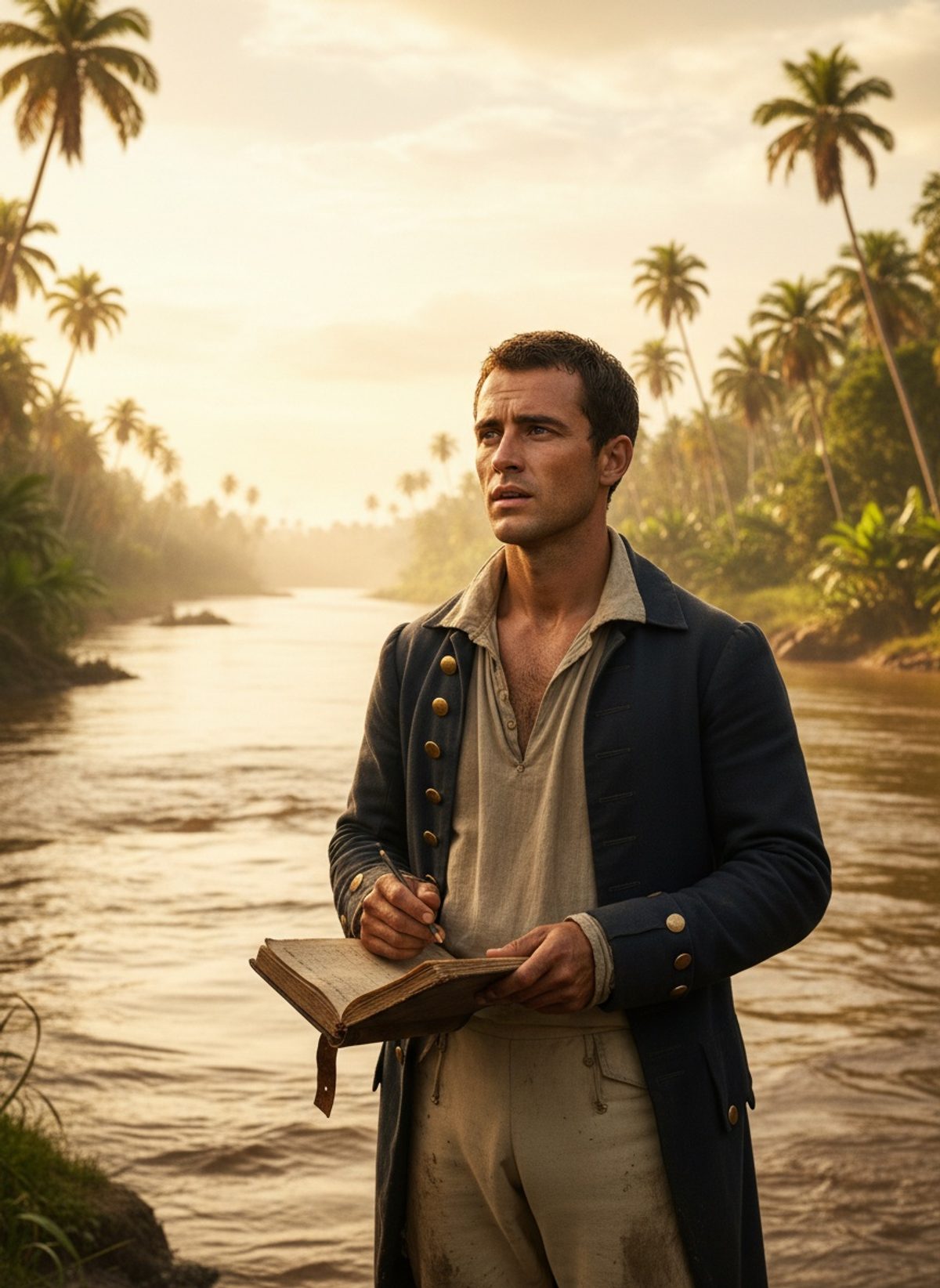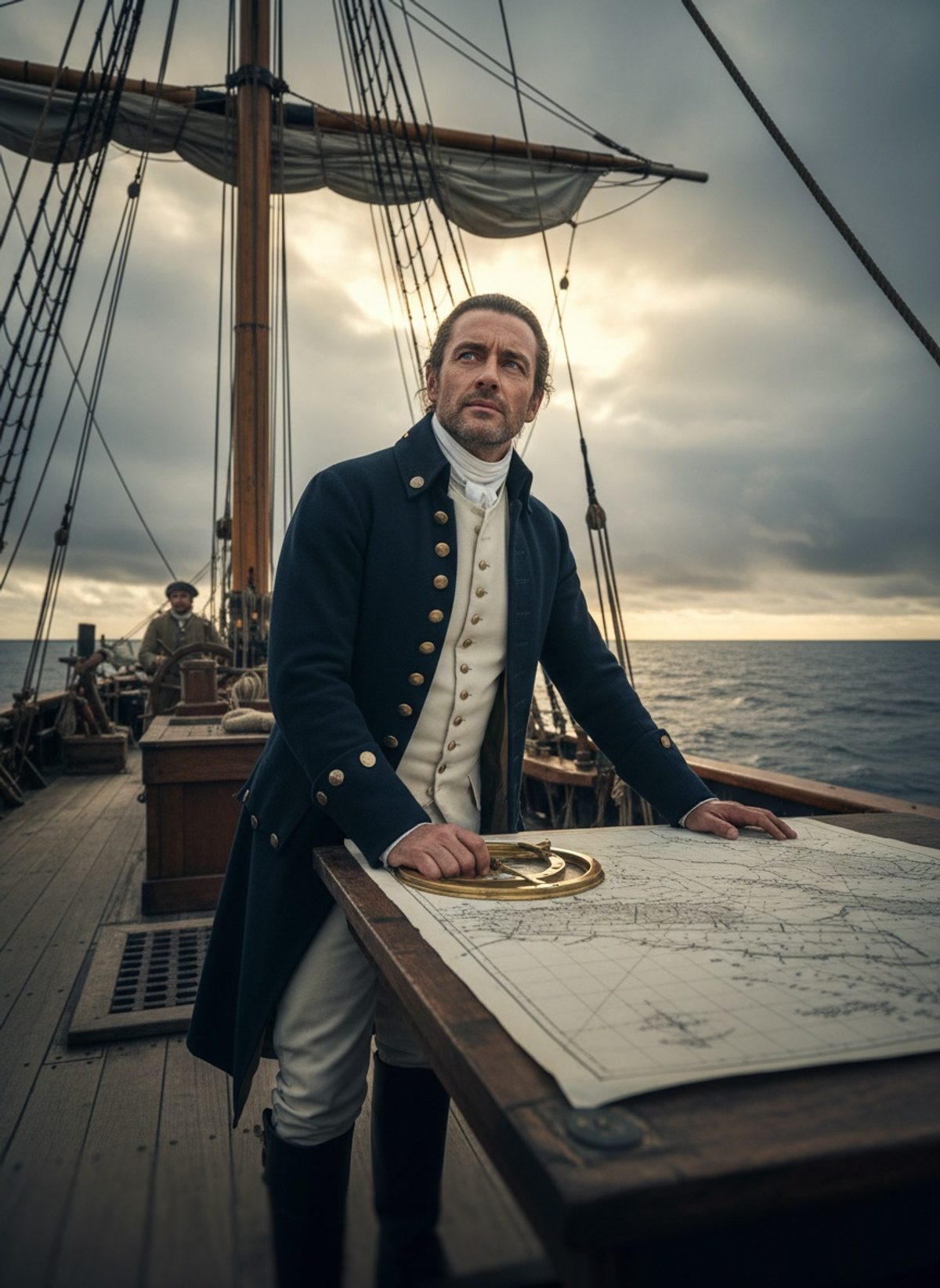
The early morning fog clung to the coastline like a shroud as the HMS Endeavour lay anchored in the Tahitian waters. The sea was a flat mirror, disturbed only by the occasional call of a gull or the lapping waves against the creaking wood of the ship. In the dim light, figures moved with purpose on deck, their breaths misting in the cool air. The dawn broke languid over the horizon, painting the sky in hues of orange and pink, providing just enough light to reveal an unease that hung heavily in the air. It was 1769, and James Cook, a tanner's son from Yorkshire, was about to set sail into the vast, virtually unknown expanse of the Pacific Ocean—a frontier uncharted by European maps, its secrets guarded jealously by nature itself.
No noble lineage bore Cook's name, nor did he stride the deck with an air of entitled superiority. His was a journey defined by meticulous preparation and a burning desire to expand the boundaries of his world. Cook's ship, a converted coal vessel not originally intended for such spectral voyages, was outfitted with the latest navigational instruments of the time: a quadrant, a chronometer designed to keep the most precise time, and extensive charts reflecting as much of current knowledge as could be gathered. These tools, placed carefully in his hands by the Royal Society, forged Cook's path forward into uncertainty.
Despite their rudimentary technologies by today's standards, these instruments opened doors to possibilities and discoveries that were almost beyond comprehension for an 18th-century mind. Cook was driven by a relentless pursuit of knowledge and the enlightenment ideals that pushed human understanding and discovery to the forefront of his era. His purpose extended beyond territorial conquest; he sought scientific riches and the truths of the natural world, rendered as insatiable as the sea itself.
As Endeavour slipped beyond the known boundaries, her path was not dotted with the telltale signs of former passage. The horizon stretched uninterrupted, an endless blue, as foreboding as it was exhilarating. James Cook's adventuring spirit was coupled with a precise methodical approach, which allowed him to navigate not just open waters but a web of cultural complexities and harsh environments. The Polynesians offered both hospitality and their navigational wisdom, having crossed the same daunting seascapes guided by stars rather than scribed paper maps.
Read next: The Day a Bristol Captain Sailed Beyond the Edge of the Known World
The months unfolded with trials inexorably bound to discoveries. Each day, Cook and his men recorded phenomena never before seen by European eyes, from the star-speckled southern skies to the curious formations of distant atolls that rose like earthen ghosts in an azure expanse. These islands, later to be known as New Zealand and Australia, held worlds dense with flora and fauna unknown in Europe, ecosystems that sang to a different tune, shaped by evolution unchecked by humankind.
Along this voyage, one of the most crucial observations made was of the transit of Venus across the sun, a celestial event that, though planned and calculated by the Royal Society back in England, required the eye of man to transcribe its movement. This act of scientific inquiry, conducted on Tahitian shores, transcended mere exploration and charting; it was a search for knowledge to reveal the greater workings of the universe. This passion reflected a burgeoning understanding that exploration's true prize lay not in land, but in enlightenment.
Back aboard the Endeavour, the journey was not without peril. The crew faced scurvy, a relentless specter of illness that stalked voyages without fresh provisions. Yet, Cook, informed by an insatiable curiosity and the practical wisdom of a seasoned mariner, found ways to mitigate its effects, insisting on diet changes including the invaluable inclusion of citrus fruits—a preventative measure that stood almost as revolutionary as the new lands plotted into his maps.
The reverberations of Cook's journey echoed far beyond the immediate corridors of power in England. His charts, painstakingly drafted and refined under harsh conditions, redefined the cartographic understanding of the Southern Hemisphere. They disabled myths and exposed the fallacies of prior guesswork, pushing the boundaries of what was understood about the Pacific's sprawling contingents. His encounters and documented interactions laid the groundwork for future diplomacy and colonial interests, regardless of the darker complexities intertwined with such encounters.
In the relentless dance of tide and time, James Cook’s voyage reminds us of the vast unknowns that lay both in geographic contours and the deeper realms of human perception. As the Pacific turned from mystery to mapped reality, the untold allure of pure discovery dwindled, yet the pioneering spirit that propelled the Endeavour remained an indelible part of the human saga. It speaks to our endless pursuit of knowledge, a quest as vast as the oceans Cook charted and as deep as the impressions left by his journeys. Such explorations remind us that each frontier, whether terrestrial or intellectual, is but a stepping-stone to a broader understanding of the universe and our place within it.