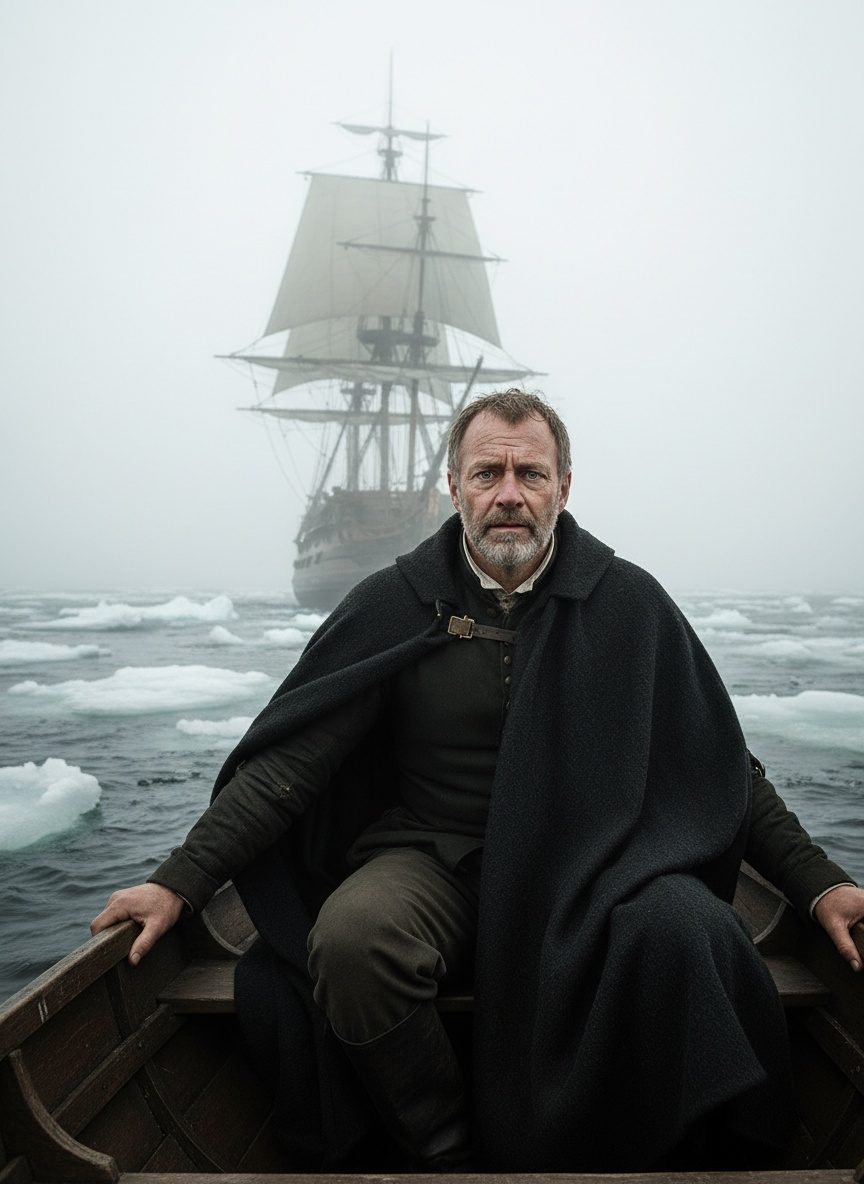
The vast expanse of the bay stretched out under a summer sun, its waters shimmering deceptively gentle and inviting, casting reflections that sparkled like a thousand scattered diamonds. Seagulls wheeled overhead, their cries mingling with the distant echo of ice grinding and cracking—a constant reminder of the harsh realm that lay just beyond sight. In the year 1611, this remote and hauntingly beautiful scene, set against the backdrop of endless horizons, was the stage for one of history's most enigmatic and tragic tales of exploration. For here, in what we now call Hudson Bay, the dreams of a legendary sea captain would meet their fateful end.
The Dream of Passage
Since the earliest days of exploration, the men of the sea had been intoxicated by the whispers of a navigable passage through the New World—a route that would unfurl the wealth of the East, shortening the arduous journeys that had long vexed merchants and monarchs alike. Henry Hudson, an Englishman with an ambition as vast as the oceans he sailed, was driven by this vision. He imagined he stood upon the brink of uncovering the world's most sought-after secret, a gateway to the Pacific that would redefine global trade and secure his place in the annals of history.
Yet, for all the allure of his aspirations, reality had other plans. Hudson's expedition, sponsored by the London merchants of the Muscovy Company, was fraught with challenges. The vessel's provisions dwindled in the face of relentless Arctic winds and crashing ice flows. Still, Hudson pressed on, guided more by his dreams than the frayed patience of his weary crew. As they sailed into what would later be called Hudson Bay, the sense of triumph was palpable, despite the forbidding ice hugging the horizon.
The Frozen Gateway
By the summer of 1611, Hudson had navigated his ship through a labyrinth of inhospitable waters, reaching what he fervently believed was the promising lead to the Pacific Ocean. But the deceptive tranquility of the bay concealed bitter truths. The promise of discovery was tainted with the reality of stagnation: ice-choked waters, emptiness where bustling trade routes lay only in imagination, and an unforgiving landscape devoid of the rewards Hudson sought.
Read next: The Day a Devon Captain Charted the Pacific and Changed the World
As the days stretched into weeks without sign of egress, the crew's optimism waned beneath the weight of hunger and despair. With their shipbecalmed, food supplies dwindled to nothing more than hard tack and the occasional fish. Arguments erupted amongst the crew as faith in Hudson's vision faltered, the men beset by an uneasy realization—they were trapped in a frozen world.
A Crew on the Edge
The demands of survival and the burden of disillusionment drove Hudson's men to the brink. Mutiny—a term as dreaded at sea as the very specter of death—whispered among the shivering ranks. What had begun as simmering distrust now boiled over into outright rebellion. Hudson's authority, stretched to breaking, could no longer contain the mounting discontent.
Hudson, steadfast in his conviction and unyielding in his pursuit, found himself at odds with men who once shared his journey but now saw him as a dangerous liability. The tipping point arrived in a moment of harrowing finality. In the grip of mutiny, the crew took the unthinkable step, forcing Hudson, alongside his teenage son and those deemed too loyal to the captain, into a small open boat. Left to the mercy of the bay's treacherous currents and Arctic chill, Hudson and his loyalists were abandoned, their fate consigned to the deep silence of history.
The Bay He Could Not Leave
On that fateful day, as the currents carried them away, Hudson's dreams lay in ruins. The bay, initially a symbol of boundless opportunity, had transformed into a prison without walls. The small boat, shrinking into the distance, was the final chapter in Hudson's quest—a tragic end to a saga fueled by insatiable curiosity and boundless hope.
Read next: The Day a Devon Sailor Mapped the Roof of the World Alone
The mutineers, now sole masters of their ship, faced their own uncertain future. Nonetheless, they returned to England, bearing not the riches of the East but instead tales of isolation and loss. While no trace of Hudson or his small contingent was ever found, the shadow of their disappearance lingers over the annals of exploration.
Thawing the Ice of Memory
The saga of Henry Hudson and his final voyage is a tale steeped both in maritime lore and profound human themes. It underscores the weight of ambition, the stark realities of exploration, and the thin line that separates legend from oblivion. Hudson's legacy sails not within the pages of the textbooks, but rather in the whisper of winds sweeping across the icy expanse that claimed him.
In today's world, where satellite images and digital navigation replace astrolabes and stars, such tales serve as a reminder of the courage and folly intertwined in the pursuit of discovery. Hudson's journey is a story of human spirit—a cautionary tale that, despite the centuries passed, continues to echo the perilous dreams of those who dare to map the uncharted waters of their own aspirations.