Battleships are symbols of unyielding power. Yet, on 4 May 1982, HMS Sheffield was laid vulnerable by a solitary missile.
The Falklands War had begun just a month prior, thrusting Britain into a conflict that would soon expose the raw realities of combat. HMS Sheffield, a Type 42 destroyer, was at the heart of Task Force 317, making its way through the icy waters of the South Atlantic, enforcing a maritime exclusion zone around the contested Falkland Islands. To the crew aboard, each wave against the hull may have felt like a predictable lullaby in a scenario that was anything but. Tension floated as tangibly as the salt in the air.
The morning sun, indifferent to man's conflicts, beamed down upon the battleship as it glided through the blue vastness. But peace held only for a brief moment as an Argentine aircraft took to the sky, its sleek underbelly harboring a deadly cargo. Cut from the same spectacle of modern warfare, a French-built Exocet missile launched from the aircraft, soaring with malevolent grace toward Sheffield. Over the vast expanse of water, the missile found its mark without warning. Sheffield's radar, its all-seeing eye, failed to discern the hawk's approach.
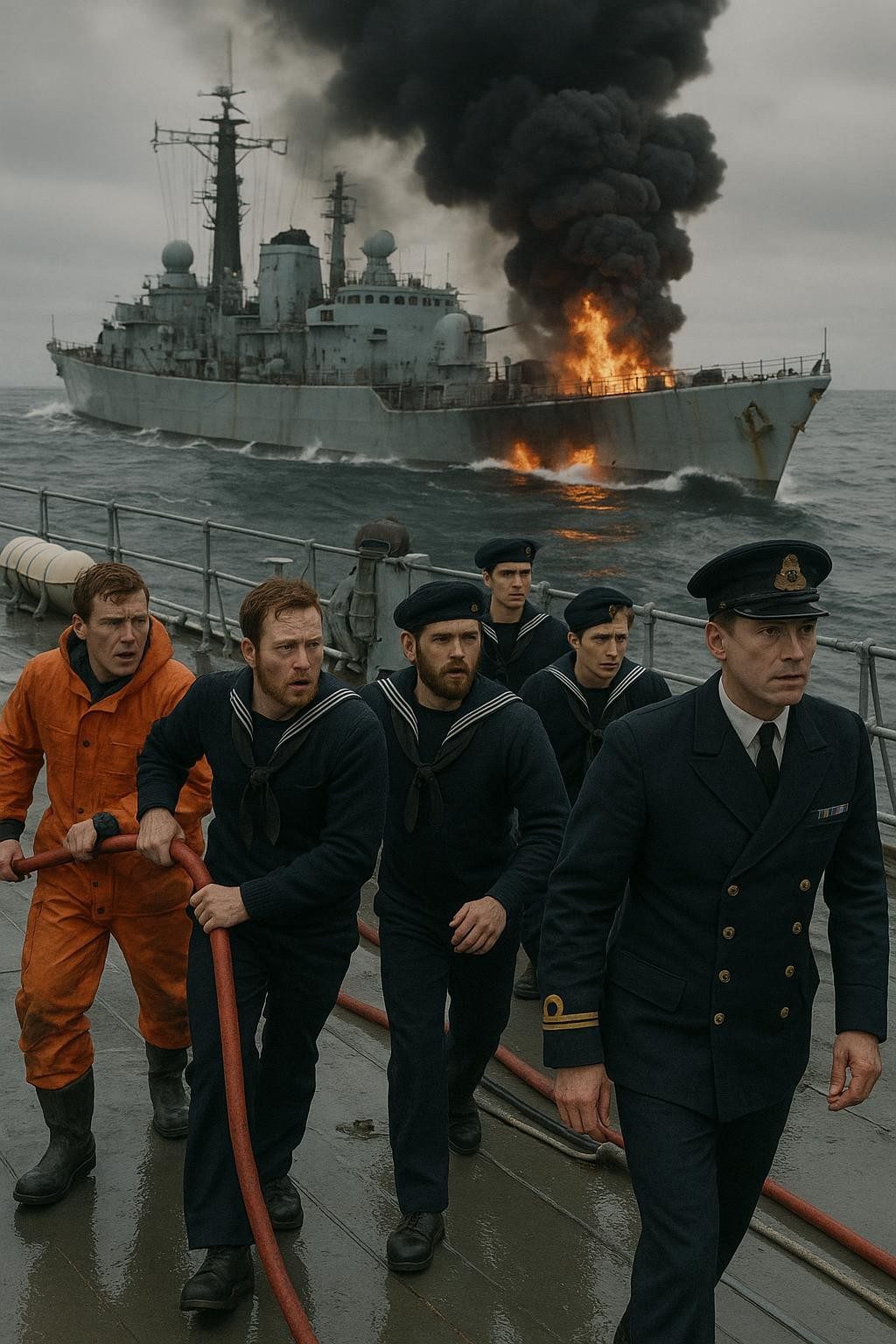
A deafening roar shattered the calm when terror struck and the Exocet penetrated the vessel amidships. The explosion thundered, a sinister echo against the waves, while a plume of black smoke unfurled into the sky like some dark flag waving defiantly. Twenty sailors perished instantly, lives extinguished in blinding flashes amidst twisting steel and fire. Immediately, the ship’s innards became a scene of chaos, metal twisting as if in agony, while flames lashed hungrily at sections of the hull.
Read next: The Night the British Ate the President's Dinner
On deck, sailors scrambled against the inevitable descent into despair. Each man became a warrior against different foes — fire and water. The conflagration grew monstrous, devouring everything in its path with sulfurous breath. Writing orders joined the inferno’s dance, reduced to ash even as they were penned. As the fire blazed, daring rescuers amongst Sheffield's ranks fought the insatiable flames, their faces silhouettes against the hellish glow. The inferno raged on for days, rendering a floating citadel of power crippled.
For the British public, the news hit like shockwaves from the blast itself. Britain hadn’t lost a warship in active service since the end of World War II. It was a piercing reminder that this wasn’t a distant scuffle on the fringes of empire’s twilight. The campaign in the South Atlantic was no mere political footnote; it carried the weight of valor and the specter of loss. What had been largely seen through the abstract political lens of sovereignty disputes rapidly coalesced into a more visceral reality: War demanded sacrifice.
Read next: The Day a One-Eyed Admiral Sailed Into the Line of Fire
Despite efforts to save HMS Sheffield, the damage proved insurmountable. The ship would not fight again. Instead, it became a martyr in metal, a somber harborage for lessons hard-learned. From its loss, Britain found painful introspection. The tragedy unveiled gaps in naval defense strategies, particularly the inadequacies in shipboard fire-fighting capabilities and electronic warfare systems, inviting heavy scrutiny from analysts keen to glean wisdom from misfortune.
The Falklands War continued, but not without the ghosts of Sheffield silently encamped in its wake. In households across Britain, families grasped the weight of waiting, every broadcast from Port Stanley potentially laced with poignant worry. For the loved ones of those who served, each mention of the islands in far-flung seas sent ripples through the fabric of domestic life. Meanwhile, within the wraith-like shell of Sheffield now adrift, stories began to form about bravery and endurance that slowly percolated back home.
There remain those who remember that day not just for the blackened ruin of a proud ship but for the enduring spirit of camaraderie that emerged. Surviving crew members shared stories of fallen friends and acts of heroism in circumstances most can barely fathom, encapsulating fragments of humanity’s resilience even amidst wreckage. The tangible loss was not just of metal and manpower, but memories — stolen moments of lives cut too short.
The charred specter of HMS Sheffield stands etched into Britain’s maritime legacy — a symbol not only of vulnerability but of reflection and reevaluation. It implores us still, to remember the souls given to the sea in service, and to recall the steadfast courage it takes to guard ideals over mighty distances of water and time. As its story continues to echo across the annals of naval history, Sheffield’s sacrifice demands we hold in reverence the costly wisdom it imparted. And perhaps, more profoundly, it serves as a timeless reminder that the peace we often take for granted rests precariously upon the resilience of those willing to tread the dangerous tide.