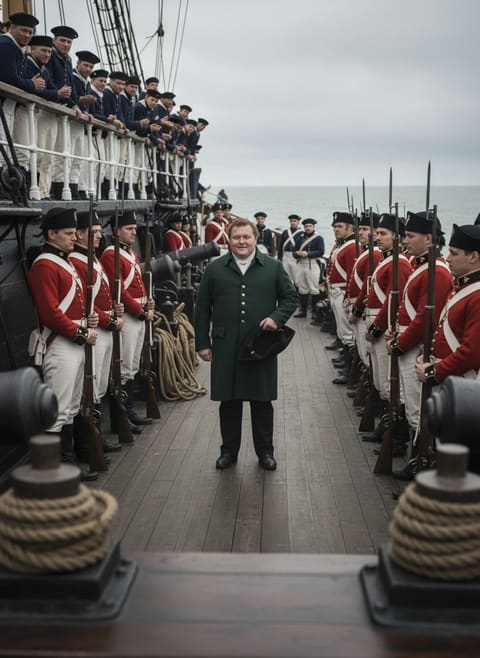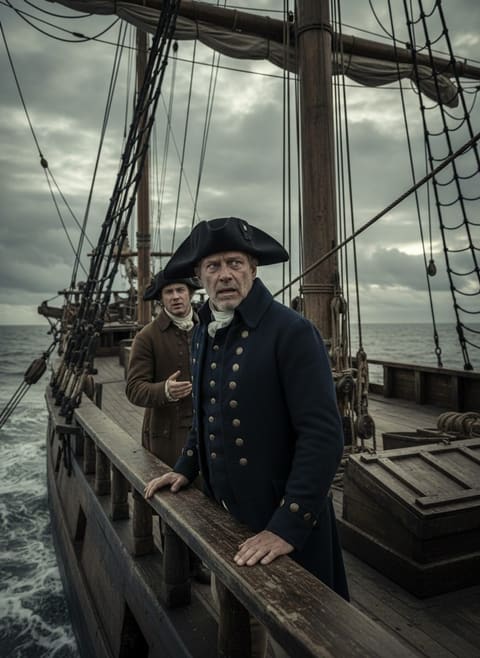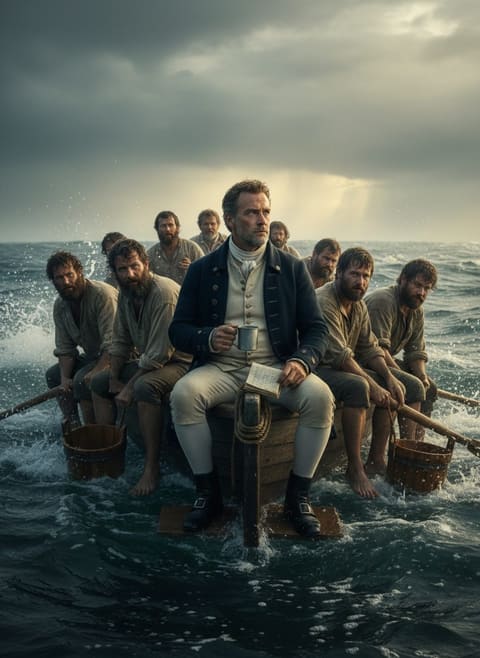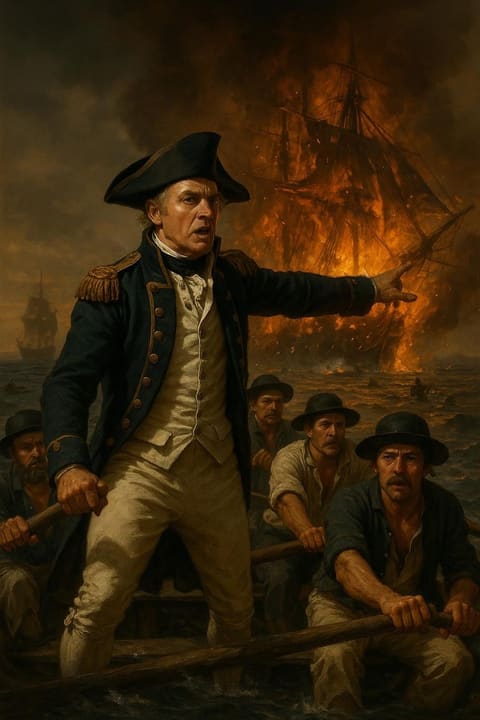
She had no glorified name yet that history would echo for centuries. But the ship that began life on the River Medway wasn't unknown for long. Her story is forged in the legacy of battle, grace under fire, and the death of a hero.
The Birth of a Giant
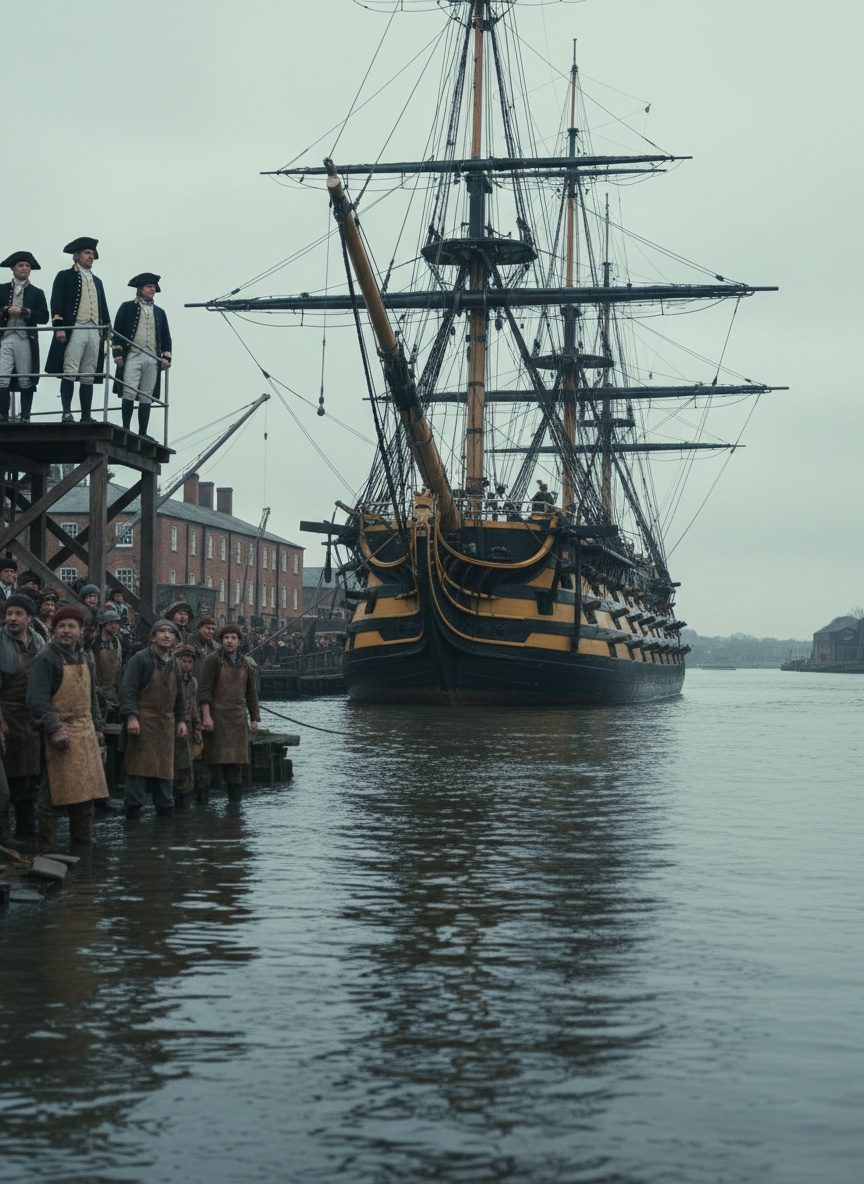
Few could have predicted that the nameless hull easing into the waters of the Medway would soon become synonymous with maritime power. It was the 7th of May 1765, a day unlike any other at Chatham Dockyard, where workers had toiled for six long years. The immense structure, a first-rate warship armed with 100 guns, required the sacrifice of thousands of oak trees, each vital in crafting a vessel destined for historic proportions. It wasn't just the ship that was spectacular; it was the promise of what she could become.
The launch was a ceremony of grandeur, attended by eager spectators longing to see the wooden behemoth meet the tides. Such a ceremony was both an end and a beginning—years of toil converged in a single moment when craftsmanship met seawater, setting the stage for future tales of battle and glory. The craftsmen and shipbuilders of Chatham might not have imagined beyond their immediate tasks, yet they were architects of the British Navy's future legend. This xebec would soon earn her name, HMS Victory, etched not only into her stern but into the annals of history.
The Path to the Unknown
Launched, yet still voiceless in her identity, HMS Victory was constructed with purpose but not destination. Her significance lay in the broader naval strategy of Britain’s burgeoning empire. The closed chapter of the Seven Years' War had left Britain as a preeminent global power, wielding a naval force that demanded quality and quantity. The Victory was the embodiment of this ambition, crafted at a time when Britannia truly ruled the waves.
Read next: The Night the British Ate the President's Dinner
Long before the Battle of Trafalgar etched her into history, this grand vessel slipped quietly into her journey through the waters, trained and prepared for potential conflict she had yet to know. In a world where the seas dictated power, the weight of oak and iron beneath Victory's decks acted as deterrents as much as instruments of triumph. Her looming silhouette was a message—not just of Britain's naval might but of the determination to uphold it.
Symbol of a Nation
Four decades later, the much-renamed HMS Victory carried a name and reputation that instilled both pride and fear across nations. Under the command of Admiral Horatio Nelson, she sailed into one of history's most fateful encounters—the Battle of Trafalgar. This engagement would become a defining moment, both for the ship and for the man she carried into battle. Trafalgar was a tapestry woven with heroism, tactical genius, and the bitter cost of victory.
Read next: The Day a One-Eyed Admiral Sailed Into the Line of Fire
Outfitted for her role on that fateful day, HMS Victory bore witness to the chaos of cannon fire, enveloped by the acrid smoke of warfare. Yet amid the cacophony, her presence was unyielding. She was the stage upon which Nelson’s brilliance played, embodying his revolutionary tactics and relentless spirit. The decks that once baptized the Medway now soaked the blood of men—officers and crew alike—etched into her planks as a testament to their sacrifice.
The Legacy Sails On
As England celebrated its triumph at sea, HMS Victory returned from Trafalgar with both its identity solidified and its place in history assured. Perhaps most poignantly, she also bore the body of Admiral Nelson for his final homecoming. Such events linked her forever to the Admiral's life and legacy—his greatest victory and his untimely death intertwined with her past.
Today, stationed at Portsmouth, she remains a living museum echoing the era when sail-power dominated naval warfare. The oldest commissioned warship still afloat, Victory is more than an artifact; she is a monument to the perpetual spirit of those who served upon her. She teaches us not only about the maritime power of 18th-century Britain but about the indomitable human spirit etched in the annals of history—alive, potent, and enduring. Perhaps that's why, even now, we remember the day she first touched water at the Medway's edge with reverence. Each plank embodies stories untold, a promise renewed with each visitor who strolls her decks and dreams of the legends left out of textbooks.