Napoleon Bonaparte was a man accustomed to commanding vast empires. By August 1815, however, he was reduced to seeking refuge on a British warship.
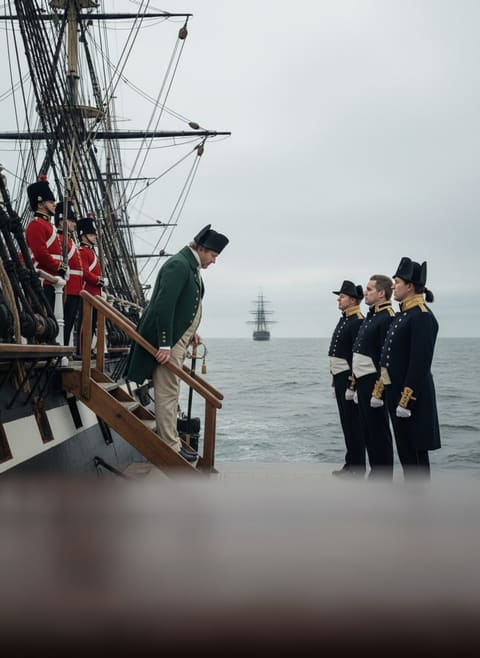
The sheer audacity of Napoleon's actions on that fateful day may seem perplexing to those unfamiliar with the dramatic fall of Europe's most feared military leader. After his defeat at Waterloo, the once indomitable emperor found himself with few allies and even fewer places to hide. On the morning of July 15, he boarded the HMS Bellerophon, a stoic reminder of British naval prowess named after a Greek hero famed for slaying formidable beasts. In this moment, Napoleon portrayed both resignation and an enduring hope for honorable treatment—though he would find that neither were entirely within his grasp.
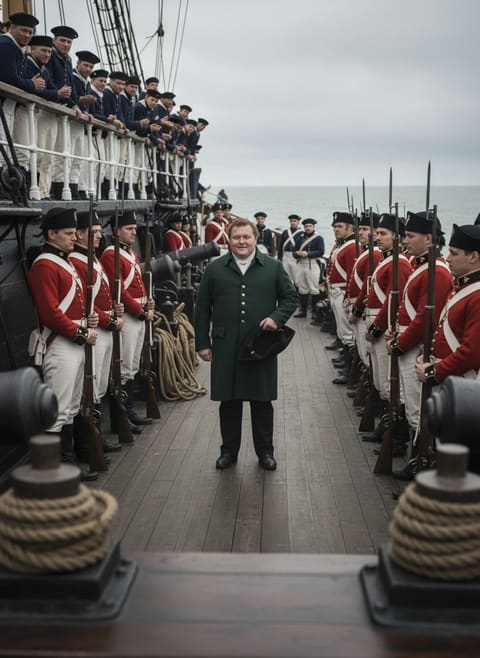
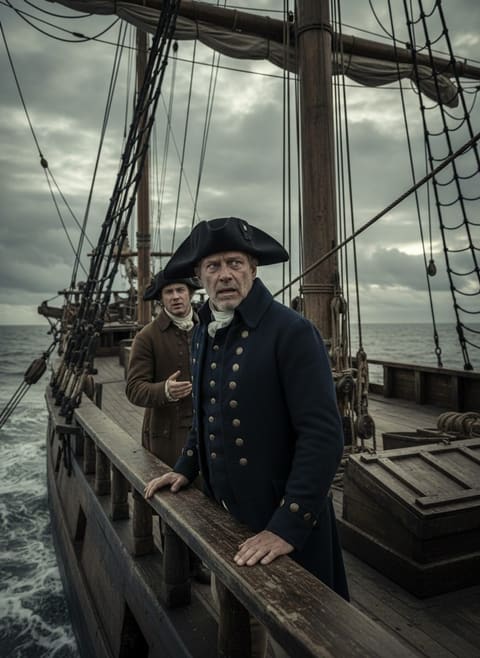
The officers of the Bellerophon watched as the man who had terrorized Europe and defied coalition after coalition for nearly two decades became their guest—or more accurately, their prisoner. Napoleon navigated this delicate situation with the grace of a seasoned statesman. Sharing meals with the officers, he regaled them with anecdotes of his campaigns, speaking not as a vanquished foe but as an equal. These interactions were poignant, as only months earlier, these very men were hostile adversaries in a long and brutal conflict.
For three weeks, the officers and crew found themselves playing hosts to the 'Corsican Ogre', as British propaganda often called him. Yet, in person, Napoleon was far from an ogre. His charm was undeniable, and the officers found themselves unexpectedly drawn to the stories of his Italiano-French upbringing, his rise through the tumultuous ranks of revolutionary France, and the grand ambitions that had driven him to greatness. Here, on the wooden decks of the Bellerophon, Europe's most notorious leader became merely a man, if only for a short time.
Read next: The Night the British Ate the President's Dinner
Yet, despite the veneer of civility, the officers of the Royal Navy were acutely aware of the fine line they walked. Napoleon was a prisoner, a fact underscored every day by the political storm brewing beyond the ship's horizon. The British government was presented with an unprecedented dilemma: how does one treat a former emperor who had once been a terror to all of Europe? Public opinion was divided. In England, newspapers speculated wildly about his fate. Admiralty lambasted them with directives, seeking to control any account of events aboard the Bellerophon. After all, these moments were not just historical footnotes; they were delicate steps in defining both Napoleon's fate and Britain's place in a post-war Europe.
As Napoleon strolled the decks, there was a deeper, almost theatrical quality to the scene—a sentiment heightened by the continuous geopolitical chess game being played beyond the ship. He knew well the significance of every word and gesture during these seemingly mundane exchanges, and he played the part with acuity, maintaining a regal dignity despite his captivity. The officers, aware of both the burden of history and the politics at play, treated him with the respect due to a formidable foe.
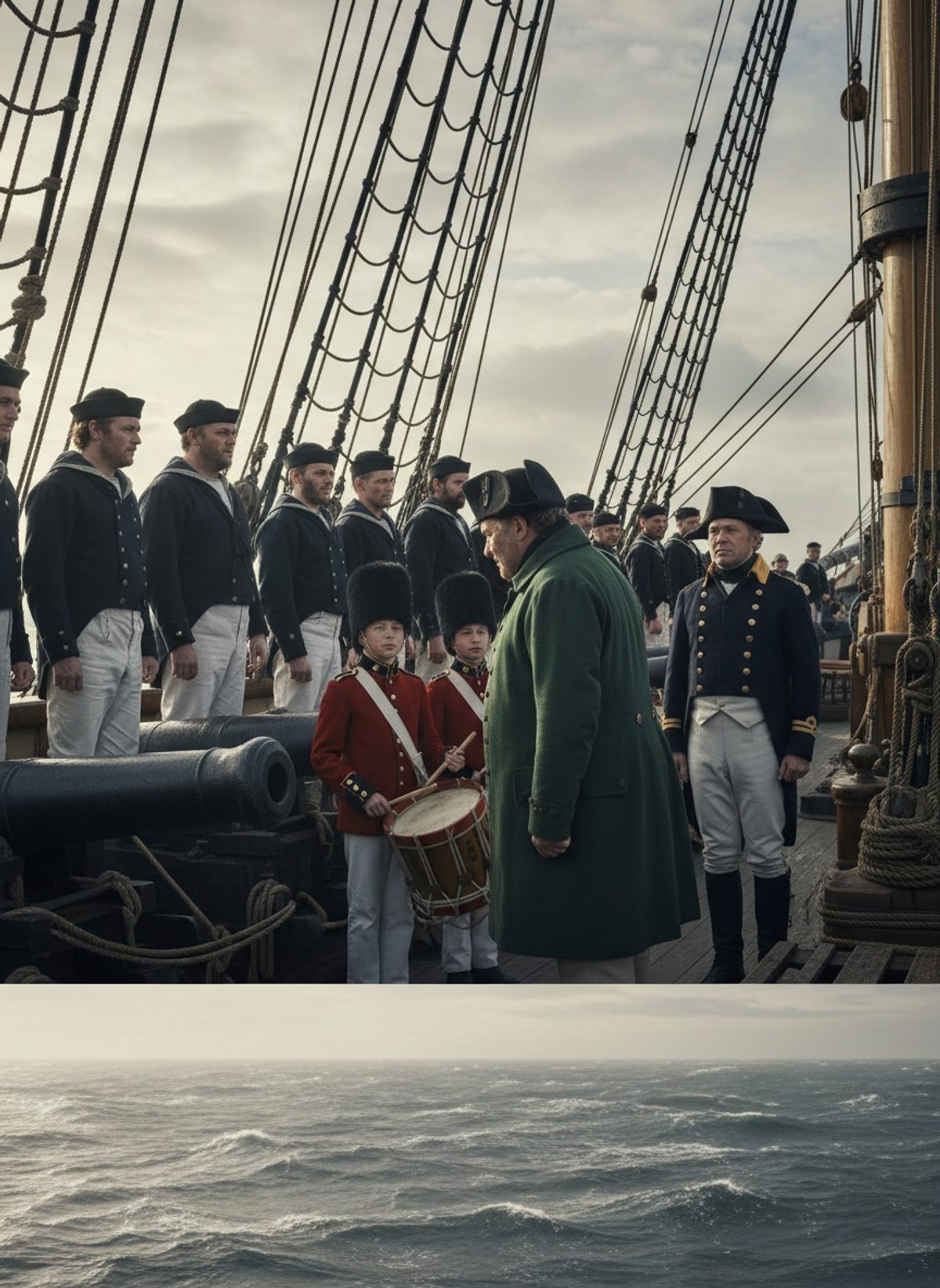
But as the summer days passed with that peculiar mix of tension and routine, an air of finality began to envelop the atmosphere aboard. It crystallized in the inevitable march of international protocols. Decisions were being made in shadowed rooms far from the deck upon which Napoleon pondered his fate. Britain was not to harbor him indefinitely; the world demanded resolution. The drumbeat, when it came, was both literal and symbolic. On the traditional quarterdeck, the ship's drummer beat out a call to muster.
The officers gathered, resplendent in their naval attire, to hear a decree that would signal the final chapter of Napoleon's storied life. Official orders had come from the British government: Napoleon was to be exiled to the remote island of Saint Helena in the South Atlantic. It was the ultimate isolation, a place from which escape was not only improbable but unthinkable. Napoleon, with the characteristic composure of a man who had faced countless battlefields, nodded in understanding of his fate.
Read next: The Day a One-Eyed Admiral Sailed Into the Line of Fire
In that moment, the landscape of power had shifted irrevocably. No longer a prisoner of circumstance alone, Napoleon was now a symbol of fallen ambition and the unavoidable tides of history. To the officers, who had grown to know him during those weeks, his acceptance of the British decree was monumental. His quiet recognition of the decision, as the drumbeat faded into the sea breeze, resonated with the weight of finality. For even in defeat, his presence and bearing were those of a man entwined in history's embrace.
This seemingly simple narrative of an emperor finding himself adrift at sea is, at its core, a vivid illustration of the complex interplay of power and its ultimate fragility. Napoleon's surrender, his interactions with the British officers, and the inevitable exile to Saint Helena, lay bare the veneer of invincibility that had characterized his life. The profound humanity of his three-week interaction within the polished confines of the Bellerophon imparts an echoing reminder: even the greatest figures are subject to forces beyond their control.
The tale of Napoleon aboard the Bellerophon challenges us to reflect on the intricate dance of ambition, legacy, and human vulnerability. It's a reminder that in the vast theater of history, even the mightiest must sometimes bow to the unrelenting beat of time's drum. A compelling testament to the idea that history, as much as it remembers the battles and empires, is equally shaped by quiet moments on distant decking, where legends at times leave the stage, and humanity alone takes its final bow.