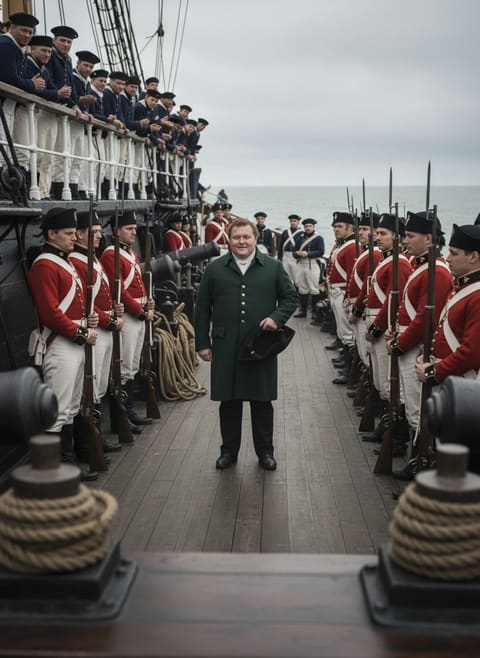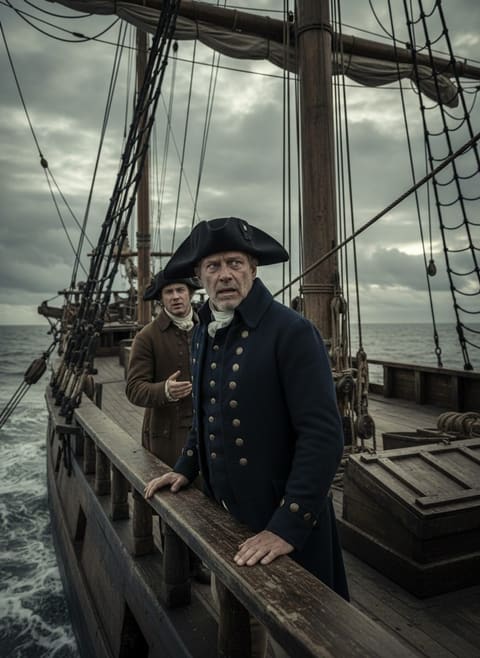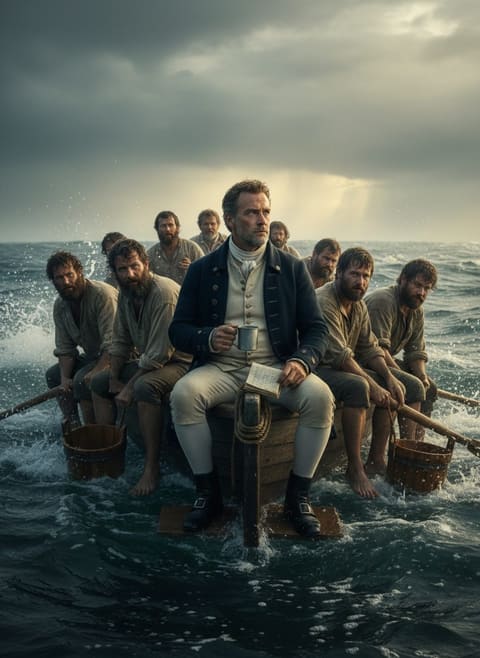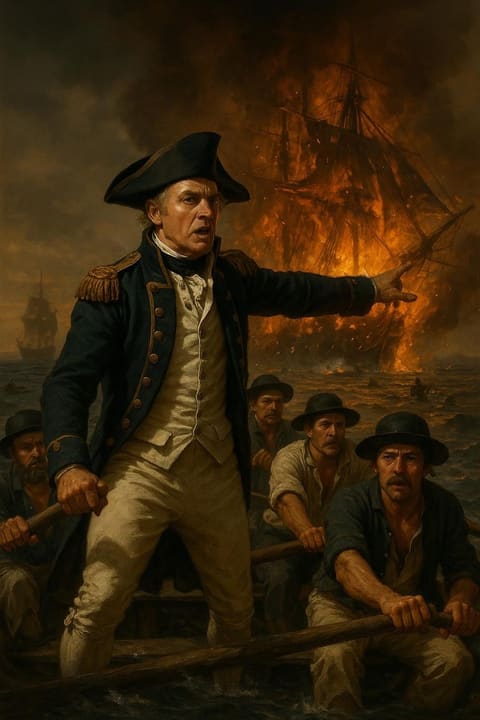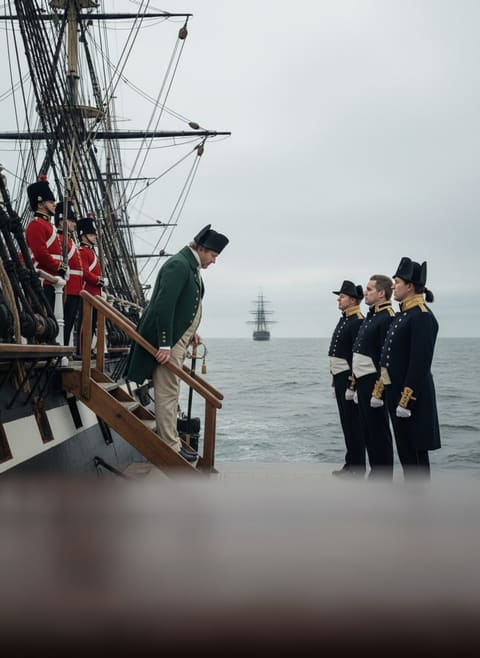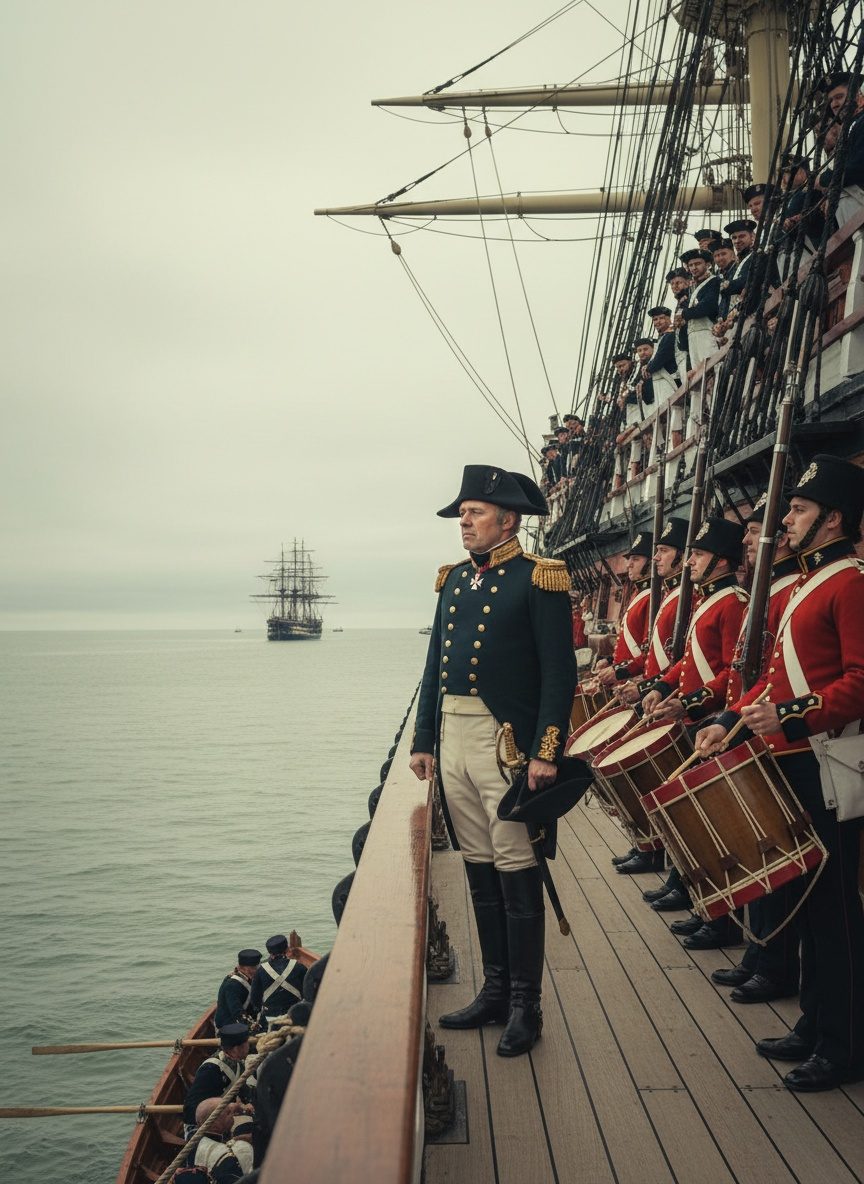
The English Channel rolls gently beneath a dappled sky, pale clouds catching golden light in their slow shuffle across the east. Below, seawater slides effortlessly past the hull of the slowly advancing British warship. Its deck is crowded with the subdued murmur of officers, men who navigate not just the capricious sea, but also the tides of political and military change. On this summer day in 1815, the stirrings of history play out not in grand battles or gaudy pomp, but in the quiet interactions aboard a man-of-war. Its newest passenger, clad simply and speaking quietly, once inspired both fear and awe across a continent. This man is Napoleon Bonaparte, the erstwhile Emperor of France, now surrendering to forces beyond guns and glory.
The Palms of Surrender
With lines etched into the palms of his hands that had once penned edicts shaping Europe from Madrid to Moscow, Napoleon steps onto the deck of HMS Bellerophon. The irony is palpable, like the tang of sea air. HMS Bellerophon, the very ship that had, for two relentless decades, fired upon the French fleets sailing under Napoleon's standard, now offers refuge. In the aftermath of his crushing defeat at Waterloo, Napoleon finds himself without a throne, without a command. Yet, his presence on the ship evokes more than vanquished ambition; it grapples with the whims of fate, the same fate he had defied for much of his life.
This British warship, part of a blockade once attempting to strangle Napoleonic France, has become his haven. Initially, Napoleon hopes for sanctuary, a place where the clamor and chaos of politics might be left behind. Believing the British will honor an informal request for asylum, he imagines retirement, perhaps in a comfortable country house, surrounded not by enemies but by gardens and books. Napoleon surrenders not just to an enemy but to the elusive hope of peace, unaware of the British plans for him far removed from English soil.
The Watchful Eyes of Plymouth
The bustling port of Plymouth awakens to an unusual spectacle. Residents have heard whispers that the Fallen Emperor is aboard the Bellerophon, anchored just beyond reach. Word spreads like wildfire among those whose childhoods had been haunted by tales of Napoleon's unyielding march across Europe. Now, they gather in droves along the waterfront, some with telescopes, some merely shading their eyes from the sun, all eager to catch a glimpse of history incarnate.
Read next: The Night the British Ate the President's Dinner
Imagine the throng, poised between disbelief and curiosity. For some, the ship is a mirror reflecting hope or fear, desires or derision, the embodiment of the very saga that had suffused their lives. The thrumming anticipation is almost tangible, infused with the gentle clinking of ships at anchor and the ceaseless squawk of gulls overhead. Napoleon, in his inescapable solitude, dines with officers, a peculiar dance of civility and wartime adversary on the high seas. He remains, to the crescendo of footsteps on cobblestones and linen shirts tugging in the breeze, a figure of intrigue.
A Man of Destiny, Out of Time
Napoleon Bonaparte had, by sheer will, sculpted Europe into an empire. His campaigns were lessons in swift maneuver and strategic daring, his imperial crowning a testament to audacity. Yet here aboard the Bellerophon, this once indomitable figure confronts the limitations of human aspirations and the merciless march of history. His ambition to realize a French-dominated Europe is now irrevocably fractured, its remnants scattered to the wind and left behind on battlefields where fortunes rise but to fall.
Read next: The Day a One-Eyed Admiral Sailed Into the Line of Fire
The emperor’s surrender signifies more than personal ruin; it marks the conclusion of an era that was fiercely transformative. Europe, once marred by relentless conflict, stands on the cusp of restoration and recalibration. Behind the figure of Napoleon lies the shattered dream of Republic flamboyance and the pragmatic reality of geopolitical fractures, weighed down by the inevitability of time's march. The space Napoleon hopes to carve out within Britain will forever elude him. The decision made on this wooden precipice of the Bellerophon determines the course of his final journey — not to pastoral retirement but to a remote rock in the Atlantic.
The Last Voyage
The somber tides, ever in motion but deeply familiar, bear witness as HMS Bellerophon transforms from safe haven to the harbinger of an inescapable fate. Napoleon's remaining days in Europe dwindle with the horizon, sinking into history as he stands on deck, gazing back towards the continent he can no longer claim. With the passage across the waves to exile on the isolated island of Saint Helena, the chapter of conquest and revolution closes under the steely gaze of the British Empire. But within these moments aboard, Napoleon's surrender reflects more than loss; it echoes the precarious nature of power and legacy.
In surrendering to the very ship that once sought his defeat, Napoleon unwittingly submits to a narrative shaped as much by his adversaries as by his own grand designs. His voyage with the Bellerophon becomes a profound human story of rise and fall, ambition and humility, where even the most powerful are humbled by the tides of history. By contemplating the spectacle of this dramatic surrender, we are reminded that history is rarely straightforward, always woven with irony and threads of unpredictable fate. It resonates with the profound truth that every empire, no matter how grandiose, faces the unwelcome certainty of twilight, as sea and time quietly unite to carry it away.